The torch of the Statue of Liberty has been closed to the public since 1916, when German saboteurs blew up a munitions depot nearby and shrapnel tore into the statue’s arm — in the 110 years since, no visitor has been allowed back up the ladder
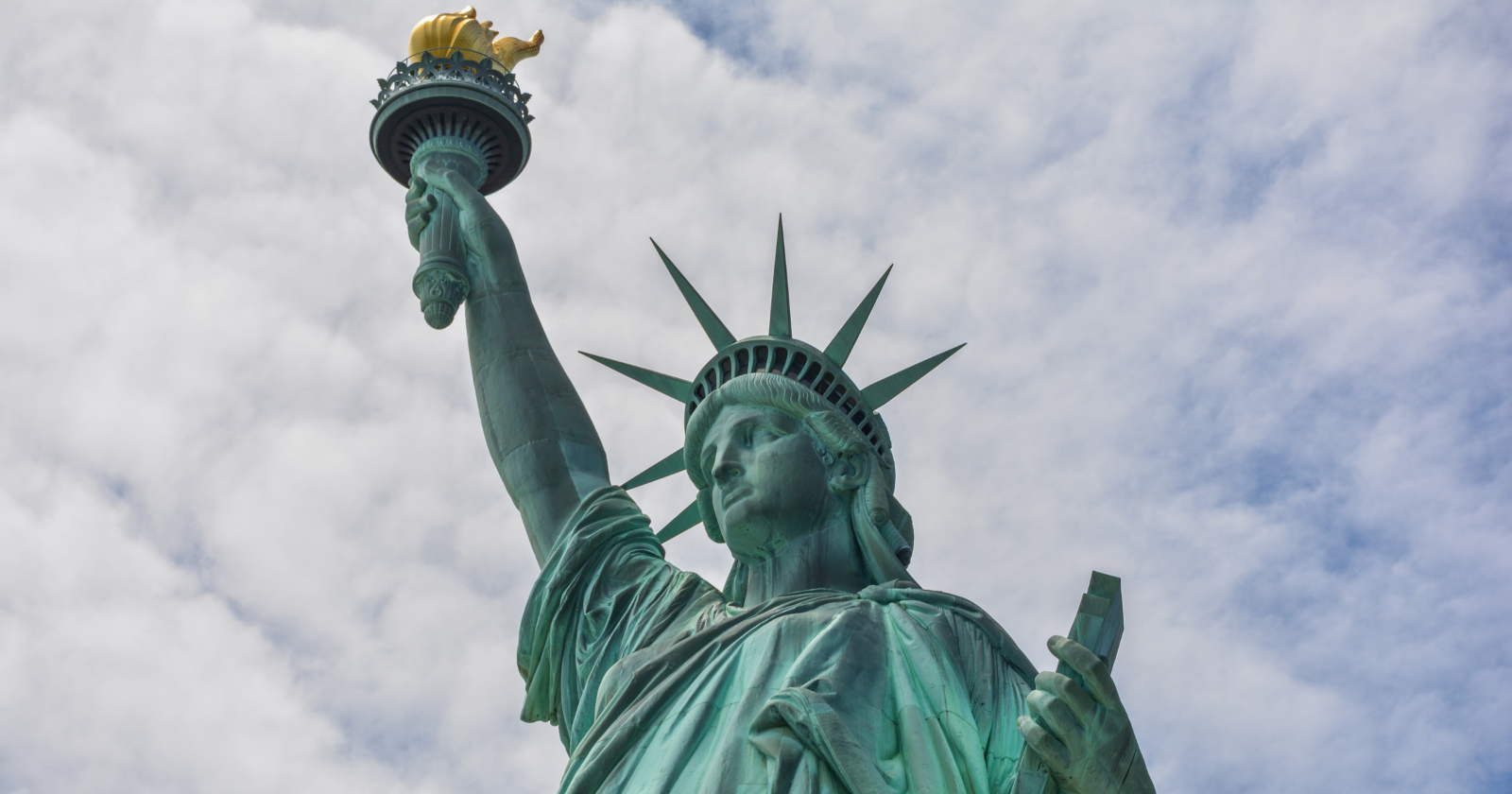
The torch of the Statue of Liberty has been closed to the public since 1916, when German saboteurs blew up a munitions depot nearby and shrapnel tore into the statue's arm — in the 110 years since, no visitor has been allowed back up the ladder

Every year, millions of people visit the Statue of Liberty, and a lucky fraction, with advance reservation, climb the 162 steps to its crown. What no one can do (what no one has done as a member of the public for 110 years) is to continue up, through the raised right arm, up the narrow … Read more

“The more aroused the fly is the harder it tries to shoot” – Google’s fully mapped fly brain is now playing Doom, Beat Saber, and more

"The more aroused the fly is the harder it tries to shoot" - Google's fully mapped fly brain is now playing Doom, Beat Saber, and more

It’s sci-fi Friday, as Google’s fully mapped fly brain, which was revealed last week, has been designed to play Doom and the rhythm action game Beat Sabre. Google’s brain mapping is a historic first and the fly brain model, which required years of work and AI help to compile, was released by the company’s research … Read more

“One of the longest-running cold cases of palaeontology.” Scientists may finally know what created these strange markings

“One of the longest-running cold cases of palaeontology.” Scientists may finally know what created these strange markings

An international team of scientists, led by paleontologist Andrea Baucon of the University of Cagliari, Italy, has partly solved the mystery of a strange natural pattern called Paleodictyon found around the world. The mystery at hand: what animal made (and continues to make) these unusual markings? The findings are published in the journal Earth-Science Reviews. … Read more

Rocket Lab protests NASA’s decision to award Blue Origin $700 million Mars orbiter contract

Rocket Lab protests NASA's decision to award Blue Origin $700 million Mars orbiter contract

Rocket Lab is still hoping to build NASA’s next Mars orbiter. The agency tapped Blue Origin for that job earlier this month, giving Jeff Bezos’ spaceflight company $700 million to develop, launch and operate the Mars Telecommunications Network (MTN). However, today (September 11), Rocket Lab announced that it challenged that decision and filed a formal … Read more

The Moon is airless, radiation-drenched and can swing from about minus 173 to plus 127 degrees Celsius, yet NASA-led modelling found that some common Earth fungi and bacteria—from human skin, soil and damp bathrooms—could survive dormant for weeks or even months in cold, shaded niches near the lunar poles.

The Moon is airless, radiation-drenched and can swing from about minus 173 to plus 127 degrees Celsius, yet NASA-led modelling found that some common Earth fungi and bacteria—from human skin, soil and damp bathrooms—could survive dormant for weeks or even months in cold, shaded niches near the lunar poles.

The Moon appears to offer Earth’s microbes nowhere to hide. It has almost no atmosphere, no stable liquid water on its surface, and no protection from ultraviolet light or energetic radiation. NASA’s standard lunar figures put one surface in bright sunlight at about 127 degrees Celsius and another in darkness at about -173 degrees. Now, … Read more

Modern humans interbred with Neanderthals before they disappeared, and most people of non-African ancestry still carry roughly 1 to 4 percent Neanderthal DNA today — meaning part of the human population we once thought we simply replaced never actually vanished

Modern humans interbred with Neanderthals before they disappeared, and most people of non-African ancestry still carry roughly 1 to 4 percent Neanderthal DNA today — meaning part of the human population we once thought we simply replaced never actually vanished

A man who died in a Romanian cave about 40,000 years ago carried more Neanderthal DNA than any other human being ever sequenced, ancient or modern. Its jaw appeared in Peștera cu Oase, and when geneticists analyzed it, the result was surprising: between six and nine percent of its genome came from Neanderthals. Because those … Read more