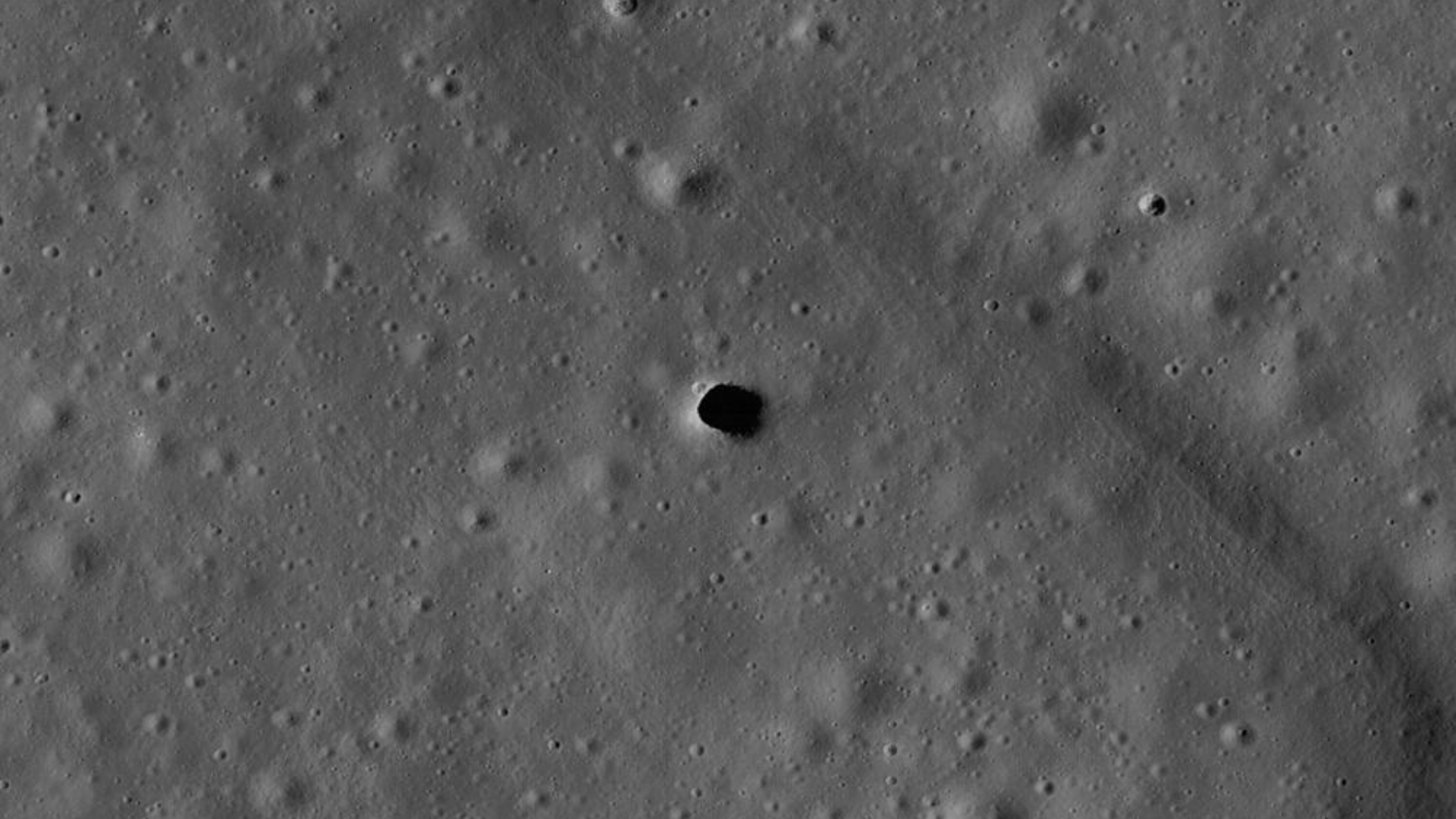
Are there secret underground caves on the moon? NASA has a new program that aims to find out. Although we see it in the sky most nights, the moon still holds an incredible amount of mystery. One such mystery is a large underground cave, or cavernous tube carved by ancient lava, that scientists believe extends beyond a particular pit on the moon’s surface. And to get to the bottom of the matter, NASA has selected a project known as GIMLI (the Marius Geophysical Lunar Well Research Instruments, not the Lord of the Rings character). GIMLI was selected along with two other programs that are intended to expand our understanding of the moon to better support a future lunar base, which NASA intends to build near the south pole. “NASA science is building the ultimate interplanetary survival guide to ensure science goes first to the lunar surface to provide our future astronaut crews with the vital information, resources and safety precautions needed in advance to survive the night on the moon,” Nicky Fox, associate administrator of NASA’s Science Mission Directorate, said in a statement. mysteriesThe site of this investigation will be the Marius Hill Pit, which was discovered in 2009 by Japan’s Kaguya lunar orbiter. You can see the hole clearly in the probe images. But researchers believe there is more than just a big hole on the lunar surface. They believe it is possible that the well is connected to a vast underground cave likely created by lava that flowed in the ancient past. If true, this could shed light on the history of volcanic activity on the Moon. You may like “Confirming a substantial lava tube would give us insight into how volcanism operated on the moon,” GIMLI deputy principal investigator Gareth Morgan said in a separate statement. “Lava tubes are a common feature of basaltic volcanism on Earth, so identifying them on the Moon means we could use knowledge of such terrestrial caves to better understand lunar history.” Furthermore, if researchers confirm the presence of this lava tube, astronauts could use it as a natural shelter on the lunar surface. These caves made of lava would provide general shelter, as well as protection from the extreme temperatures and radiation exposure experienced on the moon’s surface. Lava tubes could also be a kind of safe “bunker” where future astronauts could be protected from micrometeorites. While a future lunar base will likely include human-built shelters, natural caves could be an incredible, existing resource that astronauts could take advantage of. How to Find a Lunar CaveGIMLI will work directly on the lunar surface, scanning beneath it for signs of the lava tube. This research comes from a proposal led by the nonprofit Planetary Science Institute (PSI) and will be funded through NASA’s Lunar Surface Research Payloads and Investigations (PRISM) program. The research is partnering with Honeybee Robotics to help build the equipment and instrumentation that will be needed for the study. This team will reach the moon aboard a lander and rover through NASA’s Commercial Lunar Payload Services program, and the data collected will be studied by a team led by PSI associate director and senior scientist Than Putzig. The work carried out by PSI will be carried out in partnership with the Norwegian Space Agency. From the lunar surface, GIMLI will collect data using ground-penetrating radar, seismic sensors, and a gravimeter to better understand what’s really happening beneath the surface. These measurements will allow GIMLI to determine if there is a lava tube beneath the surface and, if so, what size it is. Could it house an entire crew of astronauts? We’ll have to wait and see.