A Chicago physicist proposed a way to create quantum images 20 years ago; after two decades waiting for experimental proof, superconductors have finally produced the effect he predicted

A Chicago physicist proposed a way to create quantum images 20 years ago; after two decades waiting for experimental proof, superconductors have finally produced the effect he predicted

Representational image of quantum images showing waves of electrons around an atom. (AI Photo) Dirk Morr, a physics professor at the University of Illinois at Chicago (UIC), has developed a quantum imaging strategy that uses superconductors as small projectors. The research, published in Nature Physics, provides experimental support for an idea Morr first proposed two … Read more

“That puzzled us quite a bit.” Scientists found another astonishing thing about narwhals after X-raying their tusks

“That puzzled us quite a bit.” Scientists found another astonishing thing about narwhals after X-raying their tusks

An international team of researchers has solved the mystery of how narwhal tusks get their twisted structure. The findings have been published in the journal Nature Communications. Narwhals are often called the “unicorns of the seas”, and not without reason. In the Middle Ages and Renaissance, the narwhal tusk was often sold as a unicorn … Read more

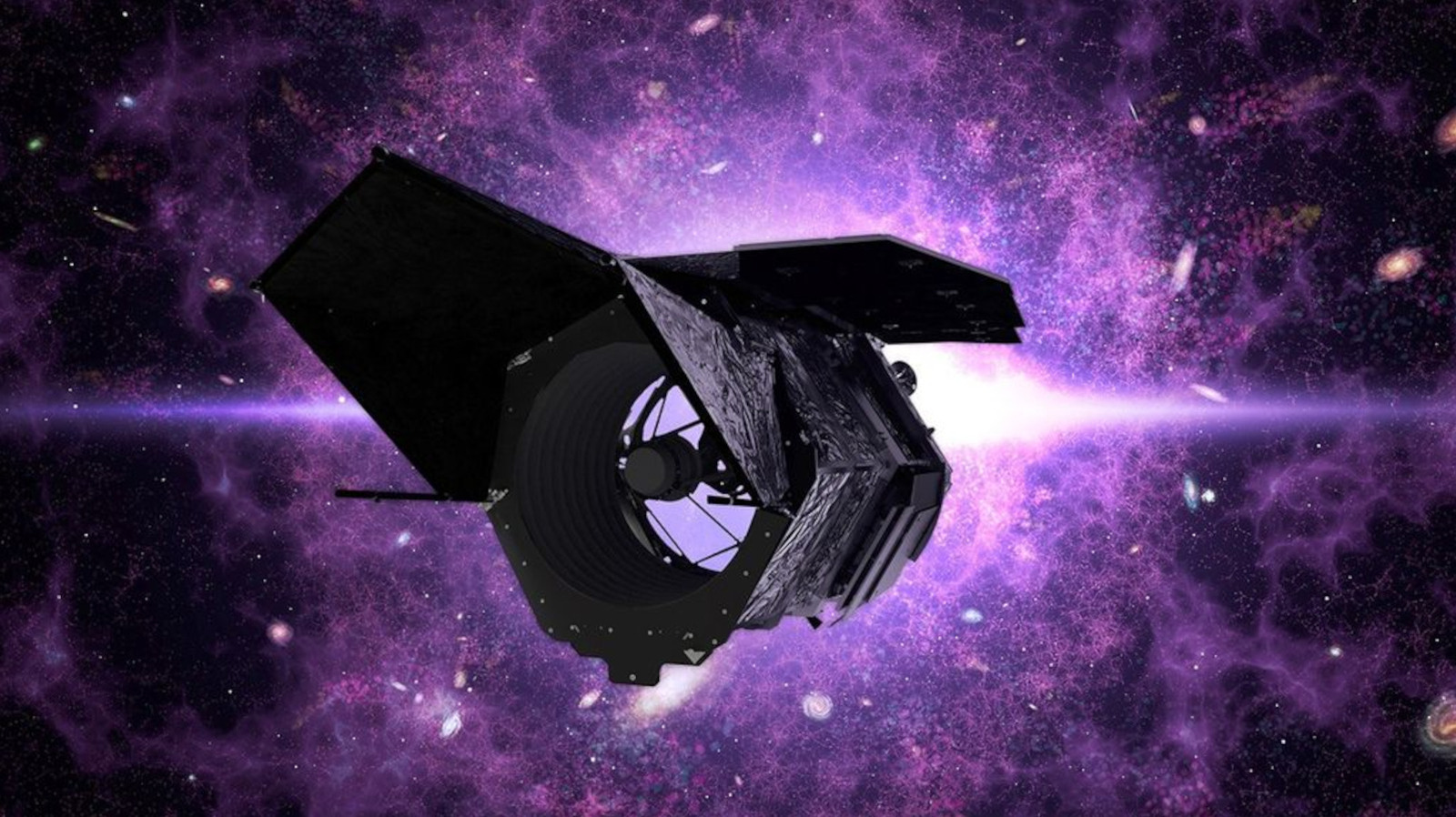
Nancy Grace Roman Telescope live updates: LIFTOFF! SpaceX Falcon Heavy launches Roman Space Telescope

Nancy Grace Roman Telescope live updates: LIFTOFF! SpaceX Falcon Heavy launches Roman Space Telescope

2026-08-30T11:38:48.575Z Roman Space Telescope reaches initial orbit on SpaceX Falcon Heavy SpaceX Falcon Heavy rocket has successfully reached orbit with the Roman Space Telescope.The flight is now in a coast phase to prepare for final deployment about 31 minutes after launch (about 7:57 a.m. EDT, or 1157 GMT). Both of the twin Falcon Heavy side … Read more

A fifth-grader in Kansas City clicked ball-and-stick atoms together in science class and asked her teacher if she’d made a real molecule — he photographed it, sent it to a chemistry professor, and at ten years old she became co-author of a published paper on a structure nobody had ever described

A fifth-grader in Kansas City clicked ball-and-stick atoms together in science class and asked her teacher if she'd made a real molecule — he photographed it, sent it to a chemistry professor, and at ten years old she became co-author of a published paper on a structure nobody had ever described

The lesson at Border Star Montessori School in Kansas City, Missouri, was as routine as teaching chemistry is. Kenneth Boehr gave his fifth graders the ball-and-stick modeling kits, the colored spheres and connecting rods that every science class has, and had them build simple molecules: water, carbon dioxide, the standards. Ten-year-old Clara Lazen did not … Read more

If the Sun vanished right now, Earth would go dark eight minutes later — but if its sound could cross space at the speed it travels through air, the Sun’s final roar would continue reaching us for nearly 14 years, because light travels 874,000 times faster.

If the Sun vanished right now, Earth would go dark eight minutes later — but if its sound could cross space at the speed it travels through air, the Sun’s final roar would continue reaching us for nearly 14 years, because light travels 874,000 times faster.

If the Sun could disappear in a physically impossible instant, the Earth would not notice it immediately. The last rays of the sun would continue to arrive already in flight. Only after those final photons crossed the gap between the Sun and Earth would the illuminated side of our planet lose direct sunlight. The familiar … Read more

Tiny Wrinkles in Graphene Turn It Into a Battery, Physicists Find : ScienceAlert

Tiny Wrinkles in Graphene Turn It Into a Battery, Physicists Find : ScienceAlert

Graphene is a very special material, only one atom thick. It has a rare combination of properties, including quantum and magnetic characteristics, that make it unique in many ways. Now researchers in the US and UK have discovered something peculiar about the electrical behavior of graphene. Microscopic wrinkles in the super-thin, super-tough material are enough … Read more

‘Hobbits’ walked more like humans than previously thought, study finds

'Hobbits' walked more like humans than previously thought, study finds

The pelvis of Homo floresiensis was more human-like than previous studies suggested, according to a new study of the species’ hip bones. The discovery adds details about how these small human relatives walked and deepens the debate about their origins. The skull of a female Homo floresiensis at the Natural History Museum in London (left) … Read more

A wood frog in North America can freeze through winter — its heart stops, it does not breathe and as much as 65% of its body water turns to ice — then thaw in spring and hop away, a feat scientists are studying for clues to preserving human organs

A wood frog in North America can freeze through winter — its heart stops, it does not breathe and as much as 65% of its body water turns to ice — then thaw in spring and hop away, a feat scientists are studying for clues to preserving human organs

Pick up a wood frog in the middle of Canadian January and feel like a rock. Ice forms crusts on the eyelids. There is no heartbeat, no breathing, no measurable nervous activity, and about two-thirds of the water in your body remains frozen in the spaces between your cells. “For all intents and purposes, this … Read more