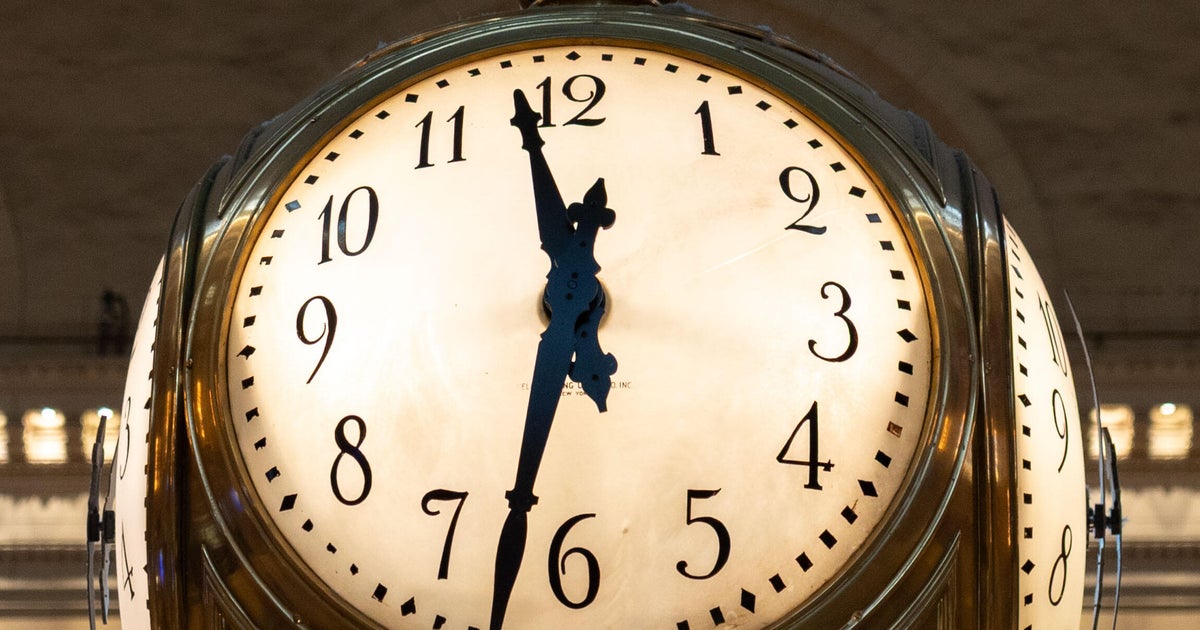
Millions of Americans got an hour of sleep this weekend when the twice-yearly time change commonly known as daylight saving time ended in 2026. Most of the U.S. went “back” an hour when clocks changed at 2 a.m. Sunday. Here’s what you should know about what is formally known as daylight saving time as the year ends: What is daylight saving time and why do we have it? US operates one hour ahead of standard time. The measure effectively “saves” an hour of morning daylight and adds it to the afternoon during the spring and summer months, when the days are longer. In the fall and winter months, when the days are shorter, the US reverts to standard time, with daylight arriving earlier in the morning. For example, in Boston on Saturday, before the time change, the sun rose at 7:16 a.m. and set at 5:39 p.m., according to the National Weather Service. On Sunday, again in standard time, sunrise will be at 6:17 am and sunset will be at 4:37 pm. The United States first adopted daylight saving time in 1918 during World War I as an effort to conserve fuel after Europe implemented its own daylight saving time, according to the Congressional Research Service. After the war, Congress repealed the clock change, but gave states the option of continuing to observe it. During World War II and the energy crisis of the 1970s, Congress introduced year-round daylight saving time in the United States, again with the goal of reducing energy consumption. These experiments did not last long. After the war, the United States let states and municipalities decide for themselves whether they wanted to keep daylight saving time and when to observe it. (Congress did not establish a uniform beginning and end for the time change until 1966.) In the 1970s, continuous daylight saving time stopped before reaching the 10-month mark. Will the United States switch to daylight saving time all year? Earlier this year, legislation to make daylight saving time year-round again cleared a major hurdle in Congress. The bill, called the Sun Protection Act, passed the House in July and moved to the Senate. The legislation would also allow states to opt out of daylight saving time before the law takes effect. President Trump, who supports the bill, accused his Republican colleague, Arkansas Senator Tom Cotton, of delaying the legislation. Trump even posted what he said was Cotton’s cellphone number on social media and urged people to call the senator to express their support for the measure. In response, Cotton noted that Congress had tried permanent daylight saving time before, only to revert to the twice-yearly time change “once Americans experienced absurdly late sunrises in the winter.” There is a ticking clock for the Senate to take action on the bill. The legislation and any other bills pending passage in Congress will expire in early January, when the new generation of lawmakers elected in Tuesday’s midterm elections takes office. If the bill dies, the effort to change daylight saving time will have to start over and pass the House and Senate before it can reach the president. Did the time change today? Yes, the time changed at 2am local time on Sunday. By 2026, the end of daylight saving time will come during the evening hours after Halloween, giving revelers an extra hour to enjoy late-night costume parties, or an extra hour of sleep to recover from their fun. But for parents of young children, the time change may have been more of a trick and less of a treat, potentially disrupting their children’s sleep schedules until they adjust. What day and time did daylight saving time end in November 2026? Daylight saving time officially ended at 2 a.m. local time on Sunday, November 1. Americans have been “going back” to the first Sunday in November since 2007, when the most recent changes to daylight saving time went into effect. A 2005 law moved the end date to the last Sunday in October. Do we lose or gain an hour when daylight saving time ends? Most Americans gained an hour when daylight saving time ended, making up for the hour they lost when clocks went “forward” in March. When will daylight saving time start again in 2027? Daylight saving time will begin in 2027, on Sunday, March 14, at 2 a.m. local time. The time change begins on the second Sunday in March, which next year falls so late because the month begins on a Monday. In 2026, daylight saving time began on March 8. The start date was also changed in 2007 to extend the duration of daylight saving time, which previously began on the first Sunday in April. Which states do not apply daylight saving time? Daylight saving time is observed in all states except Hawaii and most of Arizona. The Navajo Nation, which is located in part of Arizona, observes the time change to stay at the same time as its communities in the neighboring states of New Mexico and Utah, according to the tribe. The U.S. territories of American Samoa, Guam, the Northern Mariana Islands, Puerto Rico, and the U.S. Virgin Islands also do not observe daylight saving time. Will my phone automatically switch to daylight saving time? Phones should change overnight to show the correct time if they are set to update automatically. Apple, Google, and Samsung all have support pages with instructions for changing the clocks on their devices. Carriers like Simple Mobile and Straight Talk have also posted steps online for checking settings on other phones. More from CBS News Go deeper with The Free Press in: