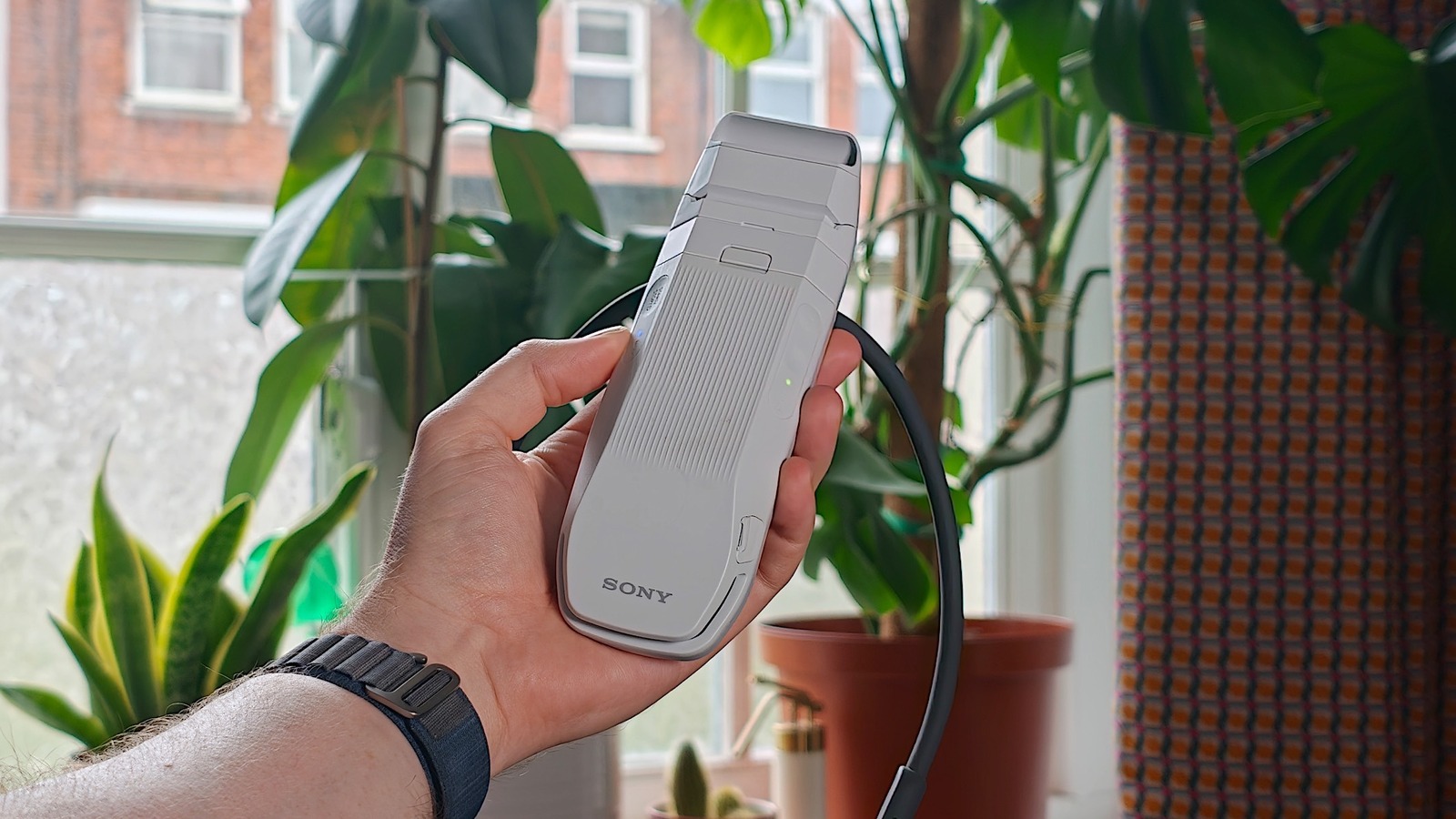
Earlier this month, temperatures where I live in London reached 100.6 degrees Fahrenheit. It was the hottest day of the year in the country and part of the third heat wave of an oppressive summer. I’m not cut out for this. The UK is not made for this. Air conditioning remains a rarity outside shops and offices: research from the University of Reading estimated that there is air conditioning in only 4.3 percent of English homes, compared to 90 percent of American homes. The trains I ride on don’t have it either, nor do many bars, restaurants and other places I frequently visit. When the second heat wave hit, I was willing to do anything to get relief. Sony has experimented with portable air conditioning technology for years, but for most of that time the Reon Pocket series was a curiosity. They were hard to find and performance was mediocre. The company continued to improve the amount of cooling the device can offer, while making it more comfortable, less annoying, and more energy efficient. The $260 Reon Pocket Pro Plus is the latest model in the series. The main thing is that it is surprisingly effective in cooling the body. The device uses the Peltier effect: a long, electrically cooled metal plate is placed against the back of the neck and upper spine. That positioning is the whole trick. So much of your circulatory system passes through that area that Reon effectively becomes a cooling station for your blood flow. With the Pro Plus, Sony says it can lower the plate two degrees Celsius (3.6 Fahrenheit) more than the previous model: a 20 percent increase in cooling performance in a single generation. Hot air is blown up and out through an exhaust that peeks out above the neckline of the clothing. The Pro Plus comes with an attachment that extends the exhaust even further and allows you to adjust its angle, which was essential for me with anything that had a thick collar or hem: shirts, jackets, and structured necklines. If you only wear a t-shirt, you can use the shorter vent. While you can hear the fans whirring in a quiet room, the device is remarkably quiet, especially compared to many portable electric fans. Sony’s built-in algorithms monitor temperature changes on the device and in the surrounding area. The Pro Plus includes a smart tag that you can put on your bag that adds another data point by tracking ambient temperature and humidity. In practice, the label was useful at times but unreliable at others. It detaches easily, the reconnect button is fiddly, and it’s only as effective as you remember to take it with you; I regularly grabbed a different bag (or no bag at all) and left the label at home. Honestly, I couldn’t detect a tangible difference in cooling when it was present. The Reon Pro Plus worked just as efficiently without it. Outside of these summer months, the Pro Plus also has a four-level warm mode for winter, but I haven’t tried it yet. Obviously. Sony says the Pro Plus can cool for up to 10 hours on its second-highest manual setting, or up to 15 hours in Smart Cool mode, where it adjusts the output based on its sensors. As with any refrigeration product, mileage will vary widely depending on context and environment. During the peak heatwave days (and World Cup matches in pubs without air conditioning) I got closer to four or five hours. I figured I couldn’t charge it while wearing it, but you can, if you’re willing to have a USB-C cable sticking out of the bottom of your clothes. Mat Smith for Engadget A real improvement is the physical buttons on the device itself. You can do almost everything the companion app offers without your phone: turn on, switch between manual and smart modes, and adjust the cooling up or down. Sony says the Y-frame neckband that keeps it in place has 40 percent more holding power compared to older models. I haven’t used the immediately preceding iteration (I tried a very early version of this technology years ago) but it holds up surprisingly well. However, it could be more subtle. Under a jacket or blazer, or any more structured garment, the silhouette is softened. But I mostly wear looser shirts and T-shirts, and in them it looks like a robot insect has been attached to your neck. People will notice. People noticed. Some assumed it was a medical device, and it certainly looks that way. The combination of a cold surface and a warm body also creates a fair amount of condensation under the shirt, although I prefer that to sweating. Fortunately, the Pro Plus is splash and sweat resistant.