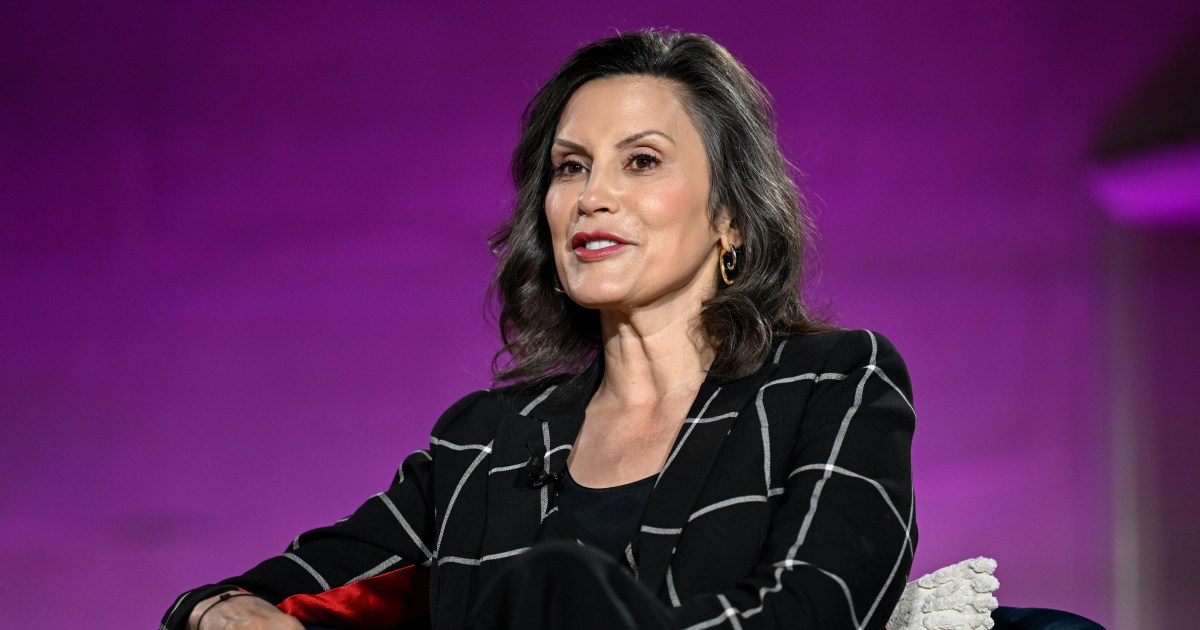
Michigan Gov. Gretchen Whitmer waded into her state’s divisive Democratic Senate primary Friday, endorsing Rep. Haley Stevens.
Subscribe to read this story ad-free
Get unlimited access to ad-free articles and exclusive content.
“As governor I’ve had one strategy: Get things done. And that strategy informs everything that I do, and that’s why I’m endorsing Haley Stevens for the U.S. Senate,” Whitmer said in a video Stevens shared on X. “Just like me, Haley will do whatever it takes to get things done for the people of Michigan, and we need her now more than ever.”
Whitmer is backing Stevens in the Aug. 4 Senate primary over former public health official Abdul El-Sayed, whom she beat in the 2018 Democratic primary for governor. Whitmer’s team did not immediately respond to a request for comment.
Voting by mail is already underway. Early, in-person voting begins Saturday. And the primary winner will soon face former Rep. Mike Rogers, who is running unopposed for the Republican nomination, in a battleground general election.
Whitmer will quickly hit the campaign trail for Stevens. The governor, according to Stevens’ team, was expected to appear with her at a Friday evening event in Detroit with Rep. Jim Clyburn, D-S.C.
In her post accompanying Whitmer’s video, Stevens said she is “absolutely thrilled” to have the support. Whitmer, Stevens added, “is a champion for our state, she understands the stakes of this race and why it’s so important we elect the strongest Dem in this primary, and she gets stuff done for Michigan.”
Whitmer’s endorsement could be a windfall for Stevens. The governor, who is prevented by term limits from seeking a third term this year, remains popular with Michigan voters. A May poll by the Detroit Regional Chamber measured her job approval rating at 52%.
A more recent poll of 500 likely Democratic primary voters, conducted this month by the Detroit News and WDIV-TV, found that half of those undecided in the party’s Senate primary said a Whitmer endorsement would make them more likely to support a candidate.
That same poll showed a close Senate race, with about 34% of voters saying they would “definitely” support Stevens and 34% saying the same about El-Sayed.
Hints that Whitmer might be weighing an endorsement came earlier this week, when the governor expressed concern about “some of the rhetoric” in the primary between Stevens and El-Sayed.
“The corporate establishment has closed ranks and made their pick — now, Michigan voters will get to make theirs,” El-Sayed spokesperson Roxie Richner wrote in a text message to NBC News after Whitmer’s endorsement landed.
In the run-up to the governor’s Friday endorsement, former Whitmer aides, who were granted anonymity to speak candidly about the contest, said they would be surprised if she waded into the deeply contentious and heated primary.
“Stepping into this primary feels exceptionally messy,” one former official said. “Unless she felt that the future of Michigan was on the line.”
But among pro-Stevens donors and elected officials who share Stevens and Whitmer donors, there were efforts afoot to nudge the governor to offer a last-minute endorsement, one person familiar with the effort said. Still, that person noted they were “not super optimistic” that Whitmer would engage in the race.
When El-Sayed and Whitmer faced off in 2018 for the party’s gubernatorial nomination, the campaign turned into a similarly brutal fight. Following her election, Whitmer offered El-Sayed a post in her administration — but he rejected the offer, according to a person with knowledge of the episode who described their relationship as “tepid at best.”
A person familiar with Whitmer’s thinking, who was granted anonymity to provide insight into the governor’s endorsement, said the decision had more to do with being pro-Stevens than anti-El-Sayed. This person added that Whitmer sees Stevens as aligned with her on policy priorities for Michigan.
“She’s someone who the governor sees as another leader who’s focused on getting things done for Michigan and putting Michigan first,” this person said, adding that Whitmer “has a lot of respect for Abdul and his supporters, but she wanted people to know where she stood, and this is about Haley Stevens being the best person to be Michigan’s next U.S. senator.”
Hundreds of thousands of Michiganders have already cast ballots ahead of Friday, which could blunt the impact of Whitmer’s decision. Already, many top officials in Michigan have offered Stevens their backing, including retiring Sen. Gary Peters and Attorney General Dana Nessel, as well as former Sen. Debbie Stabenow, but those endorsements have not broken open the contested race.
El-Sayed, who is running on a left-wing platform that includes criticizing Stevens’ support for Israel and her donor network, has endorsements from Sen. Bernie Sanders, I-Vt., and Rep. Alexandria Ocasio-Cortez, D-N.Y.
Sanders and Ocasio-Cortez rallied for him last weekend in a series of stops across the state.
“With all due respect to Congresswoman Stevens, everyone knows that this is not an election between her and Abdul El-Sayed,” Sanders said. “This is an election between Abdul and the billionaire class.”
Michigan Republicans reacted to the endorsement by framing it as a sign that the Democratic establishment is “beyond panicked” by the primary contest.
“However, Whitmer closing ranks behind Stevens does not change the fact that she is every bit as extreme as Abdul El-Sayed,” said Greg Manz, a spokesperson for the Michigan Republican Party.