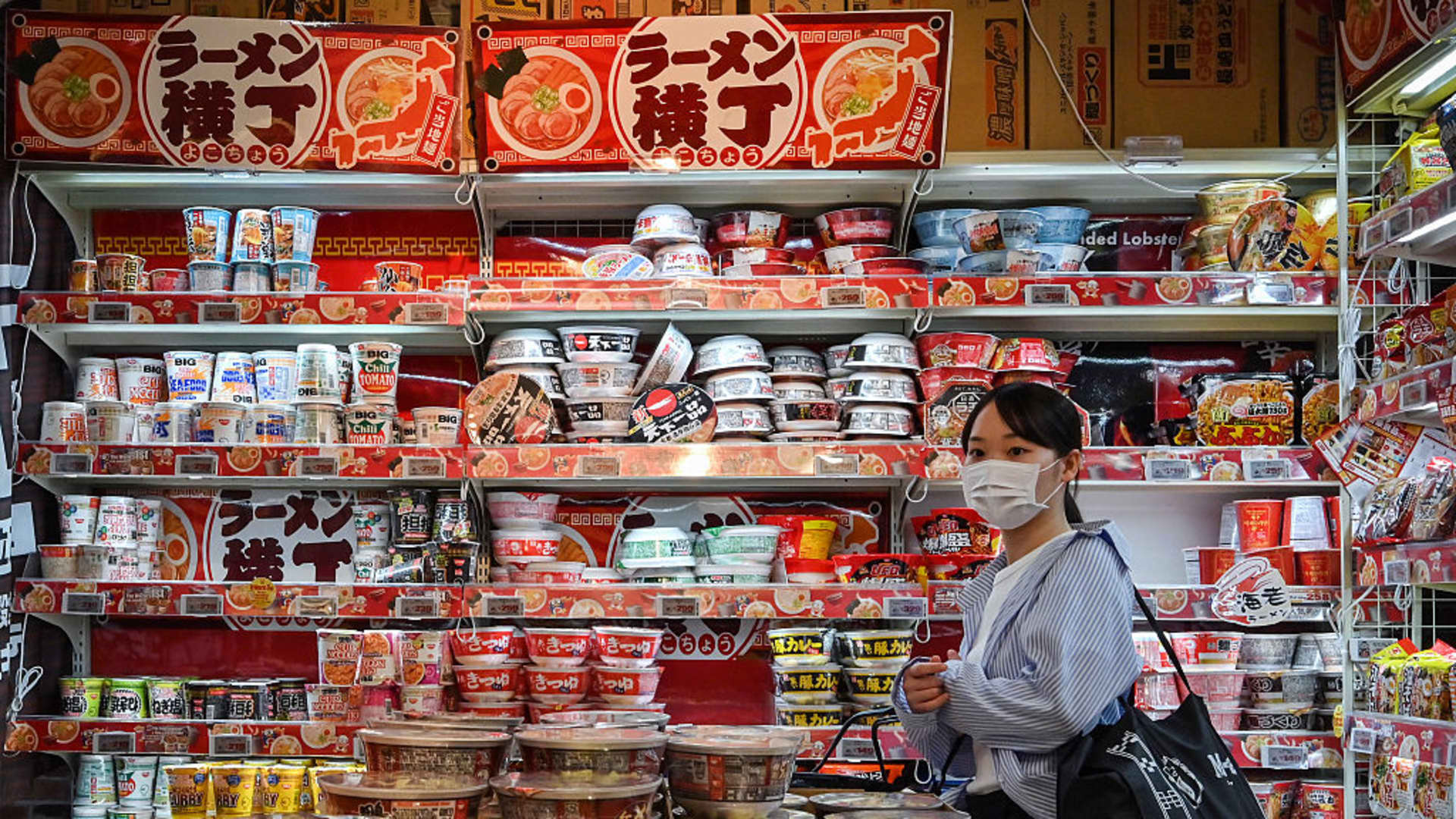
This photo taken on April 21, 2025 shows a customer walking past a display of instant noodles at a branch of Japanese discount retailer Don Quijote, also known abroad as Don Don Donki, in the Shibuya district of central Tokyo. (Photo by Richard A. Brooks / AFP) (Photo by RICHARD A. BROOKS/AFP via Getty Images) Richard A. Brooks | afp | Getty Images Japan’s economy expanded 1.1% in the second quarter on an annualized basis, missing expectations for 2% growth, as weaker domestic demand offset strong exports. The figure compares with 2.1% in the previous quarter. In year-on-year terms, the country’s economy expanded 0.7%, compared to 0.5% in the first quarter. This is the first full quarter to include the impact of the Iran war, which has raised energy prices for businesses and households. Following the data release, the Nikkei 225 rose 0.43%, while the benchmark 10-year Japanese government bond yield stood at 2.88%. The yen strengthened slightly against the dollar, trading at 159.1. Exports were the main driver of growth, with the country’s shipments exceeding expectations during all three months of the quarter. However, this was contributed to by the weakness of the yen, rather than simply higher shipment volumes. Earlier this month, the Bank of Japan released its outlook for economic activity and marginally raised its GDP growth outlook to 0.6% from 0.5% for its 2026 fiscal year ending in March 2027. “Japan’s economy is expected to continue growing moderately, albeit at a slowing pace,” the central bank said, pointing to high crude oil prices due to the conflict in the Middle East. However, this is likely to be partially offset by government measures to curb high household oil prices, as well as an increase in global demand related to AI. Many Japanese companies are involved in the semiconductor supply chain. This is breaking news; Please check back for updates. Choose CNBC as your preferred source on Google and never miss a moment from the most trusted name in business news.