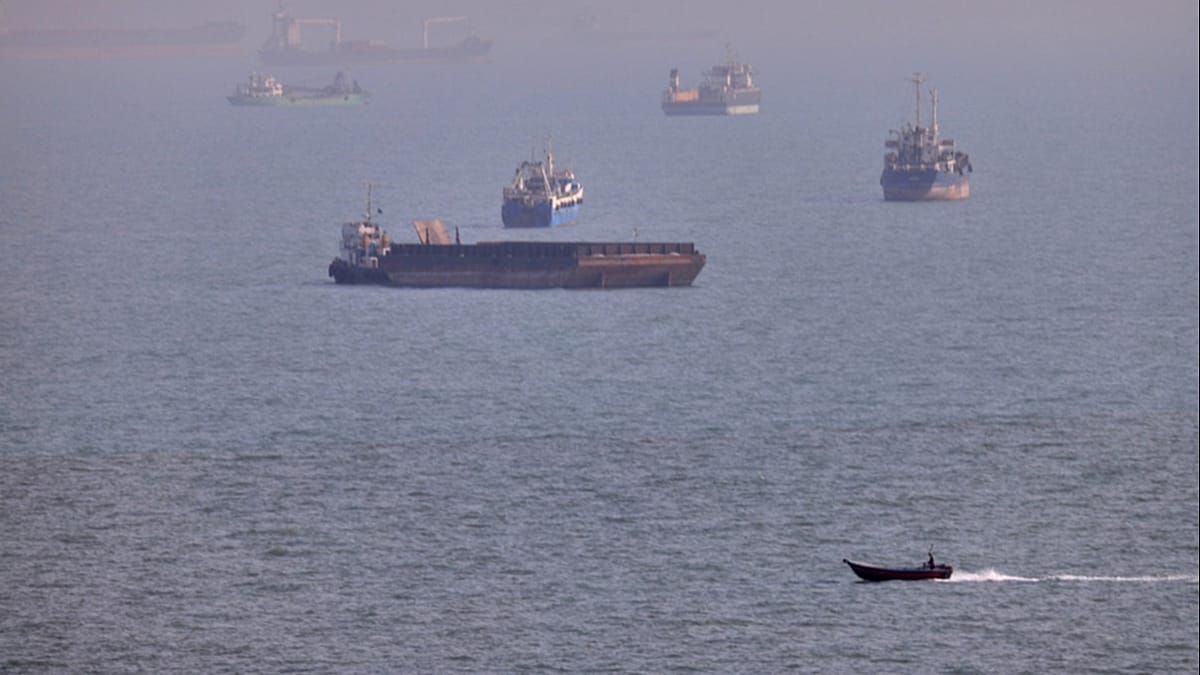
Iran said on Monday it launched attacks on US military positions in Jordan in response to Washington’s first attack on its territory in a month, marking a new flare in the six-month war. Tehran’s elite IRGC said it attacked two US military air bases with ballistic missiles in Washington’s ally Jordan, causing “serious damage”. Shortly after Iran’s announcement, the Jordanian army claimed to have intercepted eight missiles, without specifying their origin. The strikes came after the United States revealed on Sunday that it had attacked Iranian rocket launchers on Larak, a small island in the Strait of Hormuz. Washington said its strikes were aimed at preventing Iran from launching more sea mines into the strait, days after announcing it had completed the removal of explosives from the strategic waterway. “U.S. forces took limited, targeted action against IRGC minemining forces that pose an imminent threat in the Strait of Hormuz,” U.S. Central Command wrote in a post on through this essential waterway,” he said. The IRGC said the US strikes caused “casualties.” Attacks add to economic pressure The exchange of fire came just days after the war reached the six-month mark amid little to no visible progress in negotiations between the two sides to end it. In recent weeks, US President Donald Trump and his administration prioritized “economic warfare” over military strikes against Iran amid intense domestic and international pressure to end the military campaign, which Washington said would be short-lived but has since stretched into months with no end in sight. Tehran has blocked the Strait of Hormuz, a strategic sea route through which about a fifth of the world’s oil passed before the United States and Israel launched the opening salvo of the war on February 28. Iran launched a near-daily campaign of missile and drone attacks against US facilities and allies in the Gulf region, hitting targets in Qatar, the United Arab Emirates, Saudi Arabia, Bahrain, Kuwait and Oman, among others, dragging the entire region into the conflict. Diplomatic efforts, led by two main mediators, Qatar and Pakistan, have been trying for months to end the war. While a ceasefire was agreed in April and a memorandum of understanding for a final peace deal was signed in June, no agreement has been reached and Washington has since declared “economic war” against Tehran. A US naval counterblockade on Iranian ports is reducing oil supplies in Iran during a shortfall in domestic production, as the United States increases pressure. The April ceasefire ended the most intense fighting, but sporadic attacks, mainly around the Strait of Hormuz, and the collapse of the interim agreement over the summer have darkened prospects for a final peace deal. The last US attack on Iran before Sunday came on July 29 in response to “an attempted surprise attack against US forces” in the region, the US military said. In early July, CENTCOM attacked Iran for 13 consecutive nights. Tehran’s closure of the strategic waterway has caused significant economic damage around the world through logistics and supply chain crises, price increases and fertilizer and energy shortages. Oil prices rose after news of new US attacks on Iran. Brent crude oil, the international benchmark, rose again above the symbolic $90 per barrel for the first time in a month. During the height of the fighting, oil prices surpassed $120 a barrel for the first time in decades. Additional sources • AFP