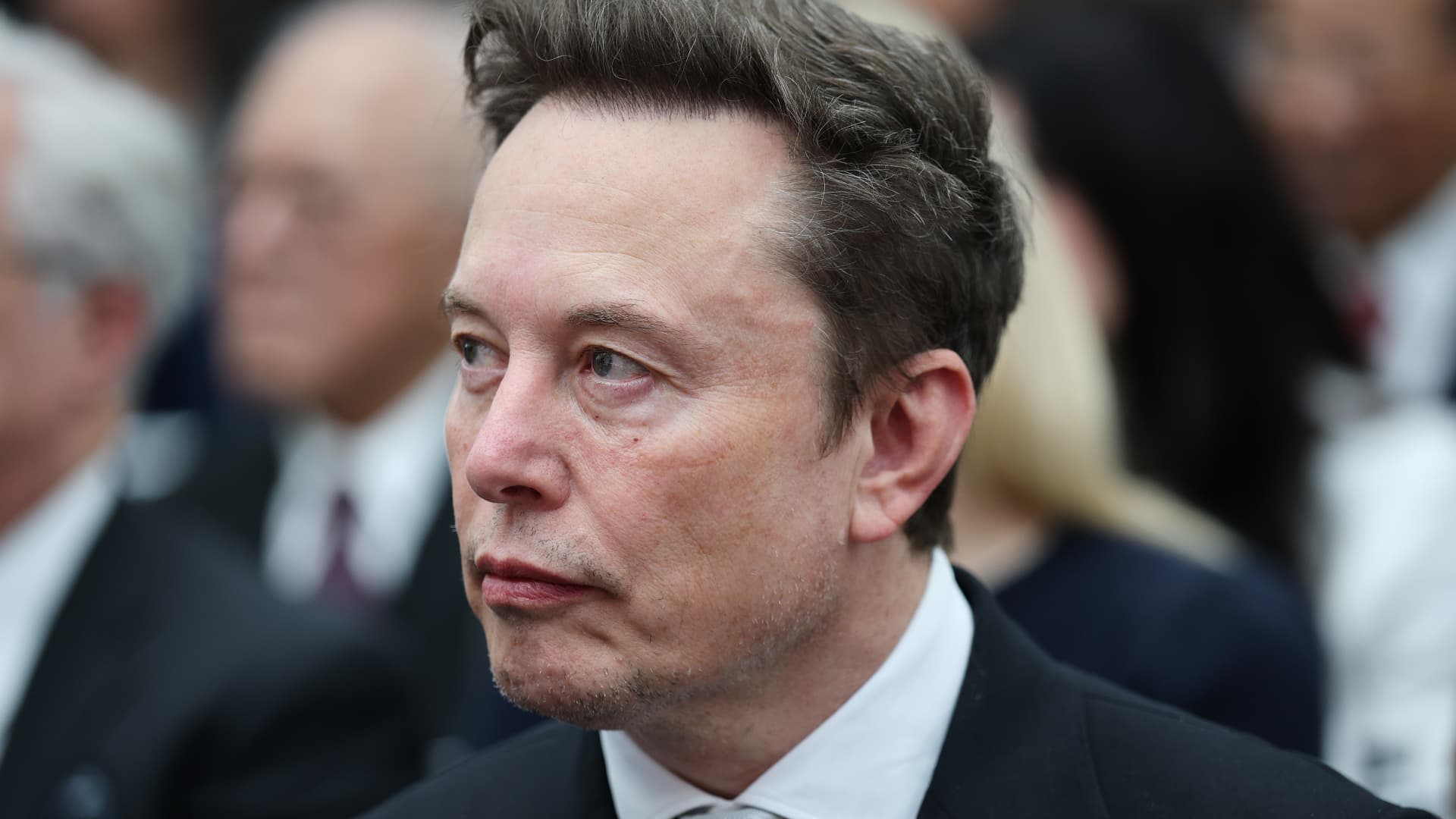
SpaceX CEO Elon Musk speaks to reporters as President Donald Trump looks on outside the White House in Washington, Sept. 29, 2026.Tierney L. Cross | The Washington Post | Getty ImagesElon Musk said Monday that he will give every child in America a piece of SpaceX next year. He seemed to suggest the gift could land in Trump Accounts, thanking Brad Gerstner, the program’s architect, for “helping get this done” in a comment on Musk’s announcement comes weeks after the US Treasury Department implemented guidelines for stock donations to Trump Accounts, also known as 530A accounts. These include restrictions on the sale of donated shares: Children who receive them generally cannot sell for five years, even if the company is in financial trouble. The temporary Treasury regulations, subject to review after public comment, are intended to encourage stock donations. But they also give donors unusual influence over children’s investments, according to lawyers and philanthropy experts who spoke to CNBC. Read more CNBC Personal Finance Coverage In the broader world of charitable giving, donors can generally express preferences about how their donations are handled, but the receiving organization or trustee retains final authority, said Carolyn Schenck, an attorney and former IRS national fraud counsel. However, under the new Trump Account rules, it is “the donor who dictates the terms of the donation,” he said. Representatives for Musk, Gerstner and the Treasury Department did not respond to CNBC’s requests for comment on the proposed gift. According to the Treasury, about 70 million Trump Accounts have been created, including more than 60 million through a recent automatic enrollment effort. Trump Accounts are available to all U.S. citizen children under age 18 with valid Social Security numbers. Musk would be the second philanthropist to publicly announce a stock pledge to Trump Accounts: SpaceX President Gwynne Shotwell pledged earlier this summer to use the Trump Account program to donate about 2 million shares. That gift has not yet been distributed. What Stock Sale Restrictions Mean for Children Trump Account beneficiaries are not free to sell in circumstances that other investors might otherwise. Under the new rules, families cannot reject shares gifted to Trump Accounts and generally cannot sell them until five years or the end of the calendar year in which the beneficiary turns 17, whichever comes first. or legal issues arise that could prompt an investor to sell. “Giving families more options and more ability to hold the assets that they believe are best for them and their children’s future … would be a good thing,” said Adam Michel, director of tax policy studies at the Cato Institute, a libertarian think tank. “But this isn’t really that, because you have no choice in the asset that goes into your child’s account, and then you also have no ability to sell it during the five-year holding period.” The temporary regulations also require that if any gifted shares are sold too soon, the trustee must purchase the same number and class of shares “as soon as practicable.” According to Schenck, this increases the risk of loss to beneficiaries if the price of the shares increases before the trustee buys them back. Ultimately, the beneficiaries would bear that cost. “If the fiduciary makes an investment error, then the focus is usually on restoring value to the beneficiary. But here, the focus seems to be on restoring the specific value itself,” said Schenck, who left the IRS in 2025 to work at the law firm Caplin & Drysdale. CNBC has learned that the buyback provision is intended to quickly correct business errors, although the regulations do not explicitly state that purpose or limit the requirement to accidental sales. temporary regulations cite donor interests. According to the text, “donors are attracted by the hope that a contribution of stock with a five-year holding period can lead beneficiaries and their families to feel that they have a stake in the fate of the corporation.” Restricting sales virtually eliminates the risk to donors and their companies that Trump Account beneficiaries will sell gifted shares en masse, liquidating a position large enough to depress stock prices, according to Jane Ditelberg, chief tax strategist at Northern Trust. “Certainly, for people who have wealth highly concentrated in a group,” Generally speaking, donors can get a greater tax benefit by donating appreciated stocks to charities than by donating cash, since they can claim the charitable deduction and avoid capital gains tax on the profits. A Treasury official told CNBC that the rules are aimed at building long-term wealth for children, especially in low-income families, and encouraging giving. “The top donors we have recruited are motivated by a desire to help children build generational wealth and get a head start on their financial future,” the official said in a written statement. The Treasury has said it is in talks with Trump Account donors ranging from “small to mega,” but has identified no pledges of additional action since Shotwell’s announcement in July. children. In documents explaining the temporary rules, the Treasury pointed to Michael and Susan Dell’s cash pledge of $6.25 billion and unspecified “similar donations,” while acknowledging uncertainty over whether that level of donations will continue. “It is unclear whether this level of donations can be sustained in the long term or if it is concentrated as Trump accounts are launched,” the text states. Legal issues surrounding stock donations. Trump Account funds generally can be invested only in low-cost index funds and exchange-traded funds. In the temporary regulations, the Treasury said that directly contributed shares are different because it does not use account funds for the purchase. But Ditelberg said a court could conclude that requiring an account to hold individual stocks is still an investment decision, an argument that may carry more weight after the Supreme Court overturned Chevron’s deference. Thanks to the 2024 ruling, courts no longer have to defer to federal agencies’ interpretations of statutes when the language is unclear. “These accounts will have to remain invested in those stocks, and the question is whether that directly contradicts the terms of the statute,” he said. “I can’t tell you how a court would rule, but I could say there is room for a challenge here.” Ditelberg added that state law grants the right to give up an asset. He said it’s unclear how the Trump Account’s donation procedures would accommodate that right. Schenck noted that the Treasury has broad authority to set the terms of the Trump Accounts, and it is the Treasury, not the original stock donor, that formally requires that the stock be held. The arrangement also differs from traditional charitable donations. For example, donors who contribute shares to donor-advised funds can recommend how the assets are managed, but the sponsoring charity retains ultimate control, including the authority to sell the shares. This is necessary to meet the IRS’s legal standards for obtaining a tax deduction on a charitable contribution. “A key principle is that the charity must have genuine control over the donated assets, including the ability to determine when to sell them, for the donation to qualify as a full charitable contribution,” said Gil Nusbaum, chief administrative and legal officer of the National Philanthropic Trust. Experts say the broader question is whether Treasury’s approach aligns with the law enacted by Congress. “Musk’s donation would be incredibly generous, but it doesn’t change the fact that Congress intended these accounts to be diversified,” Michel said. “It wouldn’t be a bad innovation for Congress to allow tax-free gifts of appreciated assets, but changes to the law should come from Congress, not by administrative fiat.”