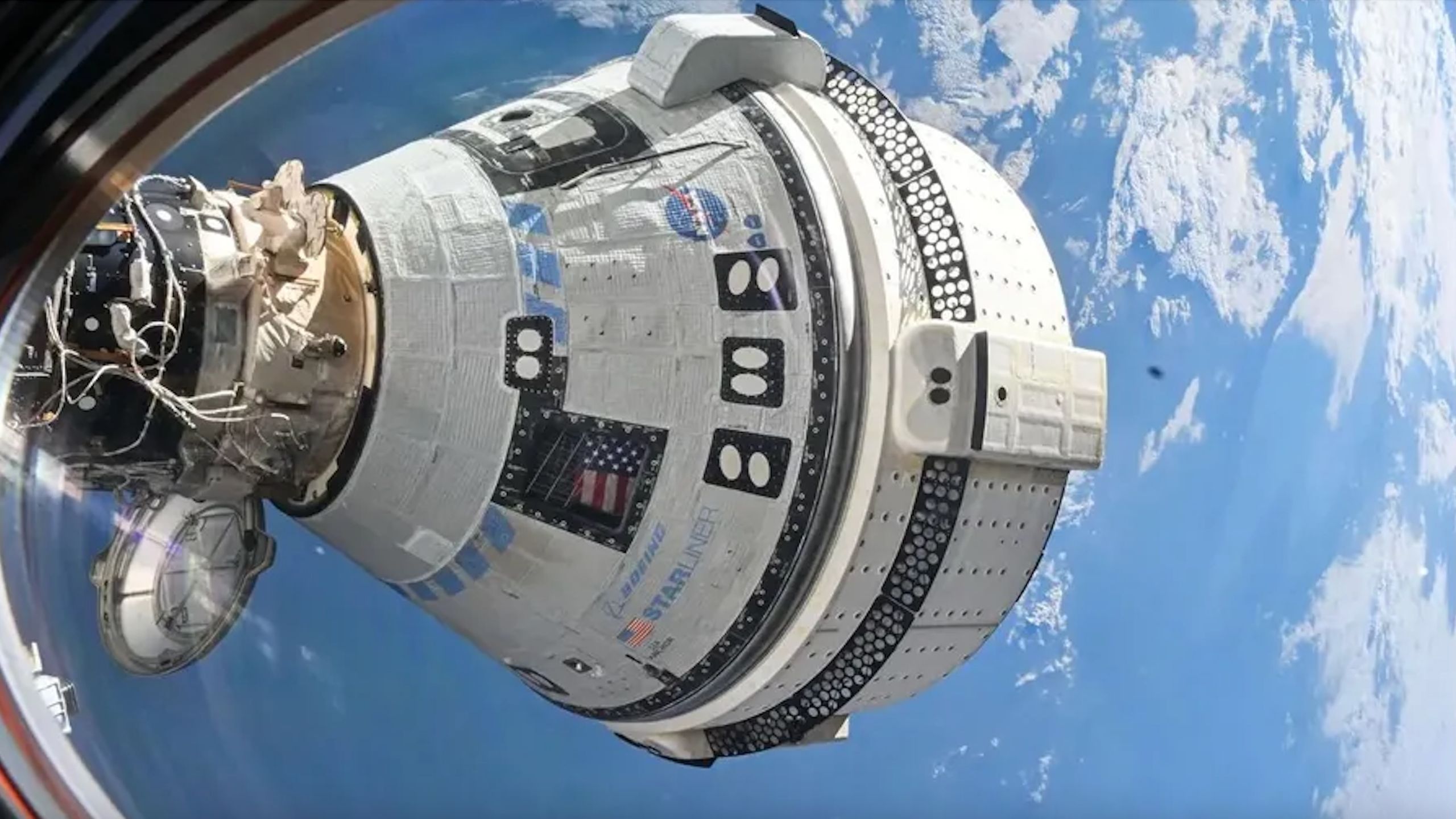
Boeing’s Starliner spacecraft will carry astronauts again, but not until 2028. If all goes as planned, Starliner will make an uncrewed test flight to the International Space Station (ISS) in December or January of next December or January, and then carry astronauts sometime in 2028, NASA announced in an update today (Sept. 28). It’s a vote of confidence for a vehicle that has experienced serious setbacks in its three test flights to date. Starliner took off for the first time in December 2019, on an unmanned mission to the ISS called Orbital Flight Test (OFT). However, the capsule failed to rendezvous with the laboratory in orbit; was stranded in the wrong orbit after suffering problems with its onboard timing system. Starliner arrived at the ISS on the unmanned OFT-2, which launched in May 2022. But it wasn’t a perfectly smooth ride: The Boeing vehicle overcame the failure of two of its orbital maneuvering and attitude control thrusters while pursuing the station. You might like Then came Crew Flight Test (CFT), Starliner’s first astronaut mission. CFT launched in June 2024 and sent NASA’s Suni Williams and Butch Wilmore to the ISS for a planned 10-day stay. However, shortly after Starliner was deployed from its rocket, some problems arose, namely helium leaks and the failure of five of Starliner’s 28 reaction control system (RCS) boosters. As in OFT-2, Starliner made progress and arrived safely at the ISS. But NASA ultimately decided not to risk sending Williams and Wilmore back to Earth in the vehicle. Starliner returned without a crew in September 2024, and the two astronauts remained on the ISS for six more months, finally returning home in a SpaceX Crew Dragon capsule the following March. Starliner has been grounded ever since, as SpaceX continues to rack up astronaut missions for NASA. The agency awarded commercial crew contracts to both companies in 2014. SpaceX successfully flew its version of CFT in 2020 and is now wrapping up its 12th operational astronaut flight to the ISS for NASA; that mission will end shortly after the launch of SpaceX’s Crew-13 next Thursday (October 1). Starliner approaches the ISS during the crew flight test mission in June 2024. (Image credit: NASA) However, NASA has long emphasized the importance of having more than one private astronaut taxi in operation, which is why it has continued to invest in Starliner’s success, even after declaring the CFT a “Type A mishap,” the most serious type, last February. And a joint team from Boeing and NASA has addressed the problems plaguing the CFT, agency officials told us today. For example, the company traced helium leaks to valve problems—specifically, degradation that occurred after exposure to nitrogen tetroxide, the oxidizer in Starliner’s propulsion system. What to read next “That’s why the seal material was changed,” said Dana Weigel, manager of NASA’s Low Earth Orbit Program, during a press conference today. “We also realized that we needed to select seals that were on the broader side of the tolerance spectrum,” he added. “Boeing has already implemented all of those changes on the Starliner-1 spacecraft.” Starliner-1 is the next uncrewed test flight to the ISS. Starliner-2 is the manned mission scheduled to take off in 2028, probably in the middle of that year, Boeing representatives said today. Engineers have also taken steps to ensure that a CFT-like thruster anomaly does not affect future Starliner flights. “We determined that the crew module thruster anomaly is the result of corrosion,” Weigel said. “Boeing has implemented procedures to remove hydrazine and also to perform a continuous purge to isolate those propellants from the environment,” he added. Not all of these changes will be tested on Starliner-1, which explains why there will be such a long gap between it and Starliner-2. “After the flight [Starliner-1]”Boeing will also implement other improvements throughout the spacecraft, including the installation of new crew module thrusters, batteries and minor modifications to the parachute system to increase performance and reliability in support of system certification,” they added. We already know one person who will fly Starliner-2: NASA announced today that veteran agency astronaut Woody Hoburg will command the mission. crewmates.) Hoburg expressed confidence in Starliner and the Boeing-NASA teams that will work on the vehicle in the lead-up to Starliner-2. “I’ve flown many types of airplanes and let me tell you, Starliner is a pilot’s spacecraft,” he said during today’s press conference. “Starliner provides the crew with real-world capabilities to respond to off-nominal events. These were exercised during CFT and, along with our expert flight control team, Starliner’s manual control capabilities were instrumental in achieving safe docking despite numerous thruster failures. “Boeing’s commercial crew contract is currently running through Starliner-6. Starliner-1 to Starliner-4 will launch on United Launch Alliance (ULA) Atlas V rockets, as did OFT, OFT-2 and CFT. But the venerable Atlas V is out of production and headed toward retirement, so Starliner-5 and Starliner-6 will have a different rocket ride: ULA’s new Vulcan Centaur. However, Vulcan has not yet been certified to launch manned missions, so work will also need to be done in that regard and NASA will foot part of the bill. “So both upgrades to the spacecraft, including the thrusters and everything you’ve heard summarized today, plus the Vulcan certification, are $359 million. [dollars]”Weigel said during the press conference. Today’s Starliner update came on the heels of other business news about the crew. On September 19, NASA announced that it had awarded SpaceX $946 million to fly three additional astronaut missions to the ISS: Crew-15, Crew 16 and Crew-17, which are expected to launch in 2030. SpaceX plans to retire Crew Dragon and its workhorse Falcon 9 rocket around the same time. The company believes which is completely The reusable Starship megarocket will be up and running by then, serving all your spaceflight needs. That may well be the case: Starship reached orbit for the first time today, deploying the first 26 satellites for SpaceX’s planned 100,000-unit Starlink V3 megaconstellation.