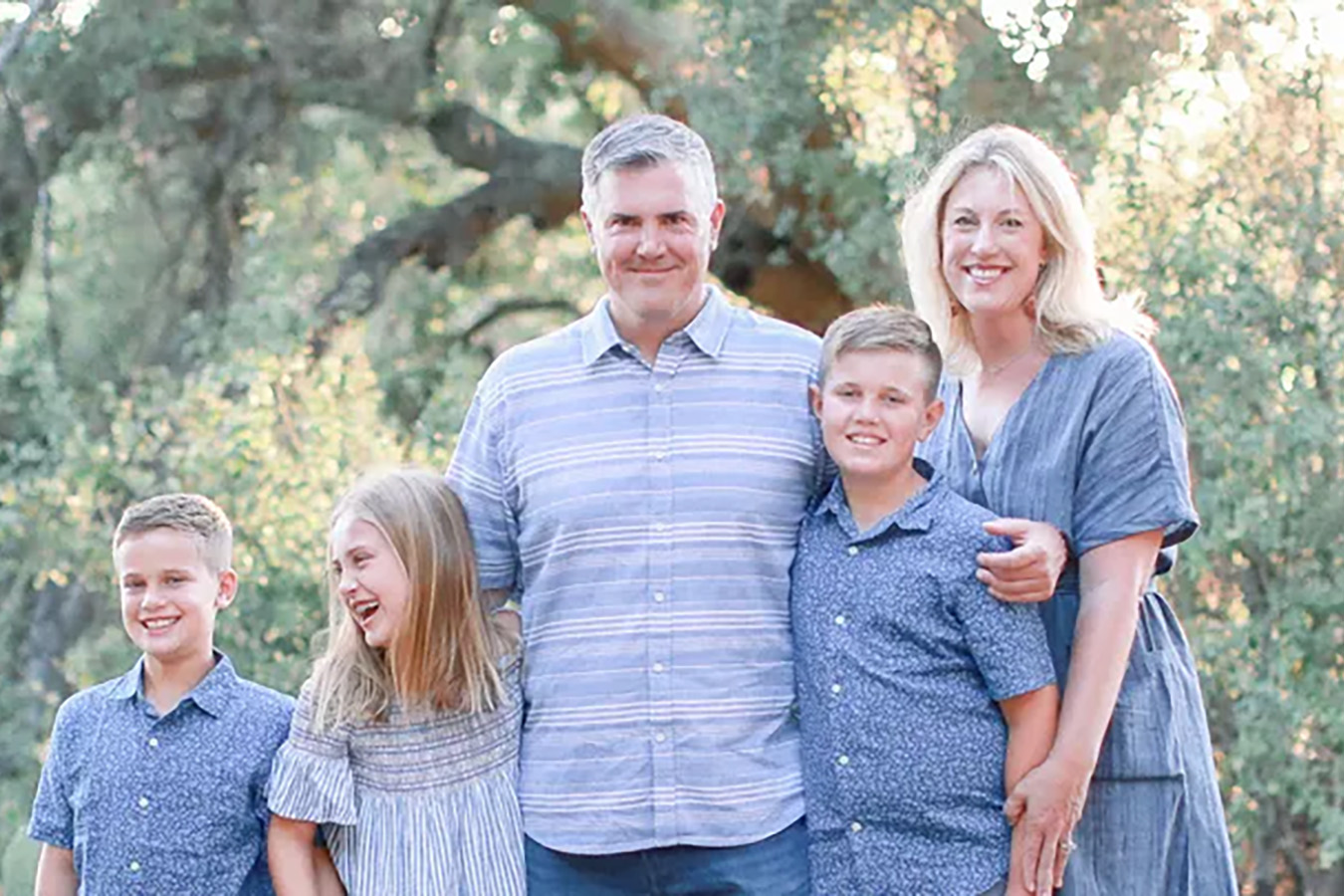
When Dustin Matteson moved his family to Orange County’s idyllic Ladera Ranch community in 2011, at first, it seemed like the perfect place to raise a child. Its green, open spaces and community-oriented atmosphere made it an ideal place for their 3-year-old son, Brody, to meet and play with other kids his own age. As he got older — against his father’s wishes — he joined the Santa Margarita Catholic High School football team, becoming a proud offensive lineman. But just before his 16th birthday, his father noticed something was wrong. Article continues below this adBrody was experiencing much more back pain than usual and began to complain. Initially, his parents thought it was related to football practice, so they brushed it off — but when it got worse, they began to worry. After seeing a lump on Brody’s spine through an MRI, a subsequent biopsy confirmed their worst fears: Somehow, their son had developed Ewing sarcoma, a rare tissue and bone cancer that affects about 200 to 240 children per year. After the diagnosis, “it escalated very quickly,” Dustin Matteson told SFGATE. Suddenly, Brody, a budding football player, had to use a wheelchair, receiving over a dozen rounds of chemotherapy and proton therapy while battling nerve damage in his right leg, fungal infections and secondary forms of cancer. Brody’s mother quit her job to take care of him, while Dustin worked remotely in the hospital as his son slept.“I’m going to be honest,” his family’s GoFundMe reads. “The odds are very long at this point, but if anyone is able to overcome this it’s Brody. He’s so amazingly tough and strong and his body just keeps fighting.” For a brief period, he was in remission — but then, the sarcoma returned. On March 22, 2026, Brody died of treatment complications. He was just 17. Before his death, he told his parents that he was just glad it was him instead of his younger siblings. Article continues below this adHe was far from the only person to fall ill at Ladera Ranch.Ladera Ranch in Orange County, Calif.Matt Gush/Getty Images/iStockphotoIn total, about a dozen cancer cases have been reported in the community since 2013, including synovial sarcoma, another rare form of cancer that occurs in the soft tissue. Just one or two out of every million people are diagnosed with the disease in the U.S. each year, which typically develops in those under the age of 30.The second-most common bone cancer among kids and young adults, Ewing sarcoma often develops between the ages of 10 and 20, usually forming during puberty in the pelvis, legs or chest wall. Common symptoms include fever, pain and swelling around the tumor, and paralysis and incontinence if the tumor is developing around the spinal region. Studies show that it’s also highly sensitive to genotoxins: chemicals or other agents that can damage DNA and chromosomes and potentially lead to cancer development.Article continues below this adIn January, Brian Dalton lost his 23-year-old daughter to desmoplastic small round cell tumor, another exceptionally rare form of cancer that carries the same Ewing sarcoma gene fusion found in other instances of cancer at Ladera Ranch, KTLA-TV reported. Her father told the outlet that she often spent time in the community as a child and that her family lived nearby. Another resident whose husband died a few years ago told the publication that, oftentimes, she saw employees in hazmat suits while spraying pesticides. “There’s so many times that I walk around and they’re spraying, and I ask, you know, what they’re spraying and they’re not telling us,” another resident, Liesl Heidt, said in a July 22 article from KABC-TV.”The Ladera Ranch Maintenance Corporation’s (LARMAC) Ad Hoc Landscape Pest Management Advisory Committee has begun its review of the Association’s landscape management practices and will continue its work as it develops recommendations for the LARMAC Board of Directors,” Lexie McNichol, the HOA’s media representative, told SFGATE in a written statement Thursday. Recommendations are expected to be shared with the Board during a September 9 open session meeting. A view of a public square in Ladera Ranch in Orange County, California.Matt Gush/Getty Images/iStockphotoFollowing Brody’s death, residents and California officials are demanding an investigation, a July 21 letter to state administrators shows. Article continues below this adKatrina Foley, Orange County’s Fifth District supervisor, told CBS News that 35 cases of Ewing sarcoma have been recorded in the region as of 2021, but the true number still remains a mystery. Overall, in Orange, Los Angeles and San Diego Counties, there was less than one case per every 100,000 children recorded from 2012 to 2021, the outlet reported — but she said that Ladera Ranch seems to have a “disproportionate number of diagnoses” compared with other areas. Though the exact cause of the disease is unknown, families in the area have come forward with concerns about pesticides and herbicides used to maintain Ladera Ranch’s roughly 4,000 acres of land. In response to community concerns, Ladera Ranch’s homeowners association paused the use of the herbicide Specticle G, along with Lifeline and Atrimmec. Indaziflam, the active ingredient in Specticle G, is one of the most common substances used to combat unwanted plants in agriculture, a June 2023 study published in Sage Journals said. According to the authors, they conducted the first study of its kind that focuses on the potential genotoxic and cytotoxic effects of the herbicide on HepG2 cells, or human-derived liver cells. They also noted that while small doses of the substance didn’t seem to have any adverse effects, “it has been observed that increasing concentrations of indaziflam lead to a genotoxic effect on HepG2 cells.” Now, the California Department of Public Health is carrying out an assessment in the neighborhood as quickly as possible, aiming to complete it by fall of this year and finally identify a culprit.Article continues below this adBut underneath the $1.3 million homes and pickleball courts lies another potential suspect: a pair of abandoned oil wells, which are now coming under public scrutiny. Though they were never in gas or oil production, Ladera Ranch residents are concerned that they may not have been properly sealed, the Los Angeles Times reported. A newly uncovered memo in a state Department of Conservation permit also said, “This well is not to be built over without further consideration,” but it’s still unclear why, the LA Times reported.“I wouldn’t assume that the statement means the well was known to be hazardous,” Karen Lincoln, the director of the Center for Environmental Health Disparities Research at UC Irvine, told the California Post. “But I also would not dismiss it.”Regardless, there are still many unanswered questions. Article continues below this adThe California Department of Public Health doesn’t know whether environmental factors can cause Ewing sarcoma or if pesticides are even linked to the disease. “Assessments of unusual cancer patterns rarely identify a cause,” the department’s website said, and though the agency conducted a review in Orange County two years ago, it was inconclusive. Overall, Dustin Matteson told SFGATE that state and local governments are enacting some change and “trying to do the right thing,” he said. In the meantime, families and residents trying to get answers are hopeful that the findings will help shine a light on an enduring biological mystery. Access our new app with ad-free reading, curated maps and more.GET IT NOWFor now, Dustin is maintaining correspondence with the CDPH and hoping to gain more transparency and communication from the agency in the process. Article continues below this ad“Can we solve it? I don’t know,” he said. “Maybe, maybe not.” If they got answers that could spare families the same pain and trauma, though, “it would be worth it,” he continued.This story has been updated.