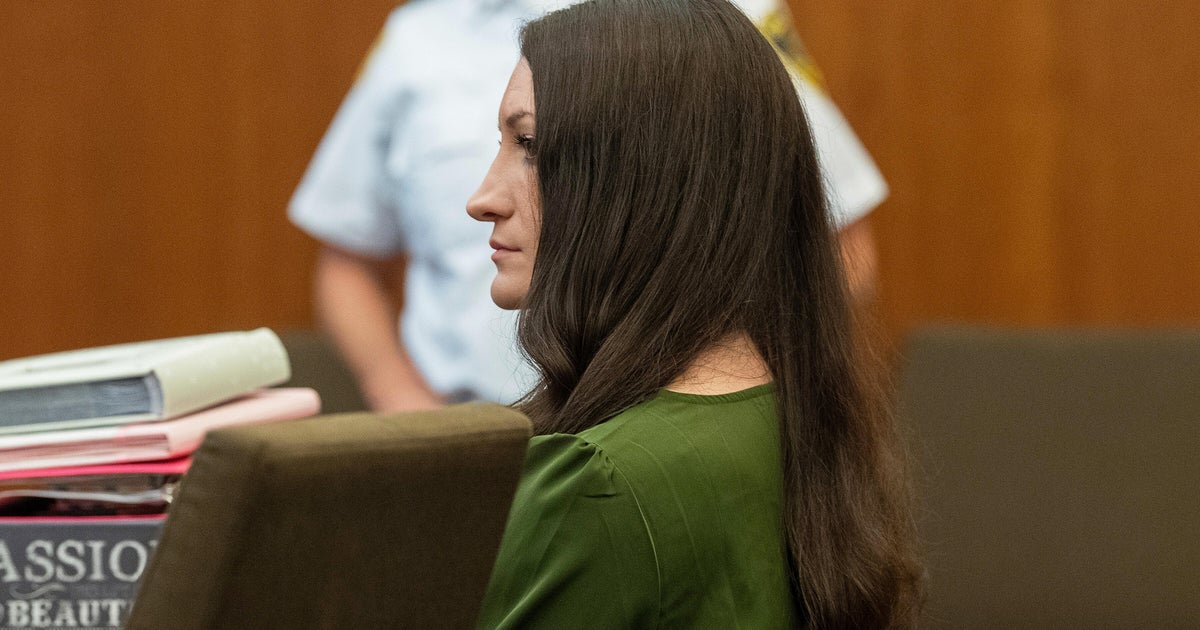
Lindsay Clancy’s trial continued Wednesday in Massachusetts, although the day’s testimony ended earlier than expected. A forensic psychologist who testified that Clancy said he heard a voice ordering him to kill his children completed his cross-examination to start the day. The judge then later ruled that a TikTok user who previously worked at McLean Hospital will not be allowed to testify before the jury. Another full day of testimony was expected in Plymouth Superior Court. But after the lunch break, Judge William Sullivan told jurors they had been dismissed for the day “due to an unforeseen circumstance.” Paul Zeizel finished his testimony that same day. Then, before the lunch break, Emily Thorndike, a former McLean Hospital employee, was questioned without the jury present. Court was expected to resume around 2:15 p.m., but Judge Sullivan went to the side bar and then told the jurors they would go home and court would resume at 9 a.m. Thursday. Sullivan said, adding that procedures are still as planned. Emily Thorndike, a TikTok user and licensed clinical social worker who used to work at McLean Hospital, testifies before the judge alone during the murder trial of Lindsay Clancy on Wednesday, August 19, 2026 in Plymouth, Massachusetts. Amanda Sabga/The Boston Herald via AP, Pool TikTok user can’t testify, judge rules Jennifer Sprague and Shanan Buckingham have been questioning witnesses throughout the trial, while Kevin Reddington handles the case for the defense. With the jury not present during the lunch break, Judge Sullivan heard arguments regarding potential testimony from TikTok user Emily Thorndike. Thorndike worked at McLean Hospital, but not while Clancy was receiving treatment there beginning on New Year’s Day 2023. Thorndike took issue with how prosecutors described the mental health facility in Belmont, Massachusetts, while Patrick Clancy was on the stand. She made a TikTok about her experience working at McLean from 2014 to 2021 that was widely viewed and led Reddington to ask Judge Sullivan to allow him to call her as a witness. “I felt like what was discussed in court was not aligned with my experience. I noticed several things,” Thorndike said without the jury present, adding that he felt some of the prosecution’s questions were misleading about staffing, especially during a holiday weekend. Reddington tried unsuccessfully to break in, contacted Thorndike after seeing the video and eventually sent his private investigator to her home to speak with her. The prosecution argued that Thorndike should not be allowed to testify because he did not work at McLean when Clancy was there, and that the records should speak for themselves. The judge said after hearing arguments that while he found Thorndike credible, he would not allow him to testify. Judge Sullivan said there is limited materiality to what she could testify and limited value of the testimony. He said the defense can present staffing records from the week before Clancy was there, in addition to the week she was there, so jurors can compare. Zeizel completes testimonyDr. Paul Zeizel was one of several witnesses who testified for the defense on Tuesday. He returned to the stand Wednesday morning. There were some tense moments as Zeizel completed his testimony. He described Clancy as “extremely well-regarded and loved” in her unit at Tewksbury State Hospital, where she remains after the children’s deaths. “Lindsay Clancy has bad days and worse days,” Zeizel said. “She talks about her children. She really loved them, misses them and thinks about them every day, almost every moment of the day.” Buckingham tried to show how close the relationship Zeizel has with Clancy is, trying to show that it could affect what he says about her. The prosecutor asked Zeizel how many defendants he has spent 35 hours evaluating. He said just one more. She asked how many other people he “cares deeply about.” He again said only one. “How many defendants have you given press conferences about?” —Buckingham asked. Zeizel said none. Buckingham also noted that Clancy continually refers to his children’s deaths as “my tragedy.” Zeizel responded that it’s “just one of the things she’ll say.” At the end of Zeizel’s testimony, Buckingham asked him if there is concern at Tewksbury State Hospital that Clancy may attempt suicide. He said yes and that she is under constant individualized monitoring. Buckingham ended his interrogation by asking if Clancy has attempted suicide since the night his children were killed. Zeizel said Clancy didn’t. Zeizel ended his time on the stand around 12:35 p.m. Psychologist Paul Zeizel in Plymouth Superior Court on August 18, 2026. John Tlumacki/Boston Globe via AP, Pool Dr. Zeizel testifies at Clancy’s trial Previously, Zeizel said he met Clancy at the hospital in early February 2023, shortly after the murders of his three children, ages 5. Cora, Dawson, 3, and Callan, 8 months, at their Duxbury home on Jan. 24, 2023. On Wednesday, she began testifying about the steps Clancy took to address her mental health in the months before the murders. He said he sought help in late 2022 for depression and psychotic symptoms of dissociation. “He felt like his brain was damaged, he felt like he should kill himself and that he was never going to get better,” Dr. Zeizel testified. “Their concern was that when people could hear their thoughts, their children would be left out of their care.” Dr. Zeizel also testified that she called the suicide hotline twice in December but did not receive any help. He said she continued to experience incessant thoughts and intrusive voices in her head after being discharged from McLean Hospital in January. “They were getting worse and telling him to kill himself,” she said. Zeizel concluded his testimony for the defense by saying that Clancy was mentally ill. “My opinion is that she was indeed mentally ill,” he said. “She failed to conform her behavior to the rule of law and did not appreciate the wrongfulness of her act.” During cross-examination, Buckingham asked how Dr. Zeizel discovered that Clancy was hearing voices. He said he spoke to other people, including a chaplain, who said he heard voices. Buckingham said that was not what he told doctors before the murders. “You are aware that when you described intrusive thoughts, you never referred to them as a voice telling you to kill yourself, right?” Buckingham asked. “No,” said Dr. Zeizel. Buckingham brought up the issue of confirmatory bias in cross-examination and showed a video of Reddington and Zeizel at a press conference, attempting to show their close relationship. Questioned again, Reddington asked if he was avoiding telling the truth or if it was his opinion on what was happening with Clancy. “I’m telling the truth,” Zeizel said, a response the judge struck from the record after an objection. Reddington also asked Zeizel if caring for Clancy is an ethics violation. “Not at all,” Zeizel replied. He added that it is within ethical standards and that it is “appropriate and meaningful” to develop empathy and relationship with a patient. Lindsay Clancy in Plymouth Superior Court on August 19, 2026. Amanda Sabga/The Boston Herald via AP, Pool Lindsay Clancy Trial Clancy has pleaded not guilty to first-degree murder, but admits to killing her children. Reddington has argued that Clancy should not be held criminally responsible because she was overmedicated and suffered from postpartum psychosis. Prosecutors said she planned the murders before faking a suicide attempt that left her paralyzed and in a wheelchair. If Clancy is convicted of first-degree murder, she faces life in prison without parole. If the jury finds that she was not criminally responsible for her children’s deaths, she will be sent to a state psychiatric hospital in Massachusetts. If you or someone you know is in emotional distress or in a suicidal crisis, you can contact 988 Suicide & Crisis Lifeline by calling or texting 988. You can also chat with 988 Suicide & Crisis Lifeline here. For more information about resources and support for mental health care, you can contact the National Alliance on Mental Illness Helpline Monday through Friday, 10 a.m. to 10 p.m. Eastern Time at 1-800-950-NAMI (6264) or email info@nami.org. More from CBS News at: