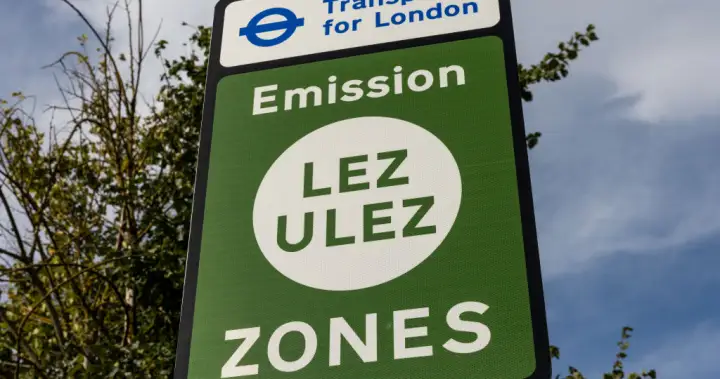

Children’s lung capacity improved significantly after the most polluting vehicles were banned from certain parts of London, UK, designated as low and ultra-low emissions zones, a new study has found. Researchers from Queen Mary University of London and the University of Oxford examined more than 3,000 schoolchildren aged six to nine in central London and Luton before and after the introduction of ultra-low emission zones (ulez) and found that the lung capacity of London children was restored to healthy levels after it was initially stunted by exposure to pollution. 4:17 SFU study finds chemical contaminants in Fraser River Chinook salmon Previous video Next video Story continues below advertisement Luton, the study’s comparison site, is a city outside London and does not have designated clean air zones. Receive weekly health news Receive the latest medical news and health information every Sunday. “This evidence supports broader implementation of clean air zones as a public health intervention,” the study says, arguing that it marks an evidentiary advance for an initiative that has in the past been criticized for overburdening drivers. London Mayor Sadiq Khan introduced the plan more than seven years ago, writing in an essay for The Guardian this week that when it was first suggested he faced a backlash from his detractors, who he said accused him of declaring “war on drivers in the blind pursuit of a policy that may not even work.” The findings showed that it is effective. Over four years, the study found that the percentage of children with impaired lung function decreased in both London and Luton, from 14 percent to nine percent in London and from nine percent to seven percent in Luton. “To our knowledge, we provide the first evidence that improvements in air quality after the introduction of a clean air zone are associated with improved lung growth trajectories in children,” the study authors wrote. More about the world More videos According to their findings, exposure to traffic-related air pollution is strongly linked to poor lung development in children and adolescents, and failure to achieve maximum lung growth poses an increased risk of asthma, chronic obstructive pulmonary disease, cardiometabolic disease and earlier mortality. Story continues below advertisement It also showed that children’s lung growth accelerated in ultra-low emissions zones and that it correlated with an improvement in air quality. The depletion of their lung capacity was specifically related to the presence of nitrogen dioxide. Based on the evidence, the researchers concluded that low-emission zones should be implemented more widely and on an international scale. “Children continue to be exposed to poor air quality in cities around the world,” they wrote, “global decision makers should consider accelerating the introduction of clean air zones to improve children’s lung health.” increasingly strict low emissions requirements. Toronto has considered implementing congestion charging and low-emission zones to reduce traffic along major travel routes. These policies typically require drivers to pay for using a polluting vehicle within certain zones. © 2026 Global News, a division of Corus Entertainment Inc.