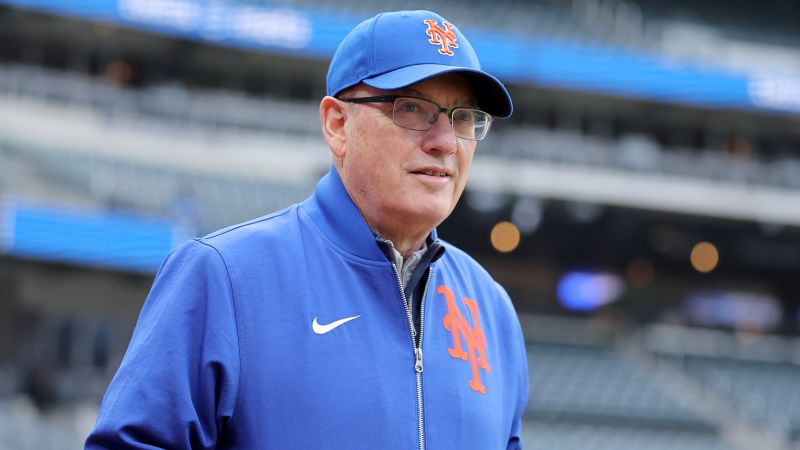
New York City – The New York Mets signed starting pitcher Tarik Skubal because nothing makes more sense. Loving Skubal is simple: He’s arguably the best pitcher in the game right now: a 30-year-old, two-time Cy Young Award winner and most valuable pitcher over the past three seasons, who has allowed one run or less in half of his starts over that span. In a free agent class with very few starters, Skubal was the most obvious way to make a noticeably better team. And no team is more desperate to do it than the Mets. It’s been 40 years since their last World Series title, a long drought even without qualifying on New York’s improved expectations curve. When Steve Cohen bought the team before the 2020 season, he said he would be disappointed if it didn’t win a championship in the next three to five seasons. He has since said he regrets that quote, but he is almost certainly disappointed, especially after having a top-three roster in the sport over the past six seasons. They made the postseason only two of those years and, most recently, finished last in their division. A lot of things went wrong for the 2026 Mets, perhaps mainly their plan to give up a proven ace. And so they signed Skubal because he addresses that need as well as any individual move could. He was reportedly paid a record $450 million over nine years (the record is both for the total dollar amount given to a pitcher and for the highest average annual value for a pitcher) because that’s what an already artificially limited market considered him worth. Last year, while still under team control of the Detroit Tigers, Skubal was among the highest-paid pitchers in the game after winning a landmark arbitration case to earn $32 million. Even without the opportunity to negotiate with anyone other than his current employer, Skubal made a record amount of money. I mean, yes, baseball players make a lot of money. You could label it obscene if you were talking about it in the context of the world outside of sports. But within the industry, an independent panel of three experts deemed Skubal to be worth more than $30 million a year. Now he will earn $50 million a year practically for his 30 years. Maybe it’s an “overpayment” in the sense that it exceeded projections and expectations, and it’s a lot of money. But if you’re determined to get a deal done – as the Mets were, as they should have been given their circumstances – sometimes you just have to spend more than anyone else feels comfortable spending. Here’s also how and why Skubal signed with the Mets: They’re owned by the 105th richest person on the planet. At least until the sale of the Los Angeles Angels to Stan Kroenke is finalized, Cohen is the richest owner in the sport. Two years before making Skubal the highest-paid pitcher, he made Juan Soto the highest-paid athlete in the United States with a 15-year, $765 million contract. It’s a fact that has shaped the narratives around the Mets in recent years at least as much as their poor performance, and especially as a whole. Now, with the expiration of the current collective bargaining agreement approaching and the league aggressively pushing for a salary cap, that talk has overtaken the sport. The Mets have spent the last two seasons inadvertently proving – with some major help from the Milwaukee Brewers – that money doesn’t necessarily buy rings. Now, they are trying to show that this is really the case, if they continue to spend. Meanwhile, MLB maintains that seeing such an absolute effort rewarded would be like ruining the sport. The league would have us believe that the fact that Cohen’s Mets hired Skubal is the reason the Pittsburgh Pirates, for example, have not made the postseason in the last 11 seasons. Or why the Tigers traded him last season when they were just two and a half games out of a playoff spot. The owners, a group that includes Cohen, want a salary cap that would prohibit the type of contracts and team-building style that has defined the Mets billionaire’s management. Under the sport’s current financial structure, Cohen is not obligated to give Skubal $450 million. He did it because he seems to genuinely want to win and because he can afford it. The idea that players should sacrifice their earning potential to save billionaires from themselves—helping billionaires prioritize their bottom line rather than allowing them to prioritize building a competitive team (arguably a different, more compelling manifestation of self-interest)—is, understandably, a bit insulting to the MLB Players Association. For some fans, however, what worries them most is whether the 30 owners could have afforded to sign Skubal. It’s a reasonable question. Bob Nutting, the owner of the Pirates, for example, is not even on Bloomberg’s ranking of the world’s richest people. The ownership class of all sports has seen a shift from the mega-rich to the super-rich (assuming they are bigger?), which has created stratification. The disparity in baseball payroll is real and undeniable. But, to continue our juxtaposition, the Pirates don’t have to beat the Mets to make the postseason. They play in different divisions. However, they at least have to make a reasonable run with the Brewers, residents of baseball’s smallest market and owners of baseball’s best record over the past two years. Neither do the Tigers, who finished fourth in their division outside of the Mets, behind three teams with smaller payrolls. A salary cap would change things. This analysis would not exist. There would be no records in the offseason. There are no headline-worthy figures. The economic panorama of sport would be more homogeneous, that is, less interesting. The Mets would still have sky-high expectations because that’s what four decades of near misses in the country’s largest media market does to a team, but without the added juiciness of a towering payroll as a testament to their desperation. And if, in fact, this pile of money is worth it and the Mets win it all – with a roster that ranges from three 2026 Rookie of the Year candidates to the highest-paid position player and pitcher in the sport – it will be hard to believe that wanting it so badly and trying so hard was bad for baseball. At least not as bad as missing games in pursuit of a salary cap would be.