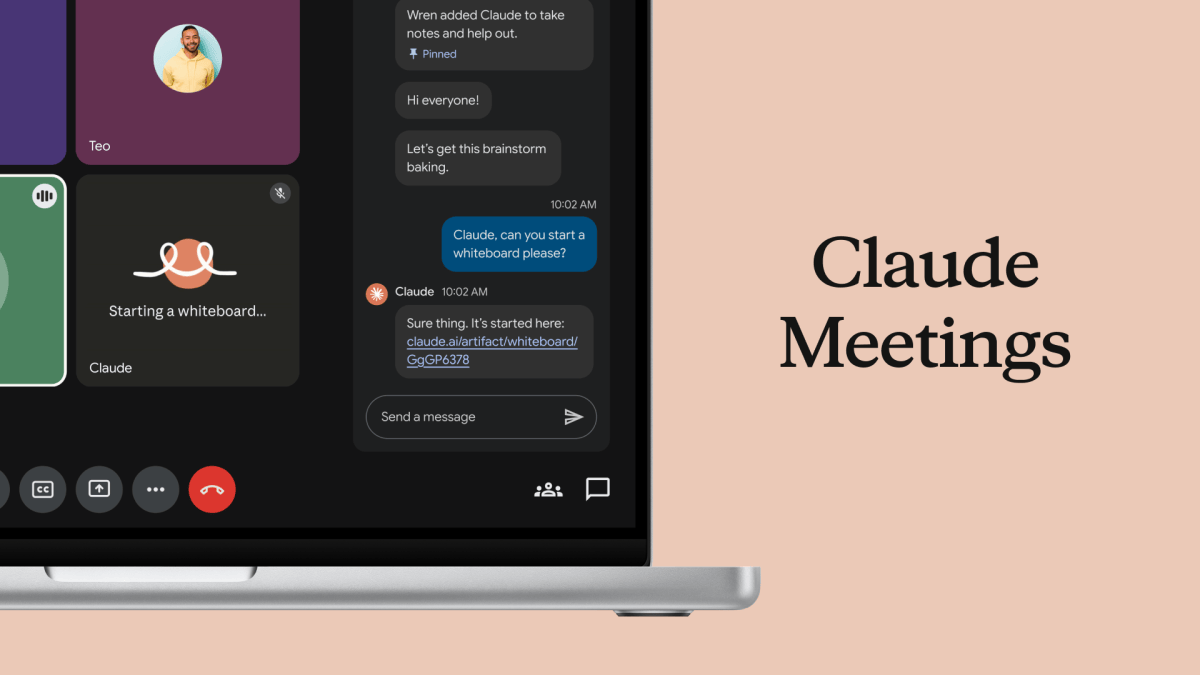
Anthropic announced new workplace features on Tuesday, including Claude Meetings, which brings Claude into video calls to start working on tasks while participants continue talking. The company also introduced Claude Whiteboards and Claude Sheets. The launch of Anthropic’s new productivity-focused features comes just weeks after OpenAI unveiled a series of workplace tools that allow users to collaborate with ChatGPT to do things like view company information and create presentations, as both companies race to turn their products into a kind of office suite to compete with Microsoft and Google. Meta also joins the competition with its Muse AI agent, which can create applets on the fly to help users complete specific tasks. With Claude Meetings, teams can add Claude to a video call as a visible participant. Claude then follows the conversation and gets to work on tasks in real time. While participants talk, you can draft the plan being discussed, plot a timeline on a whiteboard, answer questions in the meeting chat, and access connected work apps to retrieve information, such as last year’s numbers. After the call, meeting notes, action items, and other materials Claude created are available on claude.ai. The work that comes out of a meeting usually begins after everyone hangs up, but with this new feature, teams can turn discussions into actions in real time, Anthropic says. Claude identifies himself as a meeting participant and posts a notice in the meeting chat. You won’t join calls with external guests unless authorized by an administrator, and will be automatically dropped if an external guest joins. Claude Meetings launches in beta on Team and Enterprise plans. At launch, it works with Google Meet and support for additional plans is expected to emerge. Image credits: Anthropic As for Claude Whiteboards, Anthropic describes the feature as a collaborative whiteboard where teams can talk about a plan and have Claude turn it into an organized visual workspace with timelines and deadlines. The company notes that many people already brainstorm with Claude, but to share their results with others, they would have to copy and paste them somewhere else. Now, a team can work directly with Claude on the same dashboard in real time. When the brainstorming is over, Claude can convert the board into a document or slide deck. Additionally, whiteboards also work within Claude Meetings, so the whiteboard is built while people talk, says Anthropic. Claude Whiteboards is available in beta on paid plans, on the web, desktop, and mobile devices. The company also launched Claude Sheets, which allows teams to collaboratively create and edit spreadsheets with Claude. A team can ask you to create a campaign tracker or recruiting budget, and Claude will then generate a working spreadsheet. Image Credits: Anthropic Anthropic says Claude handles the initial setup of trackers and budgets, while allowing teams to continue refining and updating the same spreadsheet. Each spreadsheet can include multiple tabs, formulas, formats, and drop-down menus. Claude also makes edits directly to the cells together with the team and describes each change so users can see what he made. Claude Sheets is available in beta on paid plans, on the web, desktop, and mobile devices. Anthropic also announced that Claude Data, formerly known as Claude Dashboards, is now generally available. The feature connects Claude to the systems that companies use to maintain their numbers, such as a data warehouse or CRM. Users can ask questions and Claude responds with dashboards, written data stories, or narrated videos. Additionally, the company announced interactive connectors that open the full version of applications such as Adobe, Atlassian and HubSpot within Claude. Anthropic notes that teams can now open these apps directly alongside their Claude conversations and ask the assistant to work within them, essentially bringing existing workflows into the same workspace. When you buy through links in our articles, we may earn a small commission. This does not affect our editorial independence.