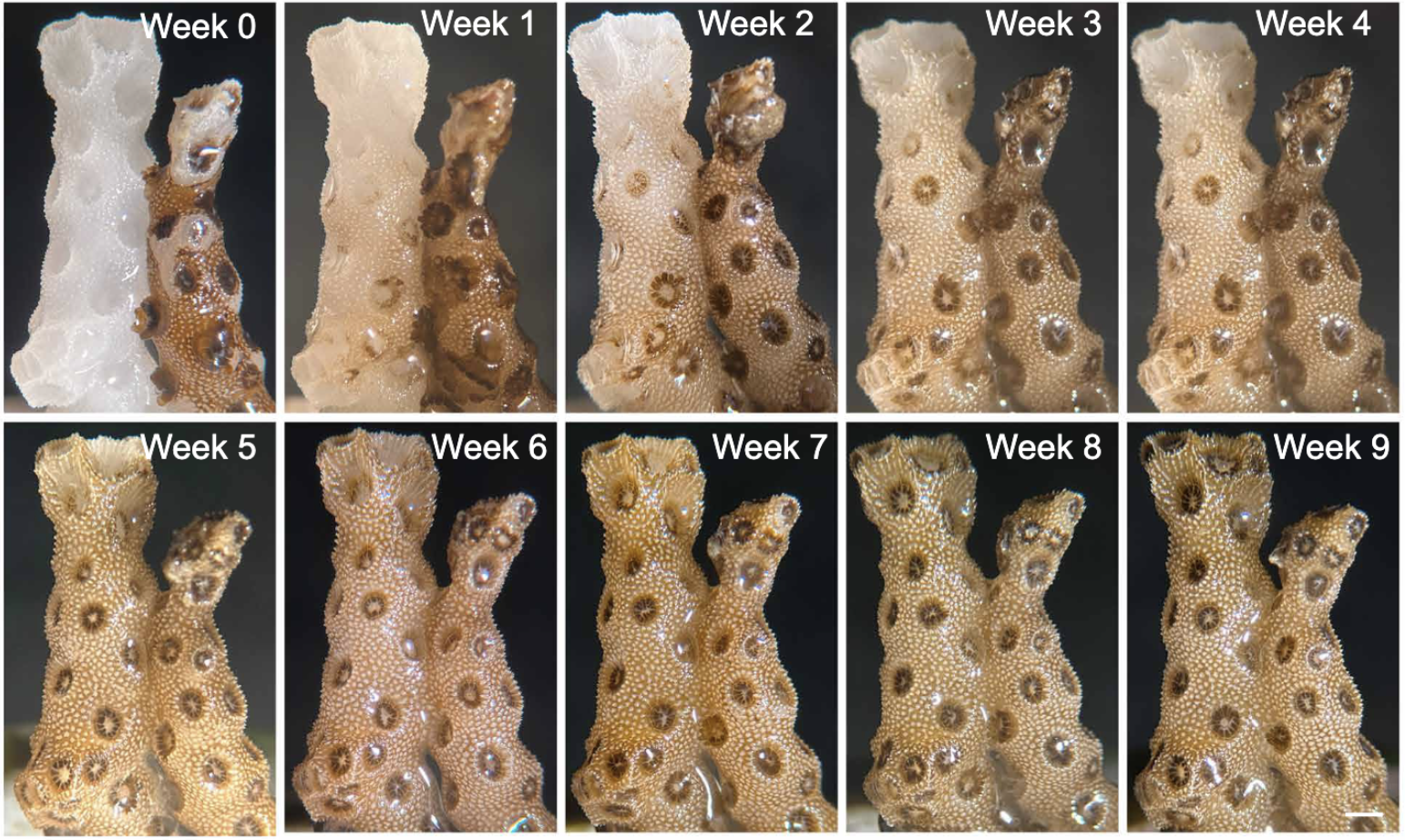
Coral bleaching is a major problem for ocean ecosystems as the ocean warms. Stanford researchers have found a new method to regenerate bleached corals. Scientists working with corals discovered that when they accidentally touched a healthy, bleached specimen in the laboratory, the healthy coral’s symbionts that form its food were able to spread to the bleached coral, reviving it within weeks. Contact was only necessary for a week, although in some cases three days were sufficient. The effect only seems to work with corals from the same genet, as healthy corals from other genets simply replace the bleached coral in an antagonistic manner. This is particularly interesting, as areas where not all corals have bleached may indicate the presence of symbionts that are more heat tolerant, and being able to quickly spread these symbionts to their neighbors can greatly speed up the coral regeneration process and save the reef. Coral reefs are some of the most vibrant ecosystems in the ocean, so if you save the coral, you can also save many other species that depend on them. If you want to explore how the coral near you is faring, perhaps you should try an open ROV or a bionic jellyfish?