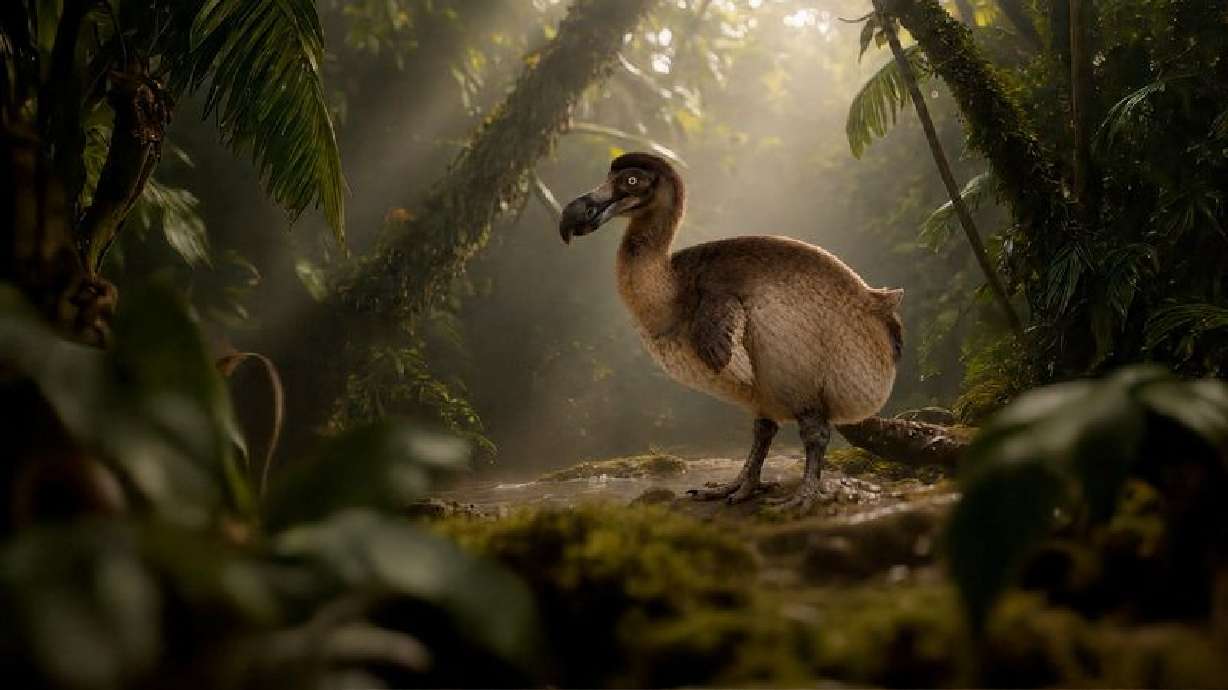
DALLAS – An American biotechnology company said it is moving toward its goal of resurrecting the dodo, the famous flightless bird with a large hooked beak, and returning it to its native Indian Ocean island of Mauritius, where humans drove it to extinction in the 17th century. Dallas-based Colossal Biosciences said Wednesday that it has used a newly developed artificial intelligence platform to identify genetic changes that may be responsible for the dodo’s distinctive craniofacial traits like its scientists are pursuing gene-editing targets to recover this lost species. Colossal plans to perform gene editing to bring dodo traits into the cells of its closest living relative, the Nicobar pigeon. Native to some islands in Southeast Asia, the Nicobar pigeon is known for its bright green and copper feathers and, unlike the dodo, it can fly. The company said it is in the final stages of its analysis of the dodo genome, now 95% complete. He also said he has made a breakthrough that should shorten the time needed to test whether a gene edit produces the desired trait. The company did not announce a timeline for hatching a dodo. Colossal stated that it is dedicated to “de-extinction”: resurrecting vanished species. Last year, it said it had genetically engineered the dire wolf by editing the genes of the gray wolf, the closest living relative of the extinct Ice Age predator, to add dire wolf traits. In addition to the dodo and the dire wolf, Colossal has four other species on its de-extinction list: the woolly mammoth; the thylacine, also called the Tasmanian tiger; the blue antelope; and the moa, a large flightless bird. “The dodo is the world’s best-known symbol of human-caused extinction. It disappeared within a few decades of humans arriving in Mauritius, largely due to the introduction of invasive species such as rats and other animals they brought with them. Bringing it back shows that extinction does not have to be permanent,” Ben Lamm, CEO and co-founder of Colossal, told Reuters. “The big hurdles ahead are proving what genetic changes really matter, making many of those edits in a bird and passing them on to the next generation, and preparing a ‘safe home for dodos in Mauritius,'” Lamm said. The dodo was a ground-nesting bird that stood about 3 feet tall and weighed about 50 pounds. Having never encountered humans, the dodos showed no fear of the people who arrived in Mauritius in the 16th century. Pressured by invasive species and human hunting, the last living dodo was seen in 1662. It has remained alive in popular culture, including in Lewis Carroll’s book “Alice’s Adventures in Wonderland.” “GenoMorph effectively acts as a ‘treasure map’ for the dodo genome, narrowing down hundreds of thousands of potential genetic changes to the most likely targets to explain its iconic beak and facial structure,” said Beth Shapiro, Colossal’s chief scientific officer. He said GenoMorph finds likely gene editing targets for species with very little surviving DNA. Typically, scientists compare many genomes of a species to find the genes behind a trait, but this “is not possible with” the dodo, Shapiro said. “So instead, GenoMorph studies how skulls and beaks develop in more than 70 species of living birds and learns which genetic switches control their shape. It gave us a short list of around 2,300 candidates linked to beak size and shape. These goals are now being validated in the laboratory,” Shapiro said. Colossal said it has expanded its Nicobar pigeon colony in Texas to 36 birds following successful breeding between established pairs. It said this should help study the development, reproduction and genetics of Nicobar pigeons. Lamm said the company is working with Mauritian scientists, conservation groups and the Mauritius government on what it would look like to bring the dodo back to its homeland. “Preparing Mauritius for dodos it also means removing invasive predators and restoring habitat, which helps the native species that live there now,” Lamm said. “No release sites will be chosen until ecological work and community consultation are completed, but Colossal’s goal is to return our dodos to their natural habitats in Mauritius.” Key findings in this article were generated with the help of large language models and were reviewed by our editorial team. The article itself is solely written by humans.