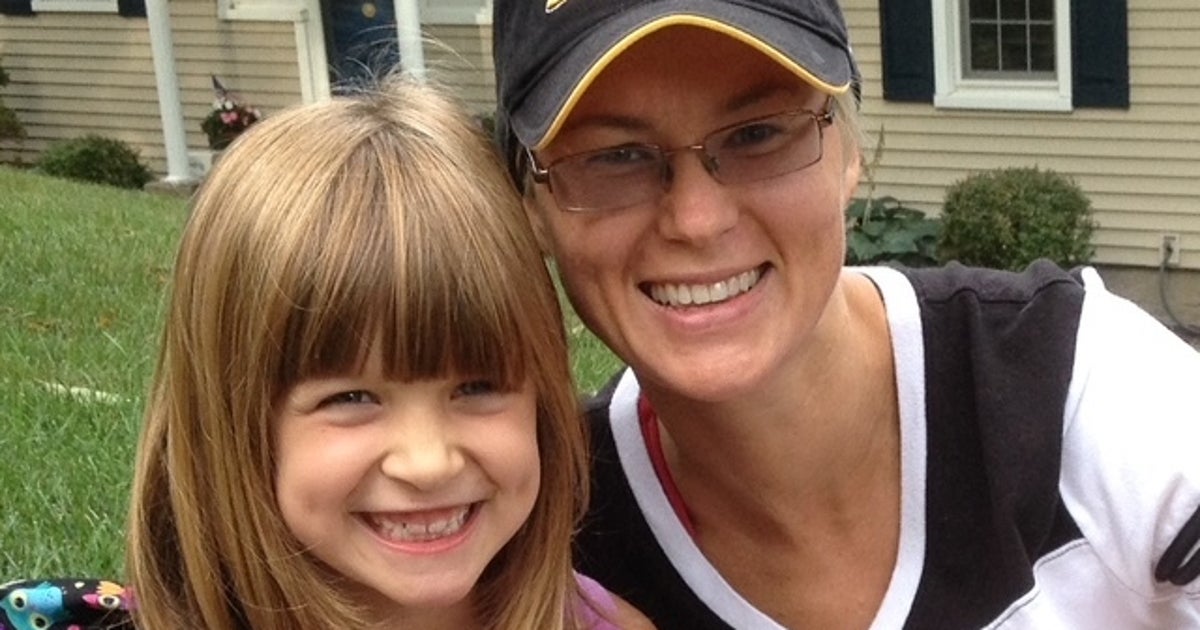
My daughter Astrid and I were on the couch getting ready to watch “Backrooms.” She had already seen the horror movie in the theater, but she wanted to watch it with me too.I asked her how her therapy was while I opened Prime. “Good,” she said. “My therapist told me I was parentified.”“Parentified?” I said. “What does that mean?”“It just means that because of your bipolar disorder, I became the parent in some ways. Parentified kids might excel in academics and get jobs early, but later can have mental health issues — even self-harm.”She said, “I’m totally fine with it. It’s not your fault you have bipolar.”Astrid, now 19, has struggled with mental health issues and self-harm. The movie distracted me, but the following day all I could think about was whether I had “parentified” Astrid. I called my friend, Carrie, and told her through tears what Astrid’s therapist said.“Danielle, Astrid was never hungry, dirty, or put in danger. You loved her and did everything for her. You were and are a phenomenal mom.”“When I was stable,” I countered, “but what about when I wasn’t?”Kandace Ledergerber, a licensed professional counselor who runs a trauma-focused practice in Phoenix, says parentification can be “a perceived role flip or an actual one, where the child feels responsible for the parent’s happiness, stress, emotional wellbeing or even physical wellbeing.”A parentified child might get themselves up and ready for school, pack their own lunch, or cook for themselves or their siblings at too early an age. When I was depressed, I still did the physical things, but only the bare minimum. I’d give Astrid lunch money instead of packing a healthy one. I’d drive her to school in my pajamas instead of walking her to the bus stop because it meant an extra 15 minutes of sleep, and the second I was home I was back to bed, where I stayed. If another adult (like my husband or mom) could fill in, I let them.Astrid never wanted to contribute to my mania or depression. When she was 8, she woke me because she had a bad dream. I easily woke up, climbed into her bed, scratched her back and sang Braham’s Lullaby with my own lyrics until she fell asleep. Afterward, I was manic and I stayed awake. Sleep is the antidote for mania, so when Astrid overheard me telling her dad, “I couldn’t go back to sleep after Astrid woke me up,” she felt guilty and worried she had made me sicker.Alex J. Anderson-Kahl, a certified school psychologist and founder of Raise Strong, says a child with a mentally ill parent might think, “How’s Mom doing?” instead of “How am I doing?” This shift can result in the parentified child having trouble identifying their own needs because they “became so practiced at noticing what everyone else needs.”When I was depressed, I’d be in bed for weeks, sometimes months. Recently, Astrid showed me her journal. One entry read: “Some kids were mean to me at school today. I really want to talk to Mom, but she’s depressed.” I brought this up to my friend, and she pointed out that her son could say the same thing about times he wanted to talk to her while she was working.“Yes, but when you got home, he could talk to you,” I said.“Danielle, I remember you saying Astrid would get into bed with you when you were depressed to talk, snuggle or just hang out.”“Well, going by her journal, there were times she felt she couldn’t do those things.” Ledergerber says, “Parentification isn’t about a parent doing something wrong. It’s about how a child’s nervous system responds to what it senses is needed in the home.”When I am manic, the whole house can feel it. I have a short temper, and I expect cleanliness and order — not things I care about when I’m stable. Once, when Astrid was 7, I asked her to clean up the playroom, and instead of putting her Legos in the Lego bin, she put them on a table. When I saw them, I asked sternly, “Did you put these here?” Astrid nodded, and I swiped the table, sending the little colorful bricks flying. I would never do that when my mind was right.Astrid could tell if I was manic or depressed, and sometimes she tried to take care of me. She walked on eggshells, tried to keep things clean, was cognizant of my need for sleep when I was up and had to deal with my absence when I was bedbound and down. She used to set up “spa sessions” where she would put a towel on my bed and give me a massage to help me calm down. We sometimes hung out in my bed when I was depressed, but if she walked in and I was sleeping, she didn’t wake me. If another adult was filling in, she might not see me for days. The author and her daughter, when she was 11, at a Christmas concert.Photo Courtesy Of Danielle HugginsWhich brings up another point — kids who have been parentified have better outcomes when there are other reliable adults they can count on. Astrid says her dad was definitely her rock, but she also had both her grandmothers, her great-grandmother, and a few neighbors who knew about my situation.On the surface, Astrid appears to be doing amazing. She’s excelling in college and works two jobs. Ledergerber, who also runs Soul Mission EMDR Therapy, says, “When children have a mentally ill parent and take on a caregiving role, they are often seen as high-achieving and doing great on the outside, thriving in their career, school and life.” While these attributes are positive, parentified kids can overextend themselves until they burn out. If Astrid isn’t being productive, she says she feels lazy.According to Terra Brigando, a licensed marriage and family therapist, parent/child role reversal “can also happen when a parent treats a child like a peer, or leans on them for support in a way that is developmentally inappropriate for the child. This bonding can feel like closeness, but it is often unhealthy. They learn that their own needs are secondary.” I absolutely shared too much with Astrid. During manic episodes, it was hard for me to edit what came out of my mouth, but regardless of my emotional state, I often treated her more like a friend than a child. We have an extremely close relationship, but my oversharing may have contributed to her anxiety and made her feel like she’s not allowed to have her own needs.Parentification is more common than I knew. Many parents who have serious illnesses have difficulty caring for their kids. My friend Carrie was parentified when her mom got multiple sclerosis when she was 13. As her mom deteriorated, Carrie cared for her, and she took on the cooking and the cleaning for the household. After her mom died, Carrie kept those roles until she moved out.In situations like this, Anderson-Kahl says the child should be given age-appropriate information; they should be aware of the situation without being made to feel responsible for handling it. Also, if possible, dependable adults should be identified and a plan put in place for difficult periods. He notes it should not be the child’s responsibility to “coordinate the entire response.” However, Brigando says parentified kids are not “doomed” and that “there is a path to healing, and often the very traits that parentification engenders can serve as strengths if the trauma from childhood is worked through with a supportive therapist.” I quoted Anderson-Kahl to my daughter, telling her, “You handled things that should have been handled by adults. That was too much for you, and it was not your fault.” She said, “That sounds accurate. But a lot of it was out of your control. You did the best you could.” Still, she said that holding myself accountable for my actions back then makes it easier to move forward in our relationship now. I blamed myself for Astrid’s issues, but lots of kids struggle even when they grow up with perfectly healthy parents. If I’d known what I know now, I would not have shared so many details of my bipolar journey with her. And when she was old enough to be told about my illness, I would have made sure she knew it was not her responsibility to make me feel better. I wish I hadn’t put my daughter in that position, but now that I know I did, I can tell her I’m sorry. Even though she’s older now, I no longer share specifics regarding my bipolar disorder. And I support her being in therapy so she can work through the difficulties that may result from parentification. Most importantly, I remind her that the only person she needs to care for is herself.Danielle Huggins lives in New Jersey and writes mostly about her life with bipolar disorder. Her work has appeared in The Washington Post, Short Reads, Mutha Magazine, and GOMag.com. She is also a contributor to the podcast, Writing Class Radio. Danielle has a memoir about her life with bipolar disorder in progress and posts about her illness across many platforms under @bipolardanielle or @bipolardaniellehuggins. Do you have a compelling personal story you’d like to see published on HuffPost? Find out what we’re looking for here and send us a pitch at pitch@huffpost.com.