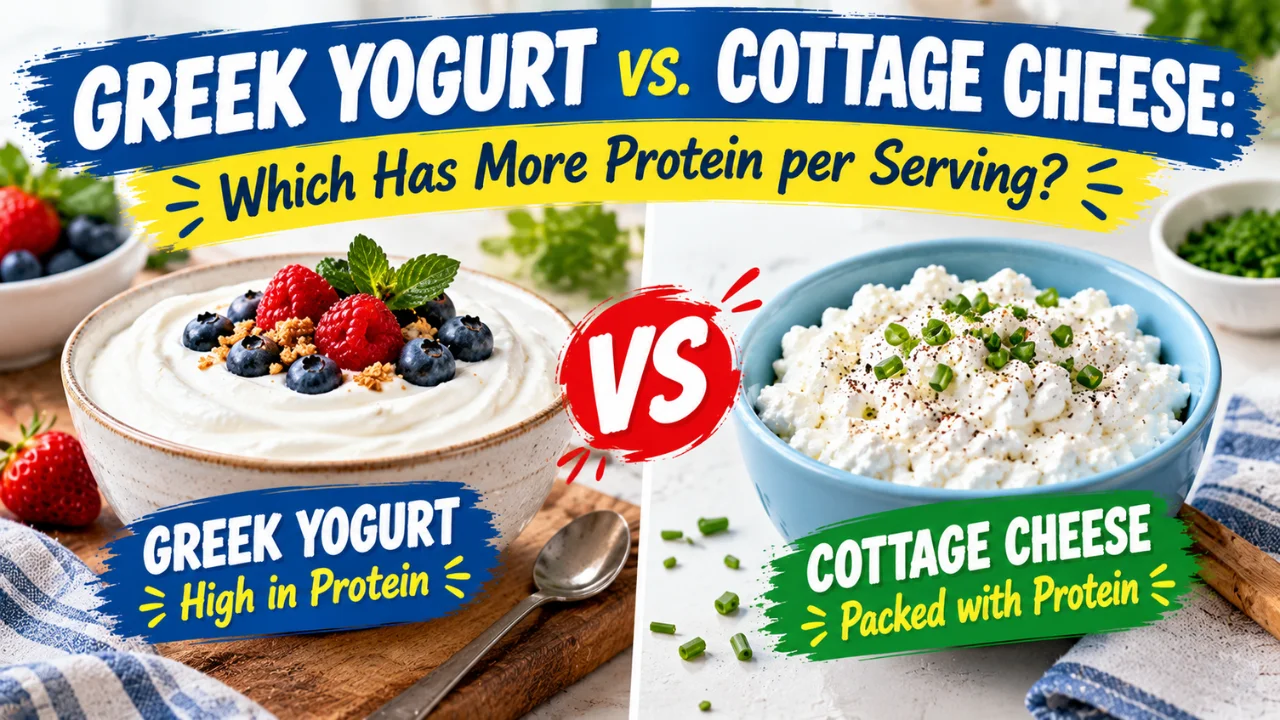
If you’ve been trying to eat more protein lately, there’s a good chance both of these are sitting in your fridge, or at least on your shopping list. Greek yogurt has been the high-protein darling of the dairy aisle for years. Cottage cheese, once considered a bland diet food, has made a very visible comeback.So which one actually delivers more protein? The short answer is cottage cheese, but only by a small margin, and other factors like sodium, calcium and calories might matter more to you. Here’s a clear, practical look at both.
The Short AnswerGram for gram, cottage cheese has slightly more protein. USDA data lists lowfat 1% cottage cheese at 12.4 grams of protein per 100 grams, against 10.2 grams for plain nonfat Greek yogurt. Other comparisons put the numbers a little differently, with cottage cheese at 11 grams and Greek yogurt at 10.3 grams per 100 grams.That gap is about one or two grams, which is small. As one analysis put it, anyone comparing the two at the tub is arguing over about two grams. Both are excellent protein foods, and neither is a bad choice.
Protein per Serving: It Depends on the Serving“Per serving” is where things get interesting, because the two products are sold and eaten in different portions.A typical Greek yogurt single-serve cup is around 150 to 170 grams. At roughly 10 grams of protein per 100 grams, that works out to about 15 to 17 grams of protein per cup. Cottage cheese is usually measured by the half cup (around 110 to 115 grams), which gives about 12 to 14 grams of protein, or roughly double that if you eat a full cup. These are estimates based on the per-100-gram numbers above, so check your own label.One source found that when comparing half-cup servings, cottage cheese comes out about three grams higher per serving. But if you’re eating a full 170 g tub of Greek yogurt and only half a cup of cottage cheese, the yogurt may match or beat it. yahoo
In practice, the winner depends on how much you eat. Here’s a simple way to think about it:Same weight: Cottage cheese wins slightly.Typical packaged cup: Often a tie, depending on the brand.Same calories: Cottage cheese tends to give a bit more protein per calorie.Calories and FatCalories depend heavily on the fat level you choose. Nonfat Greek yogurt has about 61 calories per 100 grams, compared with 84 for cottage cheese made with 2% milk fat. Whole-milk versions are higher for both: plain whole milk Greek yogurt has around 95 calories per 100 grams, and full-fat cottage cheese about 105.So if you want the leanest option, nonfat Greek yogurt is lower in calories. If you want more protein for each calorie, cottage cheese has the edge, because it packs a higher proportion of its calories from protein. One comparison puts it at roughly 11 grams of protein per 100 calories for cottage cheese versus 9.3 for Greek yogurt.Sodium: The Biggest DifferenceIf you only look at one number besides protein, make it sodium. Cottage cheese is much saltier because salt is added during production. One analysis lists 406 mg of sodium per 100 grams for cottage cheese versus 36 mg for nonfat Greek yogurt, which is about eleven times as much. Another source gives a lower figure for cottage cheese, 321 mg per 100 grams, but the gap is still large.That matters in real life. One small half-cup serving of cottage cheese can provide almost a fifth of your daily sodium allowance, and most of us eat more than half a cup. If you have high blood pressure or are watching your salt, look for low-sodium cottage cheese or choose Greek yogurt.Calcium, Sugar and Other NutrientsGreek yogurt is slightly ahead on calcium. Plain nonfat Greek yogurt has about 110 mg of calcium per 100 grams, versus 61 mg in lowfat cottage cheese, although another comparison shows a much smaller gap, 111 mg versus 103 mg. Either way, Greek yogurt comes out the same or better.On other nutrients, the picture is mixed. Cottage cheese is richer in phosphorus, zinc and vitamin B5, while Greek yogurt is richer in calcium and vitamins B2 and B12. Both contain casein, a slow-digesting protein, which helps you stay full for longer.
For probiotics, Greek yogurt generally has the advantage, since it’s made with live cultures. Look for “live and active cultures” on the label, and note that heat-treated yogurts may not contain them. Some cottage cheeses add cultures too, but not all do.Sugar is worth checking. Plain versions of both are low in sugar, but flavoured Greek yogurts can contain a lot of added sugar, which can turn a high-protein snack into a dessert. Buy plain and add your own fruit.Side-by-Side ComparisonPer 100 g (approx.)Plain nonfat Greek yogurtLowfat cottage cheeseProteinAbout 10 gAbout 11 to 12 gCaloriesAbout 61About 84 (2%)SodiumAbout 36 mgAbout 320 to 400 mgCalciumAbout 110 to 115 mgAbout 60 to 100 mgTextureThick, creamy, tangyLumpy curds, mild, saltyProbioticsOften present (check label)Not always presentBest forBreakfast bowls, dips, smoothiesSavoury snacks, toast, high-protein bowlsNumbers vary by brand and fat level, so treat these as general guides and check the nutrition label on the product you buy.Which One Should You Choose?Pick cottage cheese if:You want the most protein for your calories.You prefer a savoury, mild flavour.You’re using it in place of a heavier ingredient, such as in a pasta sauce or on toast.Pick Greek yogurt if:You’re watching sodium.You want more calcium or probiotics.You like a creamy, tangy base for smoothies, dips or breakfast.Pick both if: you enjoy variety. There’s no reason to pick a side, and using both across the week covers the bases.If you can’t stand the texture of cottage cheese, a quick blitz in the blender makes it smooth and creamy, and it works as a base for dips, pancake batter and even desserts.Easy Ways to Eat More Protein With EitherGreek yogurt: Top with berries and nuts, swirl into oats, use instead of sour cream, or blend into smoothies and salad dressings.Cottage cheese: Spoon it onto toast with tomatoes and black pepper, mix it into scrambled eggs, add it to a bowl with pineapple or cucumber, or blend it into a creamy dip.Together: Layer both with fruit and a sprinkle of seeds for a hearty snack.Keep an eye on portions and extras. A cup of cottage cheese with fruit and honey can be a very different food from one eaten plain.Final ThoughtsIf you want the technical winner for protein, it’s cottage cheese, by a small margin. But the difference is so slight that other factors, like sodium, calcium, taste and how much you actually eat, matter more.Choose cottage cheese for the extra protein and savoury flavour, Greek yogurt for lower sodium and creamy versatility, and plain varieties of both for the best nutrition. Either way, you’re getting a high-quality protein source that fits easily into a balanced diet.Frequently Asked QuestionsDoes cottage cheese have more protein than Greek yogurt?Slightly, per 100 grams. The difference is about one to two grams, and it can vanish or flip depending on portion size and brand.Which is better for weight loss?Both can help because protein keeps you full. Nonfat Greek yogurt has fewer calories, while cottage cheese gives slightly more protein per calorie. Choose the one you’ll enjoy and eat in sensible portions.Is cottage cheese too high in sodium?It can be, particularly for people with high blood pressure. Look for low-sodium or no-salt-added versions, and check the label, since brands vary.Which is better for muscle building?Both provide high-quality protein, including slow-digesting casein. The best choice depends on your total daily protein, calories and preferences. A doctor or registered dietitian can help with individual targets.DisclaimerThis article is for general information and food-education purposes only. Nutrition values are approximate and vary by brand, fat level, serving size and recipe. The per-serving figures are estimates calculated from per-100-gram values. This is not medical or dietary advice. If you have a health condition, a milk allergy or lactose intolerance, are managing blood pressure or kidney disease, or have specific dietary needs, speak to your doctor or a registered dietitian.