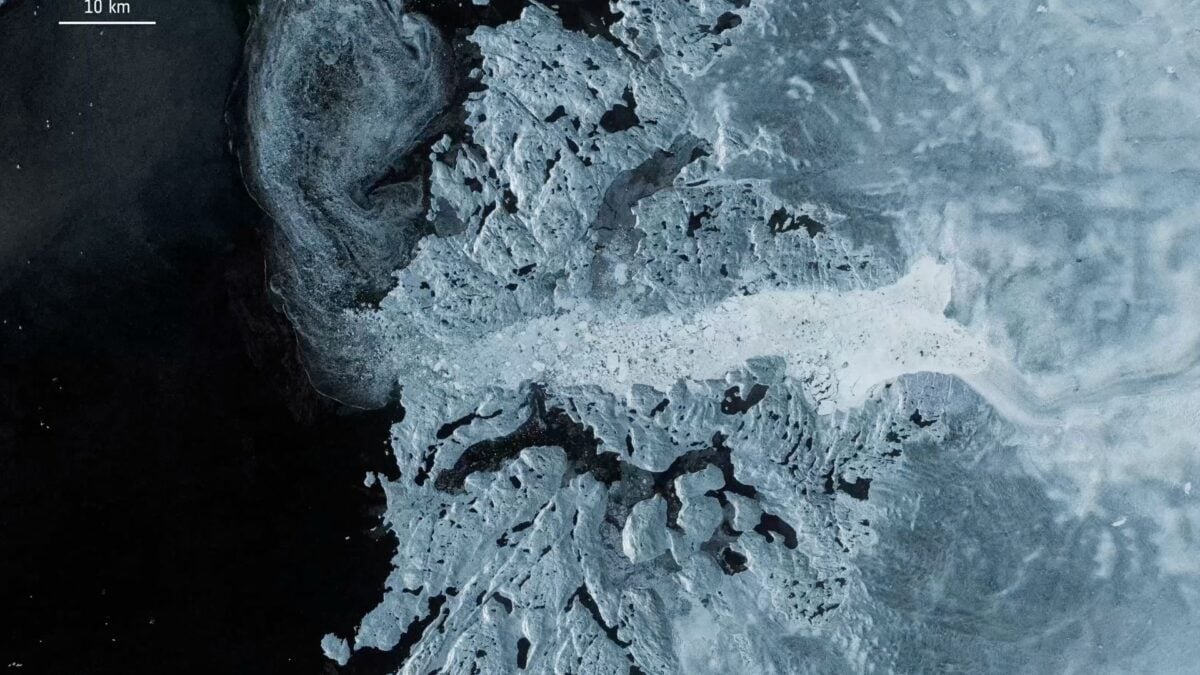
A vast region of East Antarctica contains enough ice to cause a dramatic rise in global sea level, but was previously considered relatively stable. Now, a new study urges scientists to take a closer look at the Wilkes subglacial basin, warning that as the climate warms, this hidden Antarctic ice reservoir could become a major driver of future sea level rise. The Wilkes Subglacial Basin is a massive depression in the bedrock beneath the East Antarctic Ice Sheet. Although it is one of the most important parts of Antarctica when it comes to future sea level rise, it remains largely unexplored. In a recent study, published in Nature Reviews Earth & Environment, scientists found that the underlying geography of the basin could cause it to become unstable as the climate warms. This is concerning, as the basin contains enough ice to raise sea levels by 3 to 4 meters (10 to 13 feet). Hidden threat The Wikes subglacial basin extends for approximately 1,400 kilometers (870 miles) along the interior side of the Transantarctic Mountains. It is completely hidden under a thick layer of ice, so scientists have had to rely on radar and satellite observations to gather data about the vast basin. “The Wilkes subglacial basin is possibly the last unexplored place in Antarctica,” Matt King, a professor at the University of Tasmania and lead author of the new study, said in a statement. “There is no in situ mapping data of the seafloor and we have very limited information about ocean conditions that could drive future melting.” Although it was once considered one of the most stable parts of Antarctica, scientists are only now beginning to understand how vulnerable it might be. The basin is a marine part of the ice sheet, meaning the bedrock beneath much of the ice lies below sea level. That can make the ice particularly vulnerable to retreating if warmer seawater reaches the stranding zone. The scientists behind the new study combined existing data with computer models to predict future changes in the region. Their findings suggest that retreat could become very rapid in some areas, potentially reaching around 0.6 miles (1 kilometer) per year beyond important bedrock fixation points. If it were eventually lost, the ice contained within the region would be enough to contribute several feet to global mean sea level rise. Sound the alarm Although East Antarctica has traditionally been considered considerably more stable than West Antarctica, recent findings paint a different picture. The region’s sea basins mean it could become much more important under sustained warming. However, it remains largely unstudied to date. The researchers behind the new study hope to bring more attention to East Antarctica’s Wilkes subglacial basin, highlighting important gaps in observations. The new paper shows that parts of the basin have already undergone changes. Previous evidence points to the thinning and collapse of some of the ice shelves. The basin’s main glacier, Cook Glacier, has also been thinning at an increasing rate since the 1990s and is currently sending about 44 billion tons (40 billion tons) of ice into the ocean each year, according to researchers. “The evidence of past warm periods is enough to sound the alarm that this is a region we need to understand much better, but it’s hard to find a living scientist who has been there,” King said.