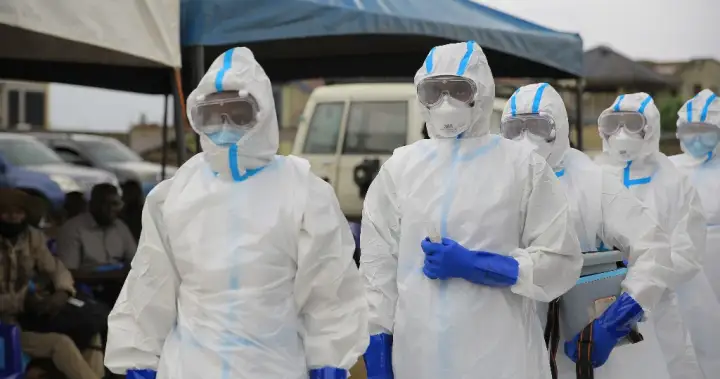

Congo is running out of health workers for treatment centers for the fastest-growing Ebola outbreak in history, particularly in the eastern province of North Kivu, where cases have risen 73 percent in three weeks, the World Health Organization said Wednesday. The warning came despite signs of improvement in other provinces, including Ituri, the epicenter of the outbreak. The outbreak has spread to seven provinces, with 7,773 confirmed cases and 3,759 deaths, according to the latest government figures. Between August 31 and September 20, cases fell 26 percent in Ituri province and 15 percent in Haut-Uele, said Marie Roseline Belizaire, WHO’s regional emergencies director for Africa. But transmission patterns vary widely and the outbreak remains uncontrolled, he said. 1:56 Health matters: Ebola outbreak reaches 2 new health zones in the Democratic Republic of the Congo “While cases and deaths are decreasing in some provinces, they continue to increase in others,” Belizaire said. “The outbreak is not yet under control and continues to spread over a wide geographical area.” Story continues below ad The outbreak is spreading under extremely difficult conditions, fueled by insecurity, displacement, a strike by health workers and intense population movements. The World Health Organization has said it is on track to overcome West Africa’s 2014-2016 Ebola outbreak, the deadliest on record, which killed more than 11,000 people, mainly in Guinea, Liberia and Sierra Leone. Receive weekly health news Receive the latest medical news and health information every Sunday. Catherine Smallwood, WHO’s Ebola incident director, said cases and deaths had begun to decline in North Kivu after several weeks of increases. But while treatment beds are added every day, the facilities still lack enough staff and partners to operate them. “The human resources gap is one of the biggest,” Smallwood said. WHO representative in Congo Anne Ancia said an Ebola treatment center requires around 300 health professionals, including anesthetists, hygienists, nurses and general practitioners. More about the world More videos “We are building Ebola treatment centers, but we don’t always have the human resources to operate them,” Ancia said. “Those health workers must be paid.” 2:08 Ebola outbreak in Congo reaches 5,000 cases as its spread outpaces efforts to contain it Previous video Next video Story continues below advertisement Frontline workers in Ituri previously went on strike over unpaid wages, worsening access to care. Health Minister Roger Kamba said in July that the government was checking payroll lists after the names of people not involved in the response were added. Frontline workers said officials promised to pay the arrears, but some workers received nothing and others only a portion of what they were owed. Another major challenge in the response is the mortality rate among children, according to the WHO. Children under five have the highest case fatality rate, more than 60 percent compared to about 40 percent among adults, Belizaire said. WHO Ebola Incident Manager Smallwood said detecting cases among children under five is also very difficult because children cannot necessarily explain their symptoms, and the presentation of symptoms can be confusing. © 2026 The Canadian Press