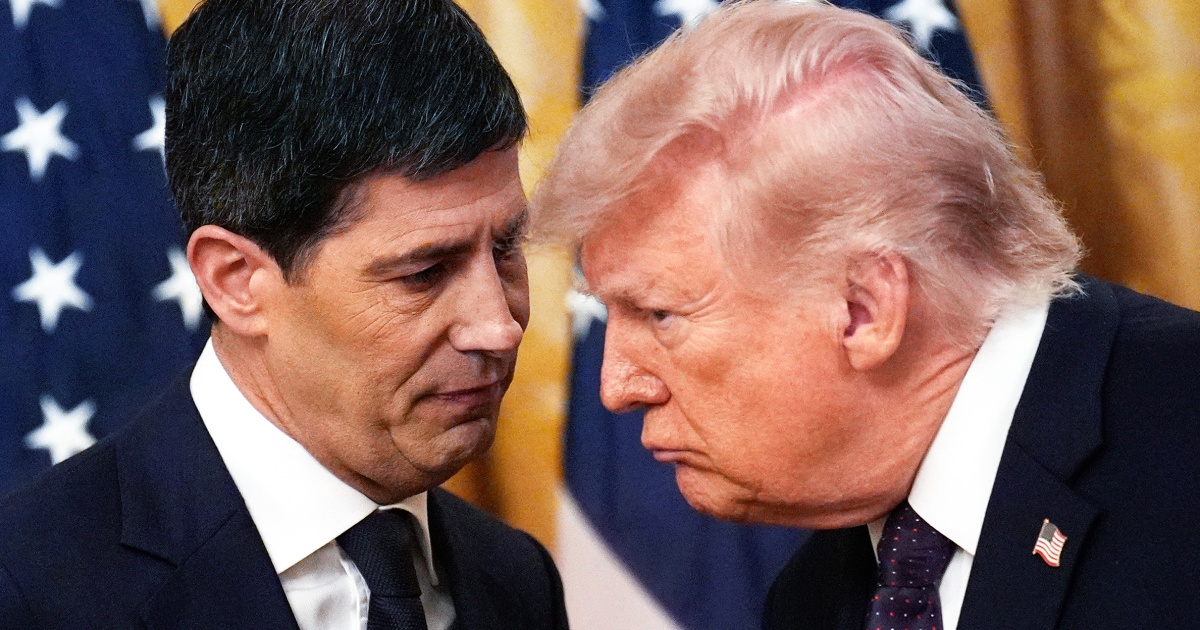
President Donald Trump berated Jerome Powell for years as he tried to pressure Powell, then chairman of the Federal Reserve, to lower interest rates. So far, he has given a pass to new Federal Reserve chief Kevin Warsh, whom he nominated this year. Now, just four months into Warsh’s term, the honeymoon may be over. Trump has stepped up his calls for an interest rate cut in recent weeks, setting the stage for a potential showdown after Wednesday’s decision by Federal Reserve policymakers. Warsh faces a “moment of choice,” as UBS economists put it: Will the Fed hold its key rate steady once again in the face of rising inflation, or raise the rate to fight stubbornly high prices, and potentially infuriate Trump? Trump adviser Kevin Hassett, chairman of the National Economic Council, said he thinks the “president will have something to say about it” if the Federal Reserve makes a “big move” on rates. (Hassett was a candidate for the Federal Reserve job before Trump picked Warsh.) “The president will have an opinion on it,” Hassett told CNBC on Friday. “I’m sure he believes there is plenty of room for interest rates to go down, and he expresses that view while respecting the independence of the Federal Reserve.” The Federal Reserve has not raised interest rates since 2023, when Joe Biden was president and the economy was struggling with sky-high inflation. But the market’s odds of an interest rate hike on Wednesday were more than 90% on Tuesday after August inflation data hit an annual pace of 3.4%. The Federal Reserve’s inflation target is 2%. ‘Just do your thing’ When Warsh took office in May, Trump said he wanted the new central bank chairman to simply focus on his job. “Don’t look at me, don’t look at anyone, just do your thing and do a great job,” Trump said at the time. This is in stark contrast to the insults Trump hurled at Powell, whom he nominated to be chairman of the Federal Reserve during his first term. Trump has not insulted Warsh, but has more openly expressed his desire for a rate cut, once again raising questions about the independence of the Federal Reserve. “I would love to see lower interest rates,” Trump said at a White House event on July 29. Trump said Warsh was “fantastic,” but claimed the Federal Reserve board was “political” and “they want to keep rates high.” Trump raised rates again last month, saying, “We would really like to see interest rates go down.” This month he went even further. “We should be paying the lowest interest rate in the world,” Trump said on Sept. 4, after the consumer price index report showed inflation was not slowing. Trump complained that higher rates cost the country more on its debt. “We should be in the 1% or half a percent,” he said. “We shouldn’t be in the 4%.” Trump later continued in a social media post: “A STRONG COUNTRY MEANS A LOWER INTEREST RATE.” The post ended: “High interest rates put America at a very unfair disadvantage, and I won’t let that happen!” The inflationary situation Several factors are fueling inflation. Deutsche Bank analysts noted that “the forward-looking elements of the inflation outlook” have worsened. “Recent FOMC meeting minutes showed that the Committee is focused on three forces in particular: energy, tariffs/supply chains, and AI. At least two of three of these factors point to higher inflation pressures” than those the Fed faced at its July rate-setting meeting, they wrote. The Trump administration has since entered a potentially protracted trade war with Canada, which was the second-largest source of U.S. imports last year. Energy prices have skyrocketed to all-time highs. On Tuesday, US crude oil hit $106 per barrel, and international Brent crude oil traded around $109 per barrel. Gasoline prices remain 45% higher than in February, when the war with Iran began. Diesel prices have reached their highest level ever recorded, putting pressure on farmers and truckers who depend on it. “The cost of diesel is factored into almost everything,” KPMG chief economist Diane Swonk recently told NBC News. The expansive expansion of the AI data center has fueled economic growth while pushing some supply chains to their breaking points. Data from Friday’s inflation reading showed that the price of software, accessories and related items rose 25.4% over the past year, the largest increase on record in the category. As a result, consumer technology companies, from Apple to Xbox to Amazon, have raised some prices. A rate hike carries its own risks, according to economists including Moody’s Mark Zandi. The job market, for example, is strong, if not spectacular. The unemployment rate is 4.1%, according to August employment data released this month. While inflation is high, the effects of Trump’s tariffs and energy shocks from the Iran and Ukraine wars should fade without any help, Zandi wrote on LinkedIn. So given the current economic circumstances, if the central bank raises rates, “it must push growth below potential, and that is difficult to achieve without layoffs, a rise in unemployment, and the activation of a self-reinforcing negative cycle,” he wrote. Tech companies are shelling out hundreds of billions of dollars to buy equipment, build massive data centers and hire developers to support their AI ambitions, while corporations have made significant profits. However, the average American has seen wage growth slow to an annual rate of 3.1%, lagging the pace of inflation. “The challenge is even more complicated because AI-related investment appears to be boosting the economy, while the non-AI economy is already struggling,” Zandi said.