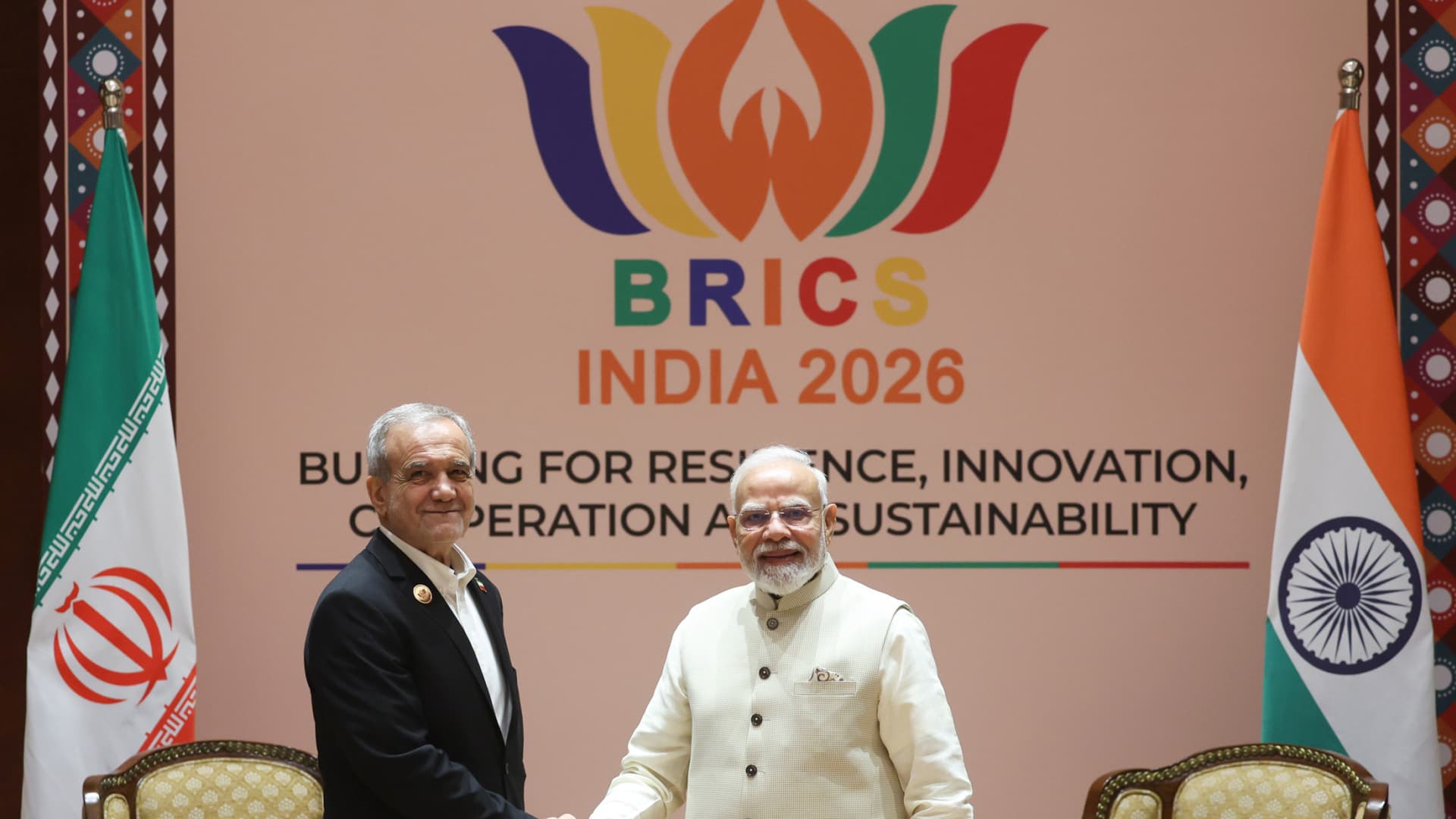
Iranian President Masoud Pezeshkian said his country will not surrender, adding that it has resisted aggression from the United States and Israel. “Iran has successfully confronted Israel and the United States,” Pezeshkian said Friday night while addressing a meeting of Indian religious leaders in New Delhi. “As we seek truth and justice, we will not give in to bullying arrogance.” Pezeshkian’s comments ahead of the BRICS Summit in India over the weekend came on the heels of US President Donald Trump’s claim that Iran would have annihilated Israel and the Middle East, and begun attacking American cities, if Washington had not taken military action against Iran. “If I had it to do over again, I would do exactly what I did,” Trump said Thursday. Pezeshkian, who is on his first visit to India, also met Indian Prime Minister Narendra Modi on Friday. During the bilateral meeting, Modi expressed concern for the safety of seafarers and stressed the need for peace and freedom of navigation and trade. Shipments of oil and other cargo through the critical Strait of Hormuz separating Iran and Oman have slowed to a trickle since the United States and Israel began their war against Iran on Feb. 28, stranding ships and seafarers for weeks or months. The Indian prime minister reiterated his call to resolve the conflict in the Middle East with “dialogue and diplomacy.” However, in his opening remarks at the BRICS Summit on Saturday, Modi called the current global order a “pyramid of privilege” where countries in the global south do not have enough power to shape decisions that affect them. The Indian prime minister, who chairs the BRICS this year, said there was a need to reform the UN Security Council and international financial institutions to reflect the growing economic influence of the Global South. Global crude oil prices have risen in response to a sharp escalation in fighting between the United States and Iran this month. Rising energy prices are a major concern for countries like India, which are major energy importers. India, the world’s fastest-growing major economy, is among the countries most vulnerable to supply disruptions caused by war. The South Asian country imports almost 85% of its fuel needs and relies on the energy supply chain through the Strait of Hormuz. The conflict in the Middle East has affected many Indian crews. In July, two ships carrying a total of 30 Indian sailors were attacked while transiting the Strait of Hormuz. According to the Indian government, 10 sailors have lost their lives due to the conflict in the Middle East. Modi and Pezeshkian were photographed affectionately holding hands as they left the BRICS Business Forum on Friday. “When the leaders of two great nations join hands, they remind us of the historical friendship between two great civilizations,” the Iranian embassy in India posted on X, praising the friendship between the two countries.