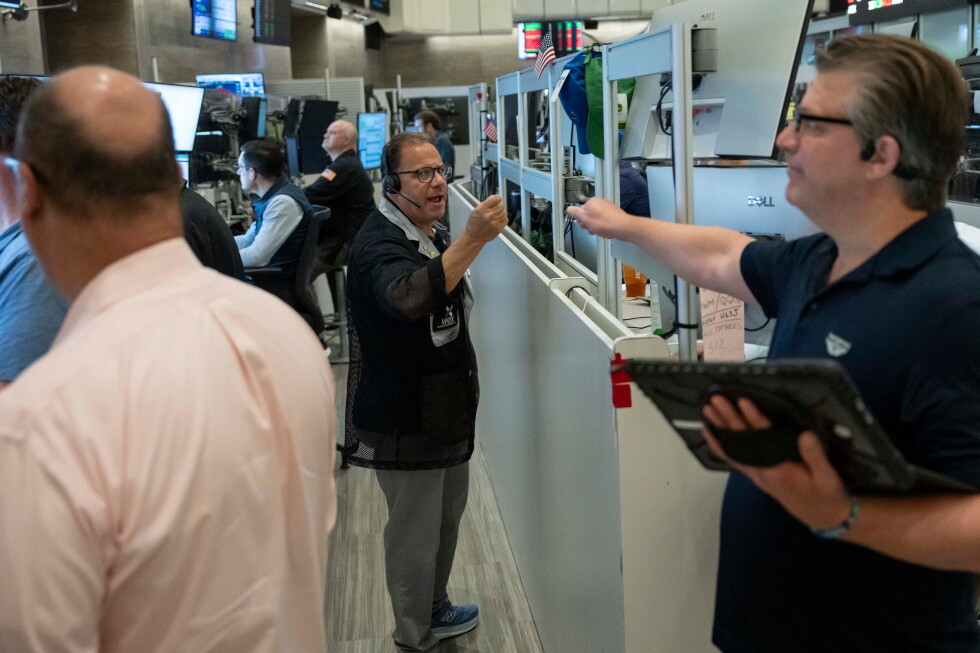
NEW YORK (AP) — Stocks fell on Wall Street Tuesday as oil prices continued to rise and stoked concerns about persistently high inflation. The S&P 500 index fell 0.4%. The Dow Jones Industrial Average fell 190 points, or 0.4%, as of 12:05 p.m. ET. The Nasdaq composite fell 0.5%. The weak start to September follows an unsettled but mostly positive month for Wall Street. All major indices posted monthly gains in August. However, the same concerns continue to hang over Wall Street, including anxiety about rising prices, public debt and the impact of global conflicts on the United States and the global economy. Technology stocks were among the heaviest on the market. Microsoft fell 1.3% and Advanced Micro Devices fell 2.4%. Their large market values tend to give them more influence over the direction of the overall market, and their growth amid the artificial intelligence boom has relied heavily on debt, which becomes more expensive as interest rates rise. AP AUDIO: Stocks fall on Wall Street under pressure from rising oil prices, bond selloff Wall Street is off to a weak start in September, after a rocky but mostly positive month. Much of the continued pressure Wall Street is feeling comes from a selloff in U.S. government bonds. The yield on the 10-year Treasury bond, which tends to affect mortgage rates, rose to 4.77% from 4.75% late Monday. At the beginning of 2026 it was as low as 4.20%. The 2-year Treasury yield, which closely tracks expectations for the Federal Reserve’s moves on interest rates, rose to 4.37% from 4.34% late Monday. This represents a significant increase from around 3.50% in early 2026. Bond yields have an inverse relationship with prices, with yields rising as prices fall. Rising yields indicate that investors are demanding higher yields on Treasury bonds because they are becoming riskier. Rising public debt is highlighting that risk. The US debt surpassed $40 trillion two weeks ago, a shocking milestone as defense costs and interest on the growing deficit account for a huge proportion of federal spending. The bond selloff is global and other nations face the same economic pressures. Higher bond yields indicate higher borrowing costs for mortgages and a wide range of other loans. Higher borrowing costs tend to weigh on investments, including stocks, while making it difficult for businesses to expand. Oil prices have been behind much of the pressure on inflation, bond yields and the broader stock market. The price of Brent crude oil, the international standard, rose 2.3% to $92.61. Energy costs remain high and volatile amid the ongoing US war with Iran, which has essentially closed the Strait of Hormuz, through which 20% of the world’s oil is normally shipped. Subscribe to Morning Wire: Our flagship newsletter breaks down the day’s biggest headlines. Higher oil prices have raised the costs of everything from gasoline to shipped goods, fueling inflation that has been putting pressure on households and businesses. Rising inflation has also been a problem for the Federal Reserve, which aims to reduce it to a rate of 2%. The inflation rate is well above 3%, and Wall Street expects the Federal Reserve to raise interest rates before the end of the year to ease the pace of price increases. Investors are betting on a 66% chance that the central bank will raise its interest rate at its next meeting in September, according to CME FedWatch. The Federal Reserve will receive more updates on inflation before the meeting. In the meantime, you’ll get updates on the job market this week. On Tuesday, the government reported that U.S. job openings rose slightly in July. A broader monthly report for August will be released on Friday. Markets in Europe fell and markets in Asia were mixed.___AP Business Writers, Elaine Kurtenbach, Michelle Chapman and Matt Ott contributed to this report.