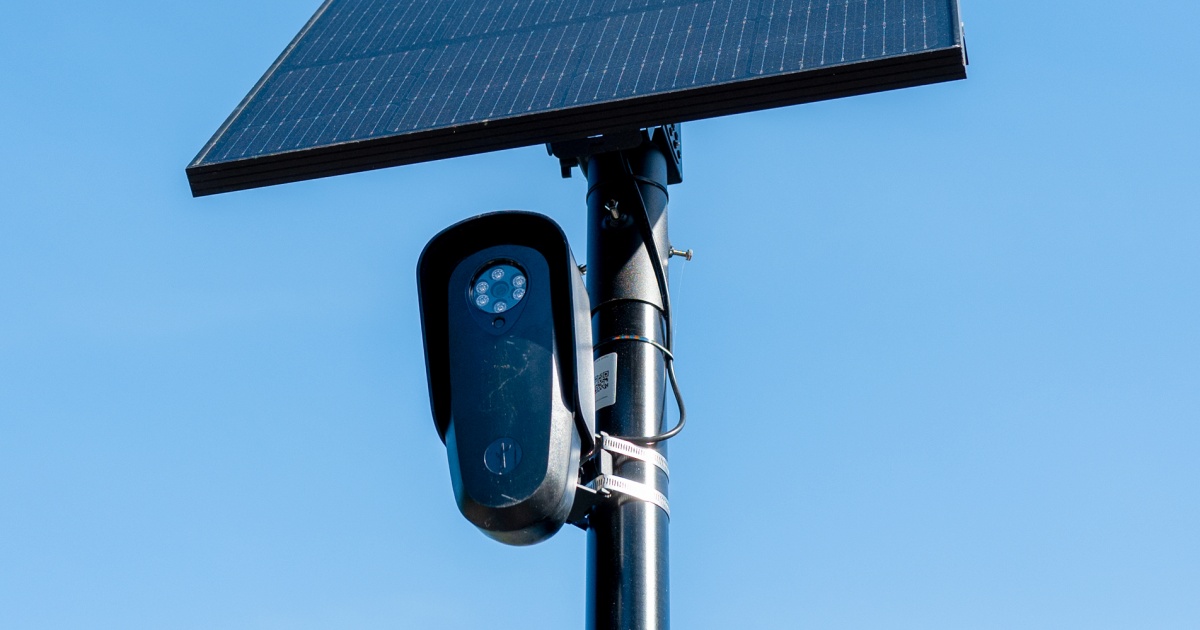
Florida’s state transportation office on Monday revoked local police’s ability to place license plate readers on state highways, as a nationwide backlash continued to gain steam against Flock Safety and other surveillance camera makers. Will Watts, director of operations for the Florida Department of Transportation, informed local law enforcement agencies in a one-page memo that the department was revoking all previously issued approvals for license plate readers (LPRs) on state “rights of way,” or the strip of land that is next to or part of a state highway. Watts cited a “recent exponential increase” in the deployment of police cameras, as well as “reports of misuse, data privacy concerns and surveillance schemes” that he said deserve immediate action “to preserve the sovereignty and quality of life of Floridians.” The technology has been around since the 1970s, but has spread widely in recent years as software has improved and the cost of hardware has decreased. Flock provides a network to customers that allows law enforcement groups across the country to share footage from their cameras with other agencies and departments, raising concerns about abuse. The memo fulfills a promise from Florida Gov. Ron DeSantis, a Republican, who last week said surveillance had gone too far. “We’re going to clear the state’s rights of way,” he said Friday on the Real America’s Voice podcast. “These cameras that are available now, who’s to say they’re just doing registration?” said. “Now, they say that. I think they’re capturing people in their cars. I think they’re capturing a lot more information than they’re letting on. And you’ve seen the abuse.” Florida is not alone. Last week, Texas Gov. Greg Abbott, a Republican, ordered a halt to state funding for Flock cameras, according to The Texas Tribune, and the issue has come up in midterm election campaigns. More than 100 local governments have canceled or not renewed their LPR contracts since early last year, according to the Institute for Justice, an advocacy group in Virginia that says the technology is unconstitutional. Monday’s order did not affect cameras on private property or local rights-of-way, where 98% of surveillance cameras are located, DeSantis said, but some localities in Florida said they were following suit. The Jacksonville Sheriff’s Office said it would discontinue the use of license plate reading technology throughout its jurisdiction, Duval County, “effective immediately” even as it called the technology “an enormously valuable investigative tool.” The county, which includes Jacksonville, has 1 million residents. Flock Safety, which in recent years has helped popularize license plate readers and other camera technologies for police departments, said a ban was the wrong reaction. “Flock’s technology is an important public safety tool for law enforcement agencies across Florida, helping officers solve serious crimes, find missing people, recover stolen vehicles and support safer communities,” the company said in a statement. “In just the last few weeks in Florida, the technology has been used to find missing children, leading to the arrest of “Instead of banning a critical public safety tool, we support thoughtful legislation and strong privacy, transparency and accountability barriers that ensure technology is used responsibly while preserving law enforcement’s ability to use effective tools to keep people safe,” the company said. users whose searches show “abnormal activity.” Last week, a Kentucky police officer was arrested after authorities said he used the Flock system more than 2,000 times to track his ex-girlfriend. NBC News has identified 50 areas across the country where Flock cameras have been damaged, spray-painted, vandalized or cut up in acts of vandalism since 2024, while some drivers have sued Flock and organized in a proposed class-action lawsuit.