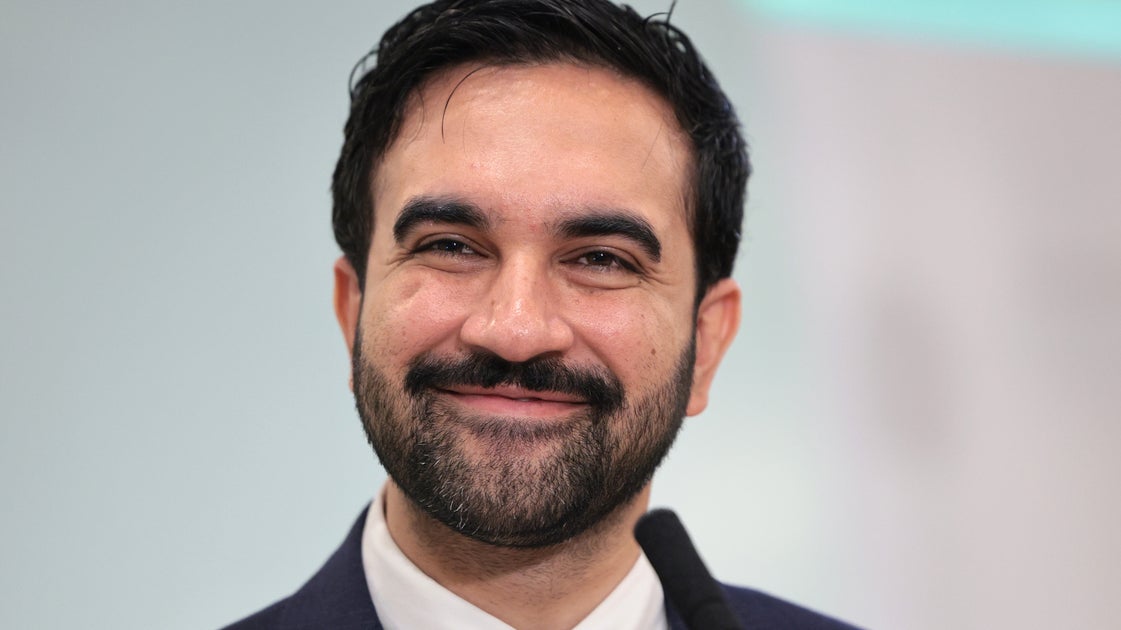
Mayor Zohran Mamdani and other New York City leaders are challenging the controversial business model that underpins Amazon’s vast delivery network, and the fallout from the fight could extend far beyond the five boroughs. City Council members hope to pass the Delivery Protection Act, a bill that would force Amazon, FedEx and other logistics companies to hire drivers to deliver packages to New Yorkers. Although many customers may not realize it, the guy wearing the Amazon uniform and driving an Amazon van is not an Amazon employee; typically works for one of Amazon’s “delivery service partners” or DSPs. The Democratic Socialist mayor and other supporters of the bill say that system has allowed Amazon to avoid legal employment responsibilities while still controlling workers. By making drivers direct employees of Amazon, the law would expose the company to a host of legal liabilities, including wage and safety protections, and strip it of a valuable structural advantage over union organizing. The battle is likely to move to other blue cities and states. In fact, a similar bill has already appeared in Chicago with the same name. But Amazon is fighting back. The company warns that it could pull its delivery operations out of New York City if the bill passes, resulting in fewer jobs and longer delivery times because drivers would have to pick up packages at centers in Connecticut or New Jersey. DSP owners who would lose their jobs at Amazon have rallied against the proposal, saying it would destroy their businesses. “They have managed to make home deliveries on a scale that now eclipses even UPS, without having a single delivery driver as an employee.” David Weil Kelly Nantel, an Amazon spokesperson, said the company is “committed to creating good jobs” and supporting the companies with which it contracts. “But as written, this legislation would directly undermine that commitment, threatening small businesses that deliver to customers, putting the jobs of more than 5,000 of their employees at risk, and forcing us to consider relocating delivery operations out of town,” Nantel said in a statement. “This would likely mean slower and more expensive delivery.” Amazon faces unions and progressive worker advocates who see its delivery system as a reflection of a broader scourge that has been affecting working conditions for decades. “We cannot hide the fact that some corporations are so large and influential that their business practices affect entire industries,” Julie Su, New York’s deputy mayor for economic justice, told HuffPost. “This model has proliferated throughout the economy… and all of this has contributed to making jobs more precarious and less secure for workers.” “It really has threatened a century of labor protections,” he added. New York Mayor Zohran Mamdani supports the Delivery Protection Act, which could radically change the outsourcing model at the heart of Amazon’s delivery network. Bloomberg via Getty Images Amazon’s delivery network could be the modern apotheosis of what labor scholar David Weil calls the “fissured workplace”: when a large company focuses on one core competency (package delivery) and transfers most of the work. possible to smaller companies that compete with each other. Weil argues that this decades-long corporate trend has helped companies cut costs, but at the expense of workers’ wages and safety. FedEx pioneered the outsourcing playbook in the transportation sector long ago, but Weil says Amazon has taken it “to a new and higher level,” in part by using algorithms and artificial intelligence to direct the work of people it doesn’t technically employ. “They’ve managed to do home delivery on a scale that now eclipses even UPS, without having a single delivery driver as an employee,” Weil told HuffPost. “The proof of success as a business model is the fact that people think that Amazon delivers their products. And Amazon gives every reason to believe it.” Luc Albert Rene knows confusion well. He delivers about 300 Amazon packages a day from an Amazon facility in Queens, but is an employee of one of thousands of Amazon DSPs. René said one of his customers recently chatted with him about his job after he delivered a package wearing his usual blue and black Amazon uniform. “When I told him that Amazon doesn’t recognize us as employees, he was shocked,” said Rene, who makes $24.25 an hour after three years. “We cannot hide the fact that some corporations are so large and influential that their business practices impact entire industries.” – Julie Su, New York City Deputy Mayor for Economic Justice. René maintains that Amazon ultimately controls working conditions and that the DSP agreement is actually a construct to avoid legal liability. “Amazon keeps claiming we don’t work for them, and yet they dictate our start time, when we have to return to the station…Amazon has all the control,” he said. (Steve Kelly, an Amazon spokesman, said Amazon assigns fulfillment windows to “manage facility operations,” but maintained that “DSPs set schedules for their own employees.”) René has been trying to build support for the Delivery Protection Act with the help of the International Brotherhood of Teamsters, one of the legislation’s biggest sponsors. Organizing Amazon has become imperative for the Teamsters, whose members have fallen from more than 2 million in the 1970s to about 1.25 million today. Amazon’s influence as a large non-union employer affects wages and working conditions across the logistics industry, including UPS, where more than 300,000 truck drivers work. Amazon’s model makes organization more challenging. The Teamsters have to unionize drivers, one DSP at a time, and any gains can be quickly erased if those companies lose their contracts with Amazon. When the union said in 2023 that it had organized a company of about 80 drivers and dispatchers in California, Amazon said it had already decided to leave the DSP. The retailer attributed the decision to poor performance; The Teamsters said it was to break the union. Su declined to discuss how the bill could benefit union organizing, saying the proposal largely has to do with safety on the streets. A report last year from the city Comptroller’s Office found that injury-related crashes increased in 78% of areas where a last-mile facility opened. Officials argue that making companies like Amazon legally responsible for delivery fees would help ensure that drivers don’t endanger pedestrians, other drivers or themselves. Beyond the direct-hire mandate, the law would also require last-mile facilities to obtain licenses and meet certain safety and training standards. Organizing Amazon is crucial for the Teamsters union, which represents UPS drivers. Jerome Sloss, who drives for a Queens-based DSP, said he and other drivers sometimes end up in white rental vans with broken locks or no air conditioning, hauling packages in broken hand trucks. He believes the team would be better if Amazon were responsible for it. “All of these issues should point to Amazon, but because of the way they have set up the business, they are constantly telling us to talk to our DSP about it,” he said. “Their favorite excuse is ‘We don’t control it’. That’s a lie, of course. Everything is set by Amazon.” Amazon maintains that the legislation is based on “misconceptions” about its safety record. The company claims that serious failures in its delivery network were reduced by 23% last year. Driver monitoring technologies have made deliveries less dangerous, the company argues, and DSP managers receive automatic alerts when systems detect unsafe behavior. Bashar Yazgi, owner of Bronx-based DSP Logistics XPress, said he has had only two serious accidents in three years among his roughly 170 drivers. “Our safety record is impeccable,” Yazgi said. “We pay for our own insurance. It’s in our best interest to make sure we’re promoting a safety-first culture.” He compares the DSP system to the fast food business model, which has also drawn criticism from worker advocates. “I don’t see how it’s any different than working for a McDonald’s franchise owner,” Yazgi said. “You represent the brand and you wear a McDonald’s uniform. There is no difference here.” Yazgi has been outspoken in his opposition to the Delivery Protection Act. Under the legislation, your DSP would not exist. He says he has invested more than a million dollars in it. Rudy Cazares, another DSP owner, said he believes the legislation is really about helping the Teamsters grow. “You don’t have to be in politics” to understand it, Cazares said, noting that the union has come out in support of the bill. He said he is not opposed to stronger safety protections for drivers. “But when you have a direct hire mandate, it’s just a very clever way to eliminate us small business owners so they can go after Amazon,” he said. “When you have a direct hire mandate, it’s just a very clever way to eliminate us, the small business owners, so you can go after Amazon.” – Rudy Cazares, owner of DSP. Weil said Amazon’s growth could be “existential” for the high-paying jobs associated with UPS. Although Amazon and UPS have comparable starting salaries, UPS drivers earn much more as their seniority increases, and the top wage will reach $49 next year in New York under the union contract. Many UPS drivers already earn $100,000 a year with overtime, viewing it as the type of long-term career not typically associated with Amazon deliveries. Amazon says driver pay at DSPs will average about $24 an hour next year. “Amazon has created a system that can displace UPS from some of its core markets,” Weil said. “The entire system that UPS has, including contracts and union protections, is under enormous pressure.” Federal regulators have attempted to hold Amazon accountable for drivers as a “joint employer” along with its DSPs, but those efforts were led by Democrats under former President Joe Biden. The Trump administration has moved federal policy in the other direction, giving Amazon more leeway for its outsourcing model and much less to worry about when it comes to unions. That’s one reason the stakes are so high for the legislation in New York City: It’s an effort by local leaders to break up the DSP model in the country’s largest market. The substance of the bill could change in the coming weeks, but it already has the support of a supermajority on the city council, which bodes well for passage this year. When asked if he is concerned about Amazon removing its hubs from the city, Su said he would not change the Mamdani administration’s support for the bill. “Of course we want businesses to stay in New York City,” he said. “But we will not sacrifice health and safety as a cost of doing business.”