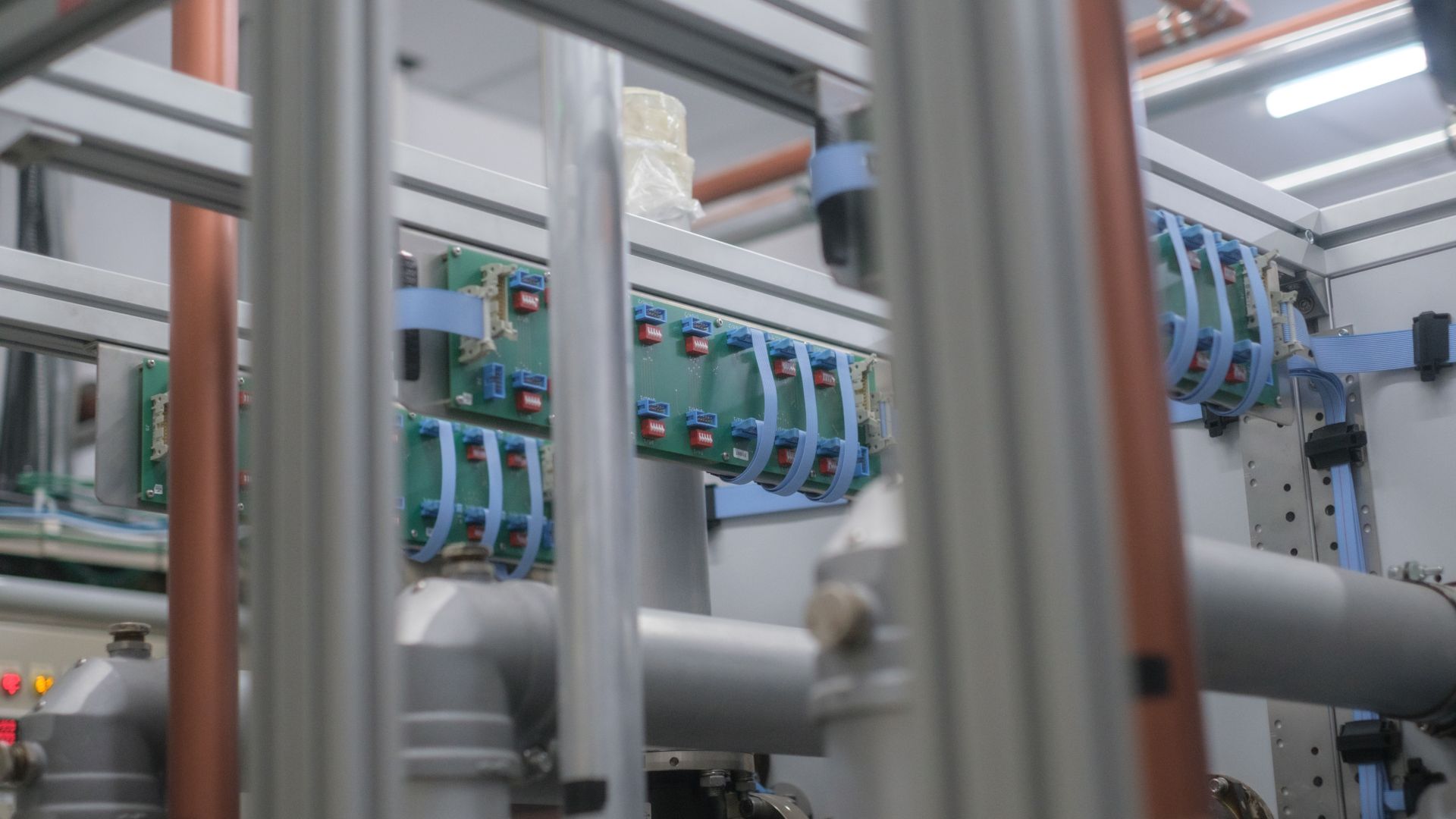
Researchers from the Hong Kong University of Science and Technology (HKUST) have unveiled the world’s first zero-degradation elastocaloric cooling device. The team claims their innovation delivers long-lasting, eco-friendly cooling, maintaining stable performance even over an impressive one million operating cycles. Powered by a fatigue-resistant solid-state coolant, this innovation is expected to usher in highly efficient green refrigeration, driving progress towards sustainable global development. A promising green alternative to traditional cooling The researchers highlighted that elastocaloric cooling, which is based on stress-induced reversible phase transformation of shape memory alloys (SMA), offers a promising green alternative to traditional cooling. Despite its great potential, commercialization has been hampered by performance degradation and low reliability. The predominant use of commercial NiTi SMA as a coolant in most existing elastocaloric cooling devices is a key challenge. This material is prone to functional fatigue, causing its cooling power to decrease with prolonged use. The team developed a fatigue-resistant SMA and integrated it into an innovative cooling structure. By combining advanced SMA materials with device-level design and engineering, they have successfully addressed the critical issues of material functional fatigue and structural reliability. The breakthrough has resulted in a zero-degradation elastocaloric cooling device capable of maintaining stable cooling performance during long-term operation, according to a press release. Constant cooling power of 400 W. Using this novel material and device design, the research team constructed a novel elastocaloric cooling device integrated with multiple refrigerant units. This device achieved a constant cooling power of 400 W and maintained a constant temperature range of 41 K (a temperature difference of 41 °C) for one million operation cycles without degradation. Accelerated fatigue testing of the TiNiCuCo coolant also showed no functional degradation after 100 million cycles. Under real-world cooling conditions, the coolant is expected to operate reliably for more than a decade, according to the release. “While significant progress has been made in cooling performance over the past decade, long-term cooling stability is crucial for practical implementation. By integrating advanced shape memory alloy materials with innovative device engineering, we have addressed this key challenge,” said Prof. SUN Qingping, senior professor at the Department of Mechanical and Aerospace Engineering at HKUST and corresponding author of the paper. “This advancement in cooling stability, achieved at both the material and device level, brings the technology one step closer to real-world applications beyond laboratory demonstrations. We are currently developing an air conditioner based on this technology. In the future, we aim to further improve the energy efficiency, power density and cost competitiveness of elastocaloric cooling systems to accelerate their market adoption as a sustainable cooling solution.” 2025. That previous system achieved 1,284 watts of cooling power and demonstrated the potential of elastocaloric technology for air conditioning applications. The latest development addresses a different part of the commercialization challenge: how to keep such systems running consistently for very long periods. HKUST’s latest research addresses one of the core weaknesses of the technology, which is durability. By combining a fatigue-resistant TiNiCuCo alloy with a redesigned coolant structure and more compact system architecture, researchers have shown that elastocaloric cooling can maintain stable performance over an extremely large number of cycles.