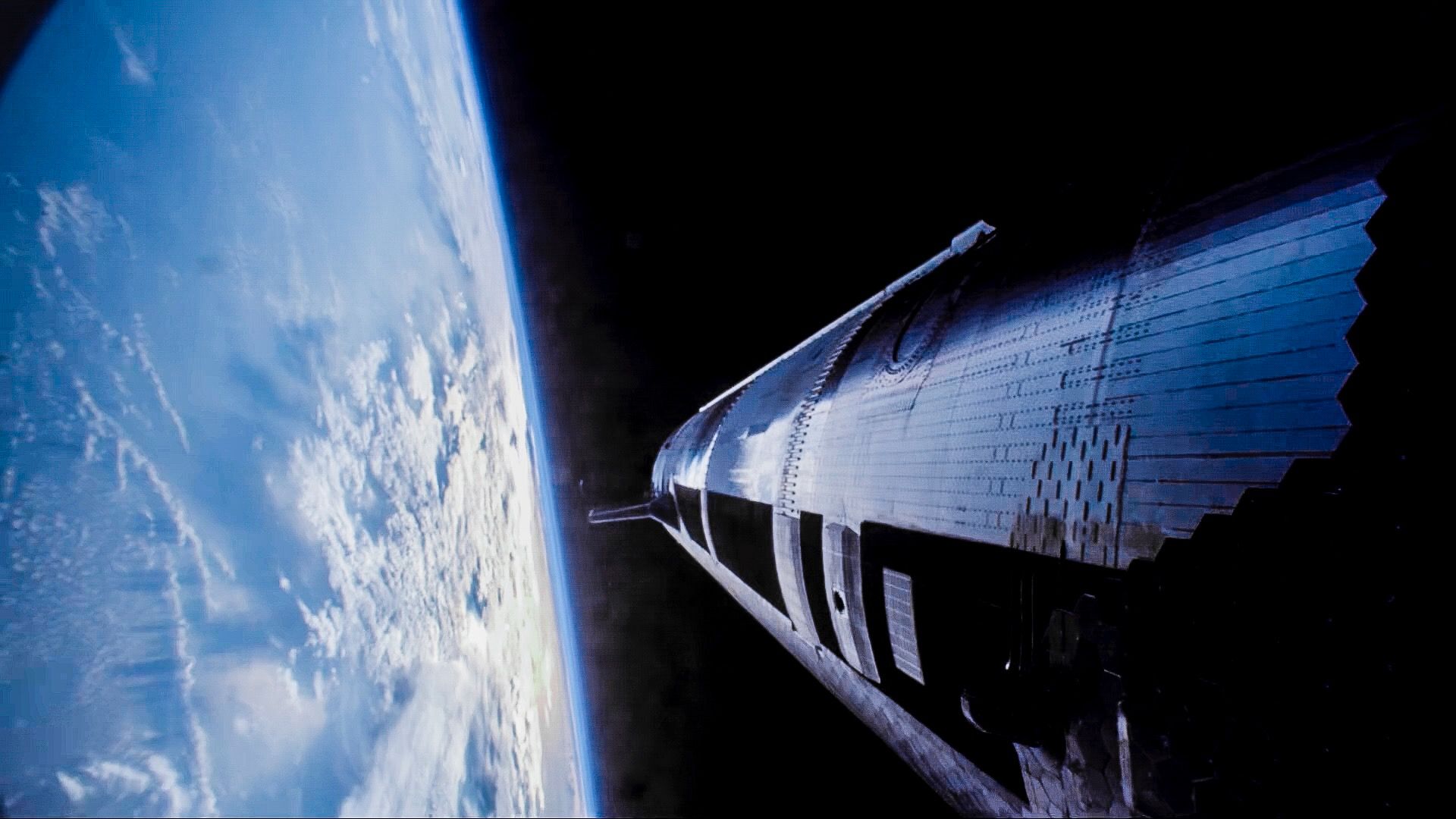
There’s a lot riding on SpaceX’s upcoming Starship launch, both physically and conceptually, as the company prepares the giant rocket for its biggest test flight to date. SpaceX is targeting September 28 for Starship Flight 14, the next liftoff of its industry-shaking launch vehicle, and plans to fly the towering spacecraft farther and longer than ever before, with a very specific destination in mind: orbit. Of the dozen launches so far, Starship has only flown suborbitally. Succeeding in its first orbital effort will be a major milestone for the rocket, which is still in development. Liftoff on September 28 is scheduled during a 75-minute window that opens at 8:15 a.m. EDT (1215 GMT). With orbit as the goal, the mission is expected to last much longer than previous Starship launches: about 10 hours from liftoff to landing of the rocket ship’s upper stage, compared to previous suborbital flights that only lasted about an hour each. Instead of its previous arcing trajectories above the far reaches of Earth’s atmosphere, Starship will rise to an altitude of about 170 miles (275 kilometers), where it will circle the planet six times before executing a deorbit burn to begin its return. SpaceX is taking the opportunity to load Starship with a stack of 26 operational Starlink Version 3 (V3) satellites for deployment to low Earth orbit (LEO). This batch will be the first of more than 100,000 upgraded Starlink spacecraft designed to expand the company’s wireless satellite Internet services. SpaceX has deployed sets of Starlink V3 test payloads on previous Starship launches, but due to their suborbital trajectory, they all quickly returned to Earth. Three of the Starlinks V3s that will take off on Flight 14 are equipped with cameras to look back at Starship after their deployment to inspect the spacecraft’s thermal protection panels, an essential component to the success of Starship’s ultimate purpose. SpaceX is designing Starship as the world’s first fully reusable launch vehicle, what the company calls “The Holy Grail of Rocketry” (which is also the title of SpaceX’s latest documentary-style episode chronicling the rocket’s development). Starship’s Super Heavy first-stage booster and the ship’s upper stage are being designed with the ability to perform decelerations and landings to return to their launch site, where they will be caught mid-air using huge toothpick-like arms on a pair of adjacent “Mechazilla” launch towers for renewal and flight. You may like As the company has worked toward that goal, it has passed several milestones on Starship’s list of technical feats needed to achieve the rocket’s eventual rapid reusability. For example, SpaceX has conducted three successful Super Heavy captures at SpaceX’s launch facility in Starbase, Texas, and has executed a handful of refires of a single Raptor 3 engine on the ship while it was in space. SpaceX has not attempted a Super Heavy return to the launch and capture site since introducing the most recent update to the Starship design, Version 3, which first took off on Flight 12 in May. None of the Starship launches have yet attempted to return and capture the rocket’s upper stage. Instead, the two Starship V3 vehicles launched this year aimed at soft splashdowns at sea for Ship and Super Heavy, in order to fine-tune landing procedures without risking damage to the main launch infrastructure at Starbase. That will also be the case for Flight 14. Composite photo showing the Super Heavy booster of SpaceX’s Starship megarocket approaching to land on the launch stand on October 13, 2024. (Image credit: SpaceX via Starship boosters to a watery grave to ensure all those modifications work. as expected. Super Heavy Flight 14 (Booster 21, for those in the know) will follow a similar trajectory to its previous flights, with its primary objectives after stage separation being a successful pushback boost, followed by a landing and ditching in the Gulf of Mexico. The ship (ship 41, if you’re counting), on the other hand, will fly a very new mission compared to its previous trips in space. Its initial trajectory after stage separation will put the spacecraft on the same course as previous flights, arcing toward a reentry and splashdown in the Indian Ocean. But then it will head to orbit, if all systems are up and running. SpaceX clarified its criteria for entering orbit on the Flight 14 page, stating: “Starship will only execute an orbit burn after the flight control team has ensured that there is sufficient redundancy in the critical hardware to perform the subsequent orbit burn at the end of the mission.” About 25 minutes after liftoff, the spacecraft will fire one or more of its three vacuum-optimized Raptor 3 engines for an orbital insertion maneuver, which is expected to last only about 20 seconds. SpaceX has included contingency landing sites should the need for early deorbit arise, and plans to be “intentionally conservative” in its abort criteria to ensure flight safety. However, if that phase of the flight is nominally executed, SpaceX has scheduled the half-hour Starlink deployment procedure to begin about 10 minutes later. The coastal phase of the mission will then begin. What to read next SpaceX is planning for Starship to complete six orbits of Earth over the course of about eight hours, during which the company hopes to stream live views of the planet from cameras aboard Ship. At the end of its coastal phase, the spacecraft will fire a single-engine deorbit burn using one of its Raptor 3s at sea level for a directed landing in the Pacific Ocean, concluding Flight 14’s mission approximately 10 hours after launch. The upper stage of Starship Flight 13 makes a landing over the Indian Ocean, July 26, 2026. (Image credit: SpaceX) Orbit is a big step for Starship, provided SpaceX can pull it off. If Flight 14’s launch date remains September 28, it will be exactly 10 years and one day since SpaceX CEO Elon Musk’s initial presentation of the company’s spacecraft design (then called the Interplanetary Transportation System, or ITS) at the 67th International Astronautical Congress in Guadalajara, Mexico, in 2016. Since then, the ambitious launch vehicle, the largest and powerful in history, it has gone through a decade of modifications and ground testing. and increasingly complex launch profiles, with progress marked by a mix of successes and setbacks along the way. But the pressure to get Starship operational is increasing. NASA has a lunar lander version of the vehicle for its Artemis program architecture, which includes an uncrewed article for docking tests in Earth orbit with NASA’s Orion spacecraft and Artemis III crew in mid-2027, and a crewed lunar lander mission in 2028 on Artemis IV. SpaceX is also eager to take advantage of Starship’s enormous payload capacity to begin deploying its much larger Starlink V3s at scale and, eventually, help assemble an even larger constellation of orbital AI data centers that Musk envisions. That constellation will consist of one million spacecraft, if SpaceX gains regulatory approval. Still, Starship has more feats to master before it can achieve everything SpaceX has billed it for. Standing 407 feet tall (124 meters), Starship V3 Super Heavy is powered by 33 Raptor 3s, which provide about 18.1 million pounds of thrust at liftoff, enough to put up to 100 tons into orbit. SpaceX says subsequent generations of Starship are being designed to double that payload capacity to around 200 tons. But achieving those design goals depends on SpaceX’s ability to make Starship much more mature. For Starship to deliver on SpaceX’s promises, the company still needs to address technological hurdles such as in-orbit fuel transfers and long-term cryogenic storage of propellants in space, both of which Starship needs to fly beyond LEO. On Artemis IV, for example, NASA estimates that the Starship lunar lander will need up to a dozen refueling launches to fill its tanks enough to carry out its mission of carrying astronauts to the surface of the moon, where it is expected to stay for up to a week before launching its crew back into lunar orbit to rendezvous with Orion. However, those capabilities lie further (but presumably not too far) into Starship’s development timeline. Orbit is the primary goal for Flight 14, and only by achieving that milestone will SpaceX move forward to overcome the rocket’s remaining obstacles.