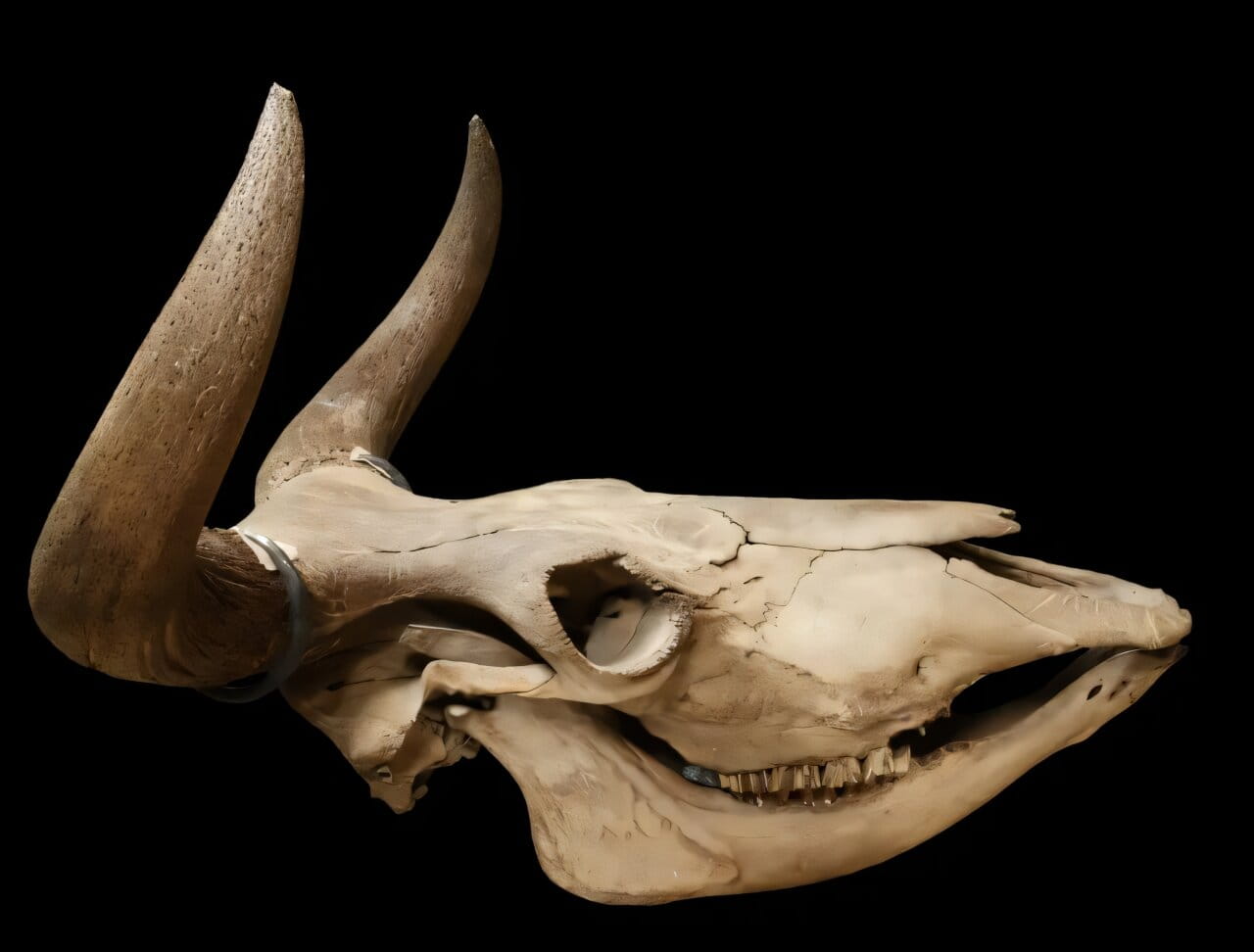
Aurochs were the wild ancestors of modern cattle. They once roamed Europe, Asia and North Africa. Today they are no longer there. The last one died in Poland in the 17th century, ending a decline of approximately 8,000 years. People caused most of this loss around the world. Scandinavia tells a different story, because animals disappeared there long before. A new study led by Lund University now explains why. Scania aurochs skull from the Biological Museum of Lund University. Credit: Lucas Gölén An international team studied ancient DNA from aurochs bones. The bones came from swamps and settlements in southern Sweden and Denmark. The researchers also tracked how many radiocarbon-dated specimens and bones turned up in each period. They also compared the ages of bones at archaeological sites. They then compared all this to regional records of past climate, plants and human activity. Population models added a final check. The aurochs arrived in Scandinavia about 11,700 years ago, after the last Ice Age ended. They came from a refuge in Western Europe. The trip was difficult for them. DNA shows a strong demographic bottleneck during the northward movement. Genetic diversity decreased as the animals spread from mainland Europe through Jutland, and then fell again in Zeeland and Skåne. Reconstruction of an aurochs. Credit: Erika RosengrenLess diversity means more inbreeding. Over time, the herds became less able to handle stress. Lead author Mikkel-Holger Sinding of the University of Copenhagen calls this a classic case of a bottleneck. Scientists once thought the Scandinavian herd was isolated about 10,000 years ago. The new genetic evidence says no. Contact with the main European population was prolonged. Isolation occurred about 8,000 years ago, when rising sea levels flooded the land bridge to the mainland and formed the Danish-Swedish Strait. At the same time, humans hunted intensively. The population model shows a classic boom and bust. The numbers grew for a while and then fell sharply and quickly. The decline aligns with more settlement, more hunting, and greater use of local resources. The aurochs completely disappeared from the Danish island of Zeeland. Sweden’s population plummeted. Lead author Erika Rosengren with a mounted aurochs skeleton from the Biological Museum of Lund University. Credit: Gunnar Menander A small group remained in southern Sweden until at least 6,500 years ago. The forests continued to expand, but the animals survived in refuges, mainly in places that hunters avoided. Then conditions changed again. Open lands gave way to dense forests and pastures became more difficult to find. Stress ended what the hunt started. The team concludes that no single cause wiped out the Scandinavian aurochs. Low genetic diversity, habitat loss and fragmentation, and prolonged hunting pressure all worked together. Genetic decline alone didn’t kill them, but the weakened herds fought everything else. The findings are important for current wildlife work. Lead author Erika Rosengren, a doctoral student at Lund University, says old cases like this show which species suffer the most and how people began to shape their environment. Species rarely disappear because of a single factor, he says. Conservation plans must address several pressures at once. It also advocates for ecological corridors that link habitats rather than isolated reserves. The study shows the value of combining DNA research, archeology and paleoecology. Publication: Rosengren, E., Rossi, C., Magnell, O., Hallgren, F., Ekström, J., Mostadius, M.,… Sinding, M.-HS (2026). The immigration history and extinction dynamics of the Scandinavian aurochs (Bos primigenius). The Holocene, (09596836261477271). doi:10.1177/09596836261477271