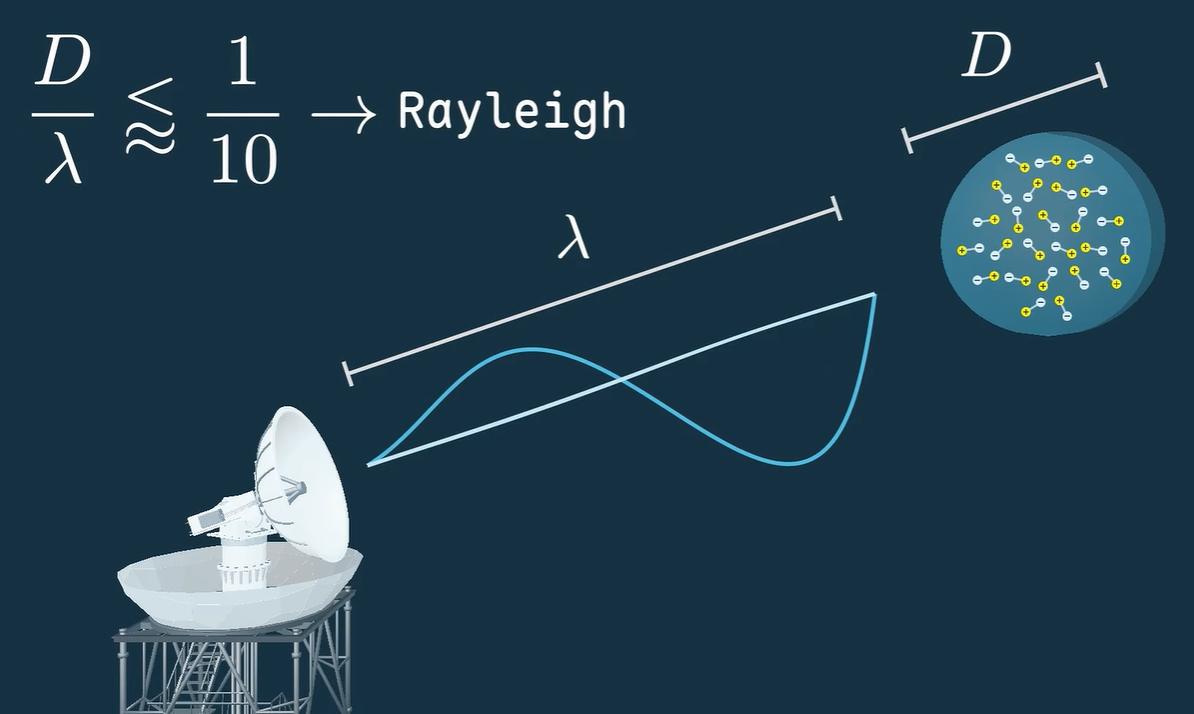
A good rule of thumb is that anything that can interact with electromagnetic (EM) radiation is an antenna, which includes our bodies, which contain mostly salt water, as well as raindrops and moisture in the air. This can be both a benefit and a curse, depending on whether you are trying to transmit a signal in rainy weather or operating weather radar. Here it is essential to understand what type of antenna is really a raindrop to optimize for any of the scenarios, which is where a video of [Marshall Bruner] Provides a solid primer. The video focuses on the Rayleigh regime, which may be familiar from atmospheric Rayleigh scattering, which also affects EM radiation in the visible spectrum, giving those of us with color-seeing retinas those pretty blue skies. As EM radiation passes through these small airborne droplets, their neutral alignment is altered and causes them to become dipole antennas, moving along with the incoming frequency. The backscatter part of this event is what returns to the emitter, like weather radar. Here, the volume and permittivity of the moisture sphere determine the signal strength, which is great if you are actually operating a weather radar and want to map the moisture in some clouds, including the presence of snow. There is a lot of math involved that is covered in the video and expanded upon in a related Python notebook.