Words by
Gary Rose MD FACS
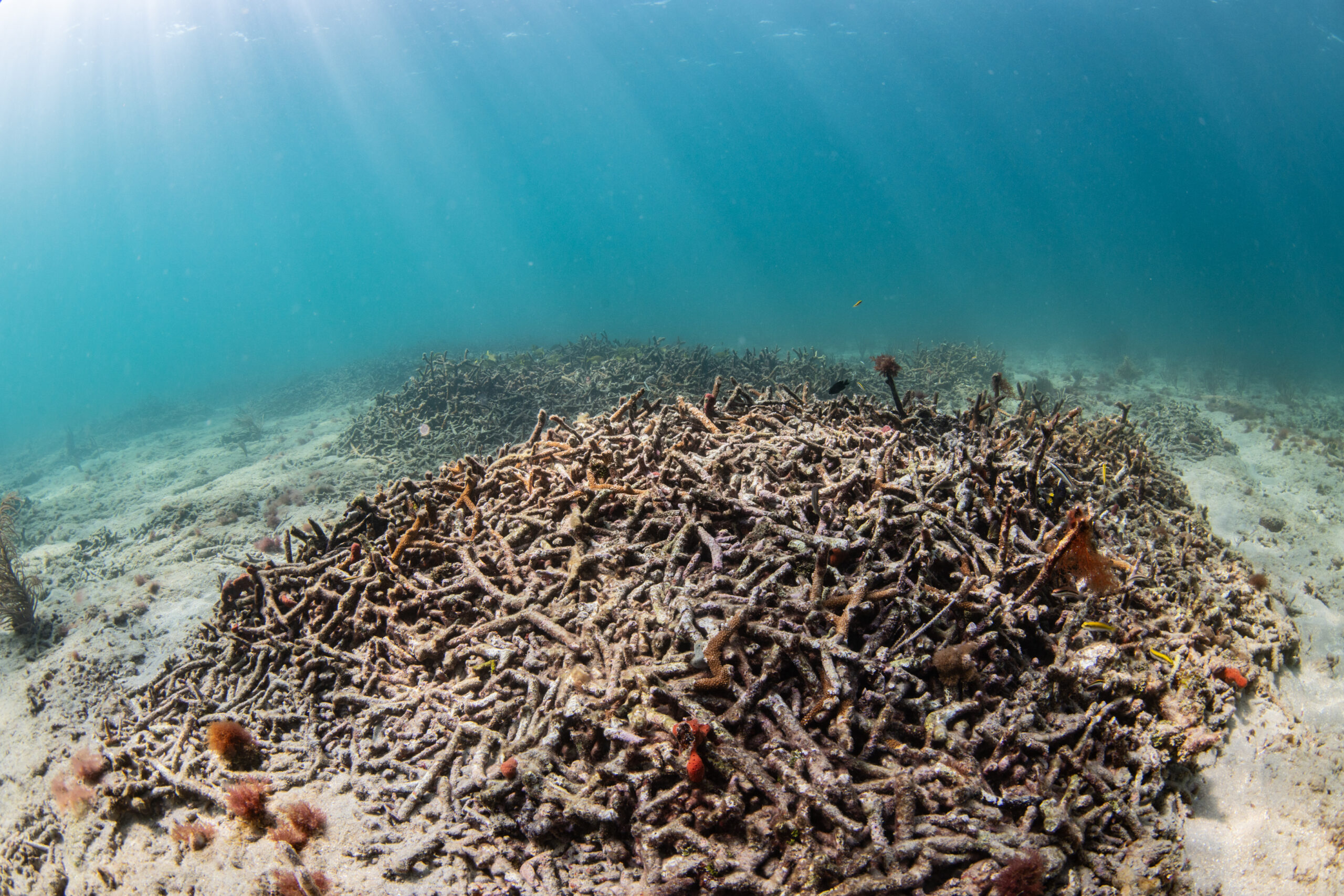
I’m sure that you’ve heard this phrase more than a few times over your years of diving: “You should have seen these reefs back in the day.” I’m guilty of saying It myself, many times over my past 52 years of being a certified SCUBA diver.
Over the years I have observed the extraordinary changes that have befallen the once healthy and beautiful reefs, in my front yard, in the South Atlantic waters of South Florida. In 1974, when I first started SCUBA diving, and became certified, it was a very different world, above and below the sea. But for now, I shall stick with below the sea.
My first few hundred dives were among the reefs of South Miami and the Upper Florida Keys. Each dive was a showcase of natural beauty, of rainbow-coloured schools of snapper, parrotfish, trigger fish, damsel fish, fairy basslets, and so many other vibrant and beautifully coloured species of reef dwelling fish. There was a never-ending display of quintessential ocean beauty. Visibility was typically top to bottom, and horizontally between 100 and 125 feet.
Huge shoals of fish were plentiful. It was not uncommon to see pods of dolphins on one day, and a school of Scalloped Hammerheads on the next. Upstaging all of the visual delights were the magnificent and healthy coral reefs. Along the southern Florida Coast of the Tri-County area (Palm Beach, Broward, Miami-Dade) there were three beautiful reef lines, paralleling the coast, intertwining in an intricate “tongue and groove” pattern.
Further South in the Florida Keys (Monroe County), the reef lines morphed into smaller coral heads (we called them Bahama heads), that projected up from the sandy ocean floor towards the surface. Each Bahama head acted as its own ecosystem. Cresting these coral heads, there were gigantic and stunning Elkhorn and Staghorn Corals, soaring up from the reef, some just barely skimming the surface at low tide. Also, encrusting the coral heads were staggeringly large groupings of yellow brain coral, purple sea fans, and orange sea whips, caressing and waving in the currents and adding a beautiful biorhythm to these magnificent reefs.
Everywhere along these great carpets of reef were vast armies of Long Spined Black Sea Urchins (Diadema antillarum). Back then we thought of them as an always-present nuisance. Their long projecting spines easily penetrated human skin, even through gloves or wetsuits.