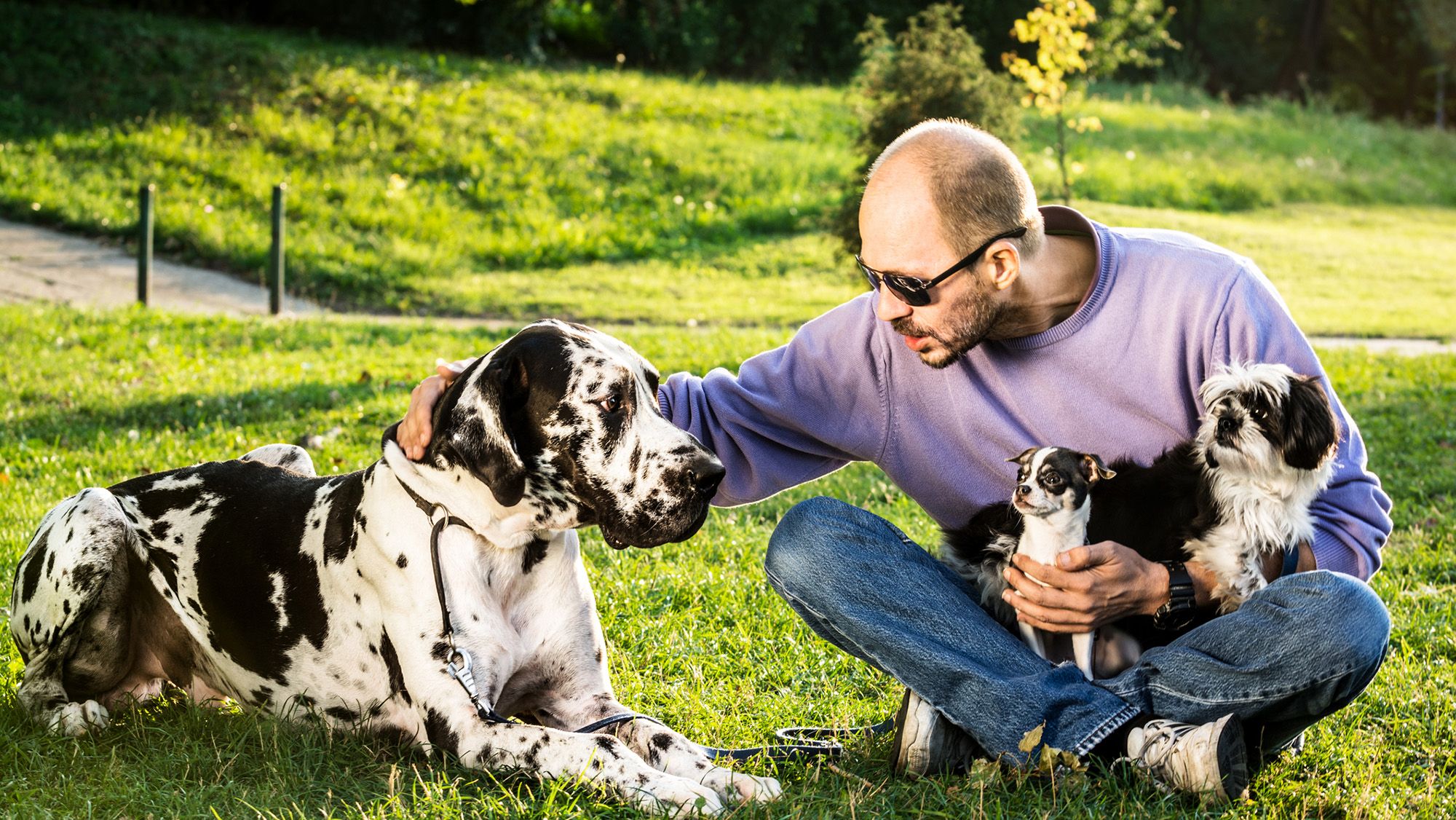
Great Danes and Mastiffs rarely live more than a decade, while Chihuahuas can live twice as long. It’s not clear exactly why large dogs die younger than small ones, but new findings may help solve that mystery. The research, published Thursday (Oct. 8) in the journal Science, analyzed a chemical code written on top of dogs’ DNA. This code, called the methylome, consists of chemical tags called methyl groups, which are attached to the building blocks of DNA. Proteins constantly access DNA, load the information written in their code and take that data to convert them into new proteins for the cell. But these methyl groups can act as little obstacles that stop that process in its tracks. Latest Videos from Live Science These clusters are a type of “epigenetic marker,” which together help control gene activity, and their arrangement in DNA changes in predictable ways as animals age, study co-author Blaise Mariner, a bioinformatician at Arizona State University, told Live Science. In many studies and species, including humans, scientists have used this data to build epigenetic clocks that track the biological ages of animals. Dogs turn out to be an excellent species to study aging. Their owners devotedly follow what they eat, how they live, and how their health changes over time. So Mariner and his colleagues built epigenetic clocks using DNA in blood samples taken from 894 dogs enrolled in the long-term Canine Aging Project based at the University of Washington. You may like These samples revealed how the dogs’ immune cells aged. These cells patrol the entire body, so “they are a very good measure of systemic aging,” study co-author Noah Snyder-Mackler, a genomicist at Arizona State University, told Live Science. The team found that changes in DNA methylation closely tracked biological aging, in that dogs with older-than-expected epigenetic ages had a higher risk of death from any cause. Once they looked at how different sizes of dogs aged, clear differences emerged. Get the world’s most fascinating discoveries delivered straight to your inbox. “Using our biomarker, this epigenetic clock, large dogs aged a little faster per year of life than small dogs,” Snyder-Mackler said. A key epigenetic change linked to increased body size was the loss of methyl groups in stretches of DNA called transposable elements. Also called “jumping genes,” these elements can potentially move around the genome, but methyl groups help prevent them from doing so. But when that methylation is lost, jumping genes can become too active and end up damaging other genes and causing inflammation, a key process that increases with age. In summary, the new data suggest that runaway jumping genes may contribute to the faster aging of large dogs. What to read next The researchers created epigenetic clocks based on data from 894 dogs. (Image credit: Josh Hawley via Getty Images) In aging dogs, the team found that some regions of the genome with few chemical tags became more methylated, while other areas that had been smothered in methyl groups gradually lost them. Additionally, at least in terms of epigenetics, dogs’ immune cells appear to become more similar to each other as they age. Mariner said this “loss of cellular identity” is a key hypothesis for what happens to the body as it ages. Immune cells are carefully specialized for different functions, such as preventing cancer or killing viruses. As these cells become more similar to each other, they become less able to fulfill their specialized functions, studies suggest. Humans have bred dogs large for their size, and Snyder-Mackler said this drive to achieve large body size may have come at a cost. “Their bodies have to make this trade-off between really rapid growth and maintenance,” he said, “versus investing in the immune system and the integrity of the body.” For now, that idea is a hypothesis, as the current study does not directly address why epigenetic aging in large dogs has turned out this way. Now, the team wants to build more informative watches as the Dog Aging Project recruits more dogs to follow for longer periods. Snyder-Mackler said the team’s data currently explains only part of how dogs’ epigenetic ages vary. “What we really want to know is what explains the rest of that variation.” said. The team was interested in building predictive models that could help dog owners anticipate age-related health problems for their pets, Snyder-Mackler added. What we learn about dogs from these studies can also help us understand human aging. This is partly because dogs contract some of the same diseases as us, but mainly because they share the living spaces and environments of humans. “Let’s start to look, at a molecular level, [at] “How these environmental exposures or experiences impact the health and aging of dogs will be directly translatable to humans living in exactly those same environments,” Snyder-Mackler said. “Most people love dogs,” he added. “That means we can get a lot of really good data on them.”