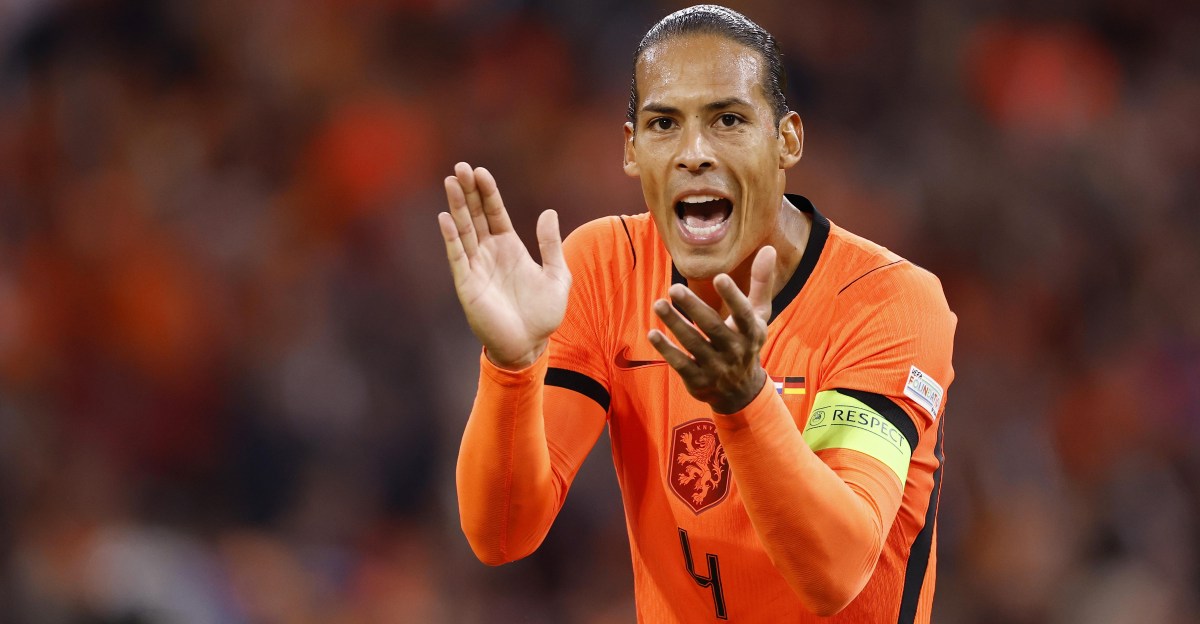
The Netherlands looked relieved and frustrated after the final whistle in their UEFA Nations League match against Germany. The Dutch scored a late goal in extra time to avoid a loss to an inferior German team. But, according to Virgil Van Dijk, the Germans should never have scored their only goal of the game. After the match, Netherlands captain Virgil Van Dijk did not mince words. Van Dijk declared it was a “shame” that Germany’s goal was allowed to stand (via Sport1 captured by @iMiaSanMia). Van Dijk’s counterpart on the German side, Joshua Kimmich, gave an indifferent response to the Dutch captain’s statement. “That’s not a thoughtful response on his part,” Kimmich said, affirming his position that it was a legal goal as ruled by the referee. At the center of Van Dijk’s statements is the injury to Dutch striker Brian Brobbey at the start of the match. The Dutchman fell after a fight in the 32nd minute and his compatriots demanded that Germany stop the play. However, after taking possession and finding the rest of the opposing team in position, the Germans did not stop. The only point in the home team’s favor is that Brobbey could have backed off and joined the press. Captain Joshua Kimmich switched flanks and orchestrated a cross into the penalty area. Even though the cross was intercepted by a Dutch player, the ball landed favorably for German Felix Nmecha, who scored the first legal goal of the match. Now, the claim that Brobbey’s injury forced Germany to stop the game is not the strongest of reasons. Brobbey is a striker and plays in the most forward position on his team. Secondly, even without Brobbey, as Germany prepared their game, the numbers continued to favor Van Dijk’s men. It was a 9 against 8 situation that showed a well-structured Dutch grid. Nmecha’s goal came against a well-positioned and numerically superior opponent with a little luck. Furthermore, the fact that the ball reached the area before changing flanks with only the pressure of the zonal marker is a key clue. This shows that Brobbey may not have pressed all the way back to change the outcome of the play and that is an important factor for the referee to consider. While neither the referee nor the VAR deemed the goal illegal, should Germany have stopped solely due to the fact that one of the opponents was down? Also, if the opponent is not so relevant to defend the attack, does that change the situation and make playing the right thing to do? Please let us know your opinion on this incident.