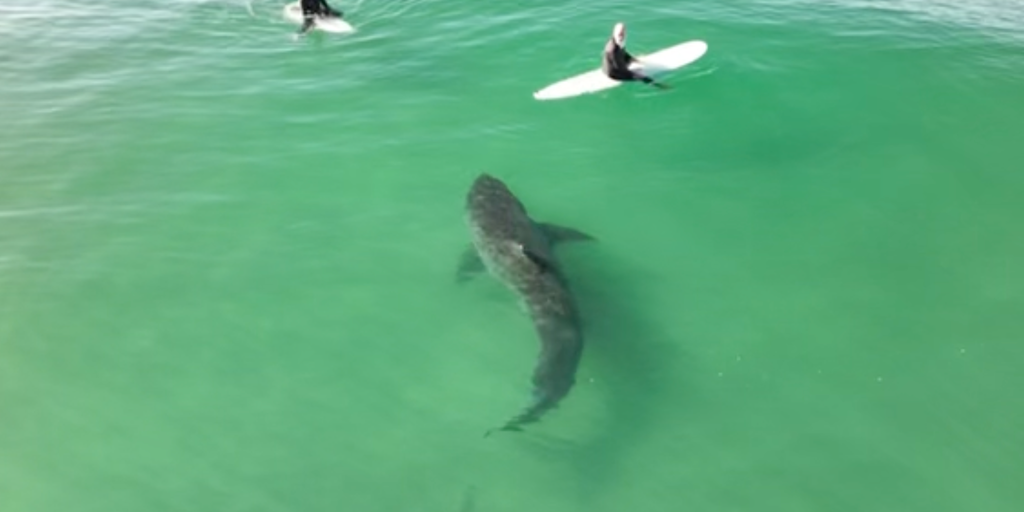
A great white shark splashed at surfers in Pismo Beach, California, on October 28, 2026. TAKEAWAY A huge shark swam directly toward surfers off California’s central coast. Along the Pacific coast of North America, the great white shark’s range extends from Alaska to Mexico. There have been fewer than 250 shark bites in California since 1950, according to the state Department of Fish and Wildlife. A huge shark spooked surfers at Pismo Beach, along California’s central coast, on Wednesday when it swam close enough to splash a surfer. Video shared with FOX Weather showed the large shark swimming directly toward a man on a longboard before lunging and splashing him. MASSIVE WHALE SHARK JOINS OCEARCH AS NEWEST TAGGED SHARK OFF THE COAST OF MEXICO A great white shark splashed surfers in Pismo Beach, California, on October 28, 2026. (Dave/ /FOX Weather) The person who took the video identified the predator as a great white shark. NOAA Great white sharks can grow to about 20 feet long, weigh more than 4,000 pounds, and prefer a water temperature range between 50 and 80 degrees. SURFER REACHES TERRIFYING ENCOUNTER WITH MASSIVE, AGGRESSIVE TIGER SHARK AT POPULAR HAWAII SURF SPOT The Tismo Beach tourism website lists white sharks as one of several species that frequent the region. A great white shark splashed surfers in Pismo Beach, California, on October 28, 2026. (Dave/@caveman_476/Instagram) The great white shark’s range extends from Alaska to Mexico along the Pacific coast and is found along the East Coast, the Gulf and the Caribbean in the Atlantic Basin. a little over a week ago. A huge shark put on quite a show for beachgoers over the weekend when it jumped out of the waters off Marina, California. The video captured the huge predator jumping completely out of the ocean near the coast. A beach advisory was issued due to the sighting. There have been fewer than 250 shark bites in California since 1950, according to the state Department of Fish and Wildlife. OCEARCH, a nonprofit marine research organization, says people are more likely to be struck by lightning than bitten by a shark.