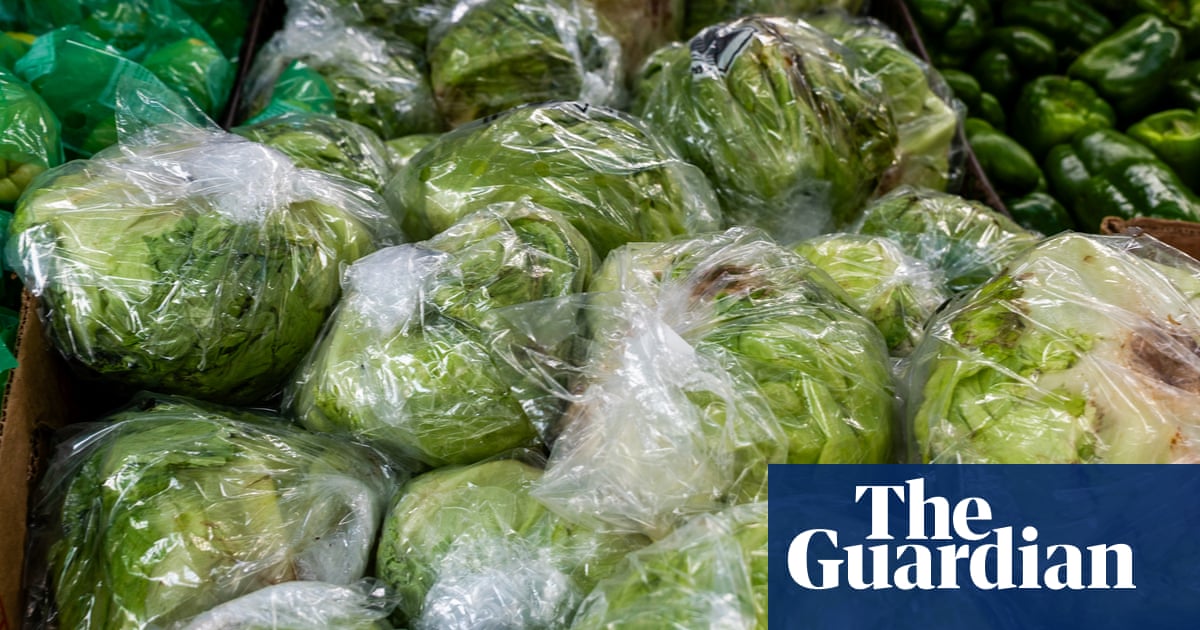
Congress passed a law to help federal agencies investigate foodborne illness outbreaks; a regulation that experts say could have stopped the largest cyclosporiasis outbreak in the United States much sooner. The only problem? The rule has been delayed for 15 years, including most recently amid pressure in 2025. It was scheduled to go into effect in January 2026, months before the single-celled parasite sickened more than 24,000 people and killed two in the Midwest. Now, it will not take effect until 2028. “Congress recognized this problem in 2010 and requested [the Food and Drug Administration, or FDA] to develop solutions,” said Sara Sorscher, an attorney who specializes in food safety at the Center for Science in the Public Interest, a consumer advocacy group. “It’s been 16 years and we still haven’t implemented this rule that is meant to address exactly this type of situation.” Often called the “traceability rule,” the regulation comes from the Food Safety and Modernization Act (FSMA) of 2011, passed during the Obama administration. high-risk foods – that is, those that have a history of making people sick, such as soft cheese, leafy greens, eggs and peanut butter – “for people who make, process, package or store food.” The promise of the traceability rule is to allow the FDA to more quickly and accurately identify where contaminated food comes from, all the way to the farm. However, the rule has irritated some in the food supply chain, and food retailers and manufacturers have particularly raised concerns, according to lobbying reports. “It’s pretty crazy,” he said. Jennifer McIntire, founder of food safety consulting firm Food Strategy, on the rule’s lengthy rollout Earlier this month, a group of 11 consumer, public health and worker advocates asked Congress to speed up the rule’s implementation in a letter to lawmakers, arguing that this summer’s cyclospora outbreak caused a “crisis in consumer confidence.” food safety, over the cyclosporiasis outbreak. He represents more than 400 people sick in the outbreak and has said publicly that he supports the groups’ letter. “For example, let’s make packaged salads: lettuce and greens.” Registrar Corp, a supply chain company that helps businesses comply with federal food safety regulations “Some of the products you can purchase are various types of vegetables; I could have chicory, spinach, you could have lettuce. They could come from completely different sources and then they are packaged.” The current tracking system in the US stems from the Bioterrorism Act of 2003, according to Jennifer McEntire, founder of the food safety consulting firm Food Strategy. In the years after September 11, 2001, and amid the anthrax threats sent to senior US officials afterward, “it was recognized that food was critical infrastructure, and that the FDA had no idea – not even authority – to know what food facilities existed. in the United States. And that was a loophole that was closed by the Bioterrorism Act,” McEntire said. That left the U.S. with its current system, often called “one up, one back,” meaning a restaurant or retailer must document where they bought something, and a distributor or manufacturer needs to know where they sold something. Still, this system made tracing food incredibly difficult. “I think the FDA does a pretty good job, but tracebacks are very, very challenging,” Lennarz said. Determining where it comes from individual vegetables is difficult because, according to a group representing American farmers, data related to the origin of the crop is often lost by the time boxes from farms are combined onto pallets, which are then loaded onto trucks. “Since a field of leafy greens may go to multiple restaurants or multiple homes, we want to be able to find any lettuce that is offensive, pick it and remove it as quickly as possible,” said De Ann Davis, vice president of science at the Western Growers Association, which represents and supports farmers. traceability rule. The stakes are high for farmers: The price of lettuce fell more than 16% in July, according to government inflation data, as consumers turned away from lettuce. Davis said farmers have been collecting data on where boxes of their produce go for more than a decade as part of a voluntary initiative called the Produce Traceability Initiative. The Food Industry Association (FMI) described traceability as “the most complex regulation the food industry has ever faced” in a recent statement, and retailers made their “concerns” about the regulation known to lawmakers and regulators, lobbying reports show. The Reagan-Udall Foundation for the FDA, a private nonprofit created by Congress during the Bush era, held a roundtable with food industry representatives from giants to influential restaurant groups. Chipotle, Kellogg Company, Midwest convenience store chain Kwik Trip, the National Restaurant Association, the National Grocers Association, and McDonald’s, with significant associated costs,” according to a 2024 industry roundtable with an FDA-affiliated nonprofit. From 2024 to 2025, lobbyists from FMI, Southern giant Publix Super Markets, the National Retail Federation and the International Foodservice Distributors Association lobbied for the traceability rule. was “requesting the inclusion of language in the FY24 Farm Appropriations bill to require the FDA to work collaboratively with industry to address concerns with the FMSA 204 traceability rule,” and that it was “seeking support” for a bill that would relax food traceability requirements, introduced by a Florida House Republican. The NRF also expressed “concerns with the FMSA 204 traceability rule” to the House, Senate, FDA and CDC, according to lobbying reports. After all this lobbying, the industry got part of what it wanted: another delay. In March 2025, the FDA announced a 30-month delay in implementing the traceability rule. In November 2025, Congress ended a historic 43-day government shutdown with a budget bill. Buried in the massive appropriations bill was an important food safety provision: Congress banned enforcement of the traceability rule until July 2028, the same provision that consumer groups asked lawmakers to rescind in a letter this month. said, “The food industry shares FDA’s commitment to strengthening food traceability, protecting public health, and assisting with foodborne illness investigations to quickly identify and remove potentially contaminated products from commerce. FMI and our member companies have invested an enormous amount of time, effort, and resources over the past four years to understand and implement the FDA Food Traceability Rule.” FMI continued: “It is extraordinarily complex and requires unprecedented coordination among producers, manufacturers, distributors, wholesalers, retailers and food service operators. Adequate time is essential to address operational realities and develop practical, workable solutions across the food supply chain without increasing costs or disrupting the flow of goods. We look forward to continuing to work with the FDA to ensure that the rule reflects the goals of the Food Safety Modernization Act of 2011 and that food businesses of all sizes can fulfill it.” The Guardian also contacted NRF and Publix Super Markets for comment but did not receive a response. But for some advocates like Marler, whose law firm handles cases of victims who may be seriously injured or even killed by food contamination, the delays are nothing short of inconceivable. The traceability standard “allows product to get off the market faster so that fewer people get sick — all of those things are good for the industry, whose product is being tainted by one entity,” Marler said. “These grown white men who run these organizations are acting like 2-year-olds… They just don’t want to be told what to do.”