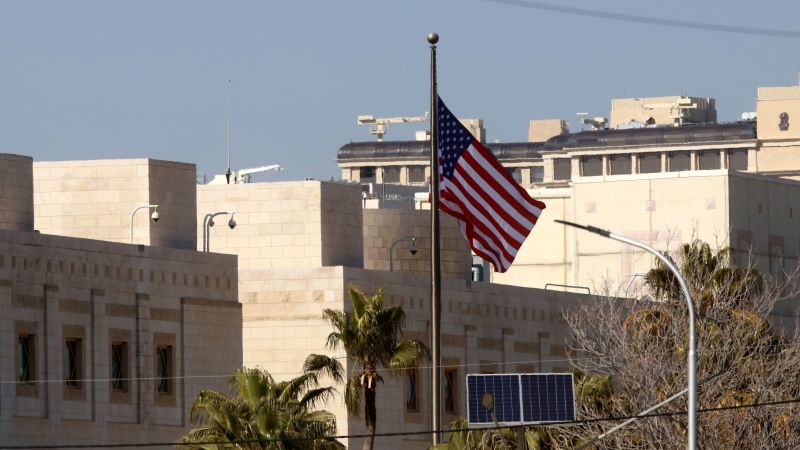
The United States is rushing to move some diplomats and their families from their posts in the Middle East amid the threat of regional escalation, according to multiple sources familiar with the matter. The departures have been described as a frustrating and chaotic déjà vu, as many of those who left had recently returned to their posts after being ordered out during the height of the Iran war. “To say it has been chaotic is an understatement,” said one American diplomat, explaining that the financial support they have been offered to date does not cover the costs of moving their entire family out of the region. Many of those families had then rushed to leave their homes in the Middle East in the first weeks of the war and find new homes and schools for their children. Now, many are having to do the same thing again, with what they say is potentially less financial support from the State Department. “This echoes the chaos families experienced earlier this year. Some had barely settled in before they were told to leave again,” Nikki Gamer, spokesperson for the American Foreign Service Association, told CNN. “Understandably, they are upset, confused and angry.” Later on Friday, a State Department official confirmed that all directly hired U.S. personnel and their families “receive per diem and support for housing and schools, with per diem consistent with government rates based on where they are located in the country.” The adjustments come as the Iran-backed Houthis have increased their attacks on Saudi Arabia; hostilities that the State Department has repeatedly warned “have the potential to rapidly escalate beyond that immediate area.” They also come as US President Donald Trump has suggested he might relaunch attacks on Iran after the midterm elections, and as sources said Israel has pushed – unsuccessfully so far – for more immediate action. The State Department this week ordered the departure of non-emergency personnel and all family members from Saudi Arabia. Authorities said the orderly departure was made in response to Houthi escalations. At the same time, it has been quietly adjusting its staffing limits at many other embassies in the Middle East, including Jordan, Bahrain, Kuwait, Qatar, the United Arab Emirates and Lebanon, sources told CNN. A State Department official confirmed to CNN that Lebanon, the United Arab Emirates, Qatar and Jordan “will see temporary changes in staffing levels under restricted operations.” They said there are no changes to staff in Kuwait or Bahrain, suggesting they have not exceeded their staffing limits. “Under restricted operations status, staffing levels are constantly evaluated and adjusted,” the official said. Unlike the departure ordered by Saudi Arabia, the movements of these embassies have not been publicly announced. The State Department has emphasized that those embassies, unlike Saudi Arabia, have not changed status and remain in “restricted operations” status. Even when there is no formal change in status, there may still be a change in staffing within the “restricted operations” status. “There’s a very Groundhog Day vibe,” a source in Amman said of the request by some embassy employees to leave the Jordanian capital again. Not all embassies allowed children to return to their posts, but most allowed spouses to return. Now, relatives are leaving the embassies they were recently allowed to return to, but unlike earlier this year, sources say relatives are not receiving the same financial support. Communication and coordination around departures from the department’s headquarters in Foggy Bottom to Foreign Service officers in the field is “just as much of a shit show” as it was at the beginning of the Iran war, said a source familiar with the departures. In the days surrounding the adjustments, there were concerns among foreign service officials about whether the State Department would give their families “per diem” allowances to move to the U.S., the source said, noting that some embassies have not had the planning meetings or public meetings with staff that are typical before departures. “Many people find out about this through the news rather than through their leaders in office,” the source added. The American Foreign Service Association, the union that represents foreign service officers, said it is hearing accounts of “bureaucratic ping-pong.” “Families who had just returned to work and re-enrolled their children in school are being told to prepare to evacuate again without being told what level of financial support they can count on,” he said in a statement Thursday. AFSA spokesperson Gamer told CNN that “families outside of Saudi Arabia have told AFSA that they are being ordered to leave without confirmed housing assistance or per diem.” They have been told this is because their embassies are not changing their “restricted operations” status. Families often rely on those subsidies to help them find housing and cover unexpected costs associated with uprooting their homes abroad, especially if their diplomatic family member remains at the embassy as an essential worker. “Families deserve to know how they will pay for a place to live before they board a plane,” Gamer said. The State Department official said: “We understand how difficult it is for our diplomatic personnel and their families to be in a status of restricted operations, authorized departure or ordered departure.” “We are committed to using every tool available to help families navigate this difficult time, including additional expenses and school enrollment,” they said. “We are communicating directly with staff affected by these latest changes and will have more to say in the coming days.” This story has been updated with additional details.