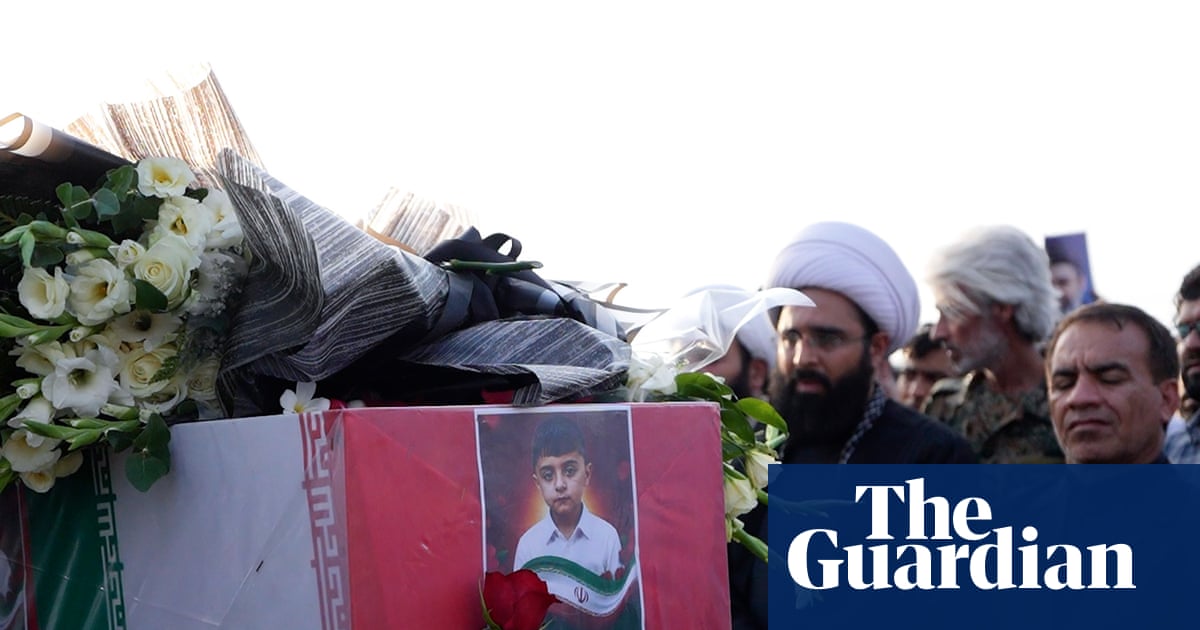
People in Kuhestak, a predominantly Baloch town in Hormozgan province in southern Iran, are in mourning after an attack during a wedding killed at least four people, including a child, and injured more than 60, according to local authorities. The explosion occurred around 9:30 p.m. on September 1, turning a night of celebration into one of devastation for the small coastal community, which lies on the Strait of Hormuz. The wedding couple showed debris, flower garlands and decorations scattered among debris and bloody shoes. When asked about Thursday’s attack, US Vice President JD Vance said the US would never attack civilians in combat but that “sometimes things happen”, adding that he was skeptical of the reports from Iran. He did not acknowledge that the killings had been confirmed by an internationally recognized humanitarian body. According to Iranian state media and people interviewed by The Guardian, the house belonged to Ali Mallahi, a local fisherman who was celebrating his daughter’s wedding. In a video published by state media, Mallahi stood in the rubble of what had been his home and said he was saddened by the attack but thanked God that the victims were not older. Residents said the celebrations had only just begun. Friends and family were waiting for the bride and groom, and many guests had not yet arrived for the henna ceremony. A woman cries during a mass funeral in Kuhestak. Photograph: Razieh Poudat/AP Witnesses who spoke to the Guardian said the attack had left residents angry and in deep mourning. Ahmad*, a local barber who witnessed what happened, said the entire neighborhood had been devastated by what happened. “I really have no words. Ours is a small town and we all know each other and we are brothers. We are all in mourning. I visited the house and the media will not report it, but it was not just a house. Many houses “We do not carry coffins on our shoulders, we carry the dark future that awaits us all in the south,” Ahmad added. Moein Arjomand, director of the Balochistan Human Rights Documentation Network, said local rescuers were facing increasing obstacles in investigate the explosion. “Our team has faced many difficulties due to the Internet [shutdown] and witnesses and relatives told us that they were prohibited from speaking to human rights groups and foreign media,” he said. “I tried to arrange international media interviews with relatives, but they are worried about the consequences and I couldn’t arrange them.” His seven-year-old son, Sepehr, lying in a hospital bed with his head bandaged. Buildings damaged after attack on wedding party. When asked if the United States was responsible, JD Vance, the US vice president, said that “sometimes they happen things.” “The local clinic is not equipped to care for victims like this, so the injured were taken to Minab hospital,” Arjomand said. A video posted by local activists showed the family of Amir Mohammad Karimi, the four-year-old victim, crying over his body as he was buried on Thursday. A 16-year-old boy, Mohammad Mallahi, was also killed by shrapnel while riding his motorcycle nearby. “We have another funeral on Friday, this time a young woman, and we will all be there,” Ahmad said. “I can only pray to Allah that no more blood is shed and our wounded return home from the hospital.” Ahmad was referring to Asiyeh Molainejad, 22, another relative of the bride who was declared dead on Thursday. Beyond the immediate grief, the attack deepened the feeling among some Baloch residents and activists that civilian deaths in their communities receive comparatively little attention. Photograph: Razieh Poudat/APFarzin Kadkhodaei, a human rights activist from Balochistan, said the circumstances of the deaths had made the loss particularly painful “The human cost is devastating. They were Baloch civilians gathered for a wedding, and to lose their lives in the middle of what should have been a joyous occasion is heartbreaking,” he said. “Their families are now suffering unimaginable pain, while the injured have to live with the physical and emotional consequences.” Chakar Baloch, a 35-year-old fisherman, said the attack reinforced the feeling among local people that civilians living along the Makran coast were being placed in the path of conflicts over which they had little control. “My general opinion is that we are the victims. “We are the people who live along the Makran coast and for years we have gone out to sea, struggled to earn our bread and just wanted to stay alive,” he said. When asked if the local population was demanding answers about the strike, a Baloch resident of Sirik said the Western media did not understand their plight. “Who do you want me to ask for answers?” she said. “From the United States that has attacked us in this war? Or the regime that has brought this war to our doors? Tell me who I can demand and I will answer your questions.”