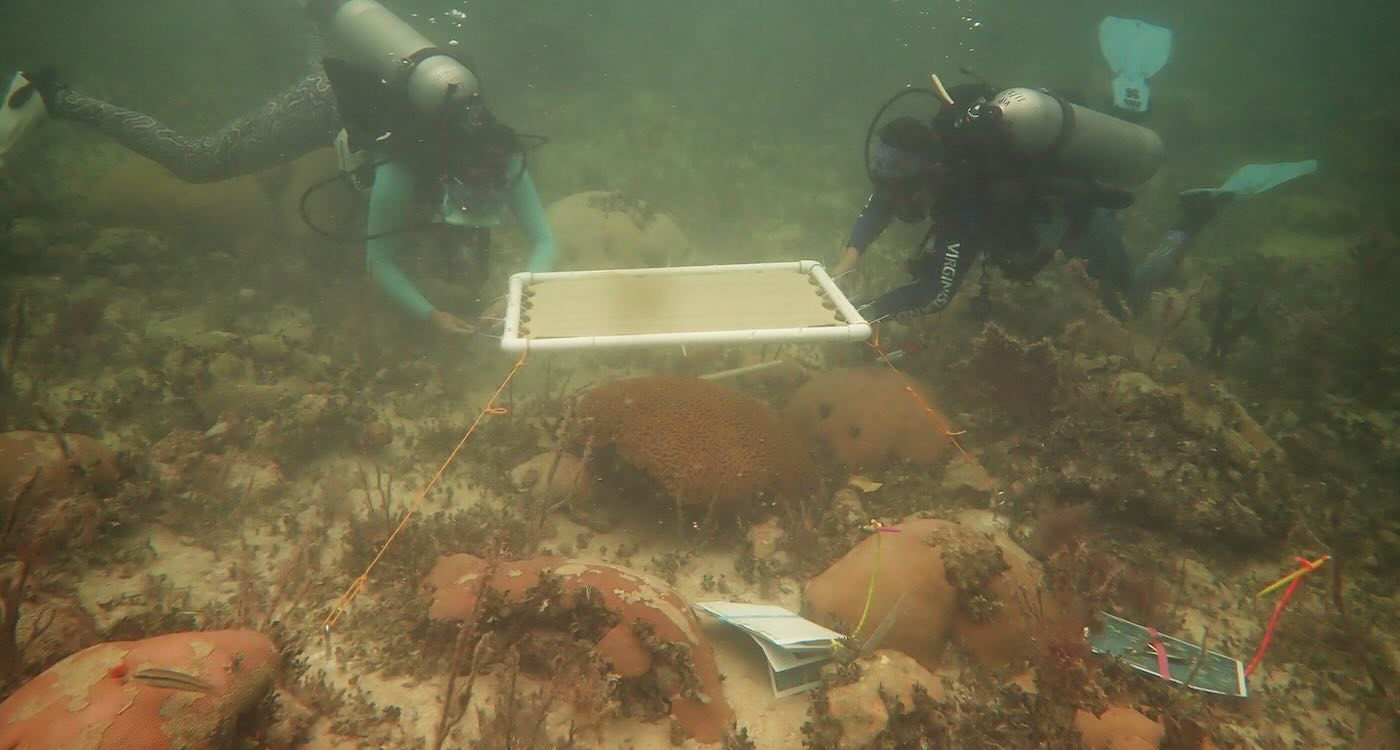
Installation of underwater coral umbrellas by Nova Southeastern University in Florida / Journal Frontiers in Marine Science Underwater umbrellas could protect coral reefs from heat and even partially reverse bleaching, according to a new study by Florida scientists. Temporary shades placed over particularly vulnerable Caribbean corals can mitigate the damage caused by high sea temperatures caused by global warming, which turns them ghostly white and eventually kills them. It is possible to restore dead reefs, but the process is difficult and expensive, and still leaves them vulnerable to future heat waves. Now, scientists believe they have found a new way to protect them, at least on a small scale. The study’s lead author, Dr. Karen Neely, explained that shade cannot cool the water, but it prevents ultraviolet (UV) damage and irradiance, which worsens heat damage. “The 2023 coral bleaching in Florida essentially wiped out branching corals and, in some coastal sites, had a devastating impact on brain corals,” he explained. “This study arose directly from that event: we wanted to provide proof of concept for tools to save specific corals in similar future events.” So, in the summer of 2024, Dr. Neely and her team at Nova Southeastern University in Florida installed twenty custom-made curtains over 10 different colonies of two species of brain coral, Pseudodiploria clivosa and Colpophyllia natans, along with 20 matching corals to act as controls. Underwater coral umbrella installation by Nova Southeastern University in Florida (SWNS) The umbrellas, made of PVC pipe and nylon fabric, were temporarily attached to the seafloor with rope and floated a foot above each coral (30 cm). They reduced light by 60%, according to the study published in the journal Frontiers in Marine Science. Divers visited every two weeks to track color changes and take tissue biopsies at Newfound Harbor in the Florida Keys, to monitor algae living within the coral. Neely explained that corals have a “symbiotic” relationship with algae: the coral provides the algae a home and the algae provides the coral with most of its nutritional needs. He said algae also give corals their color, so when corals turn white due to heat stress, scientists know the relationship has broken down and the coral is starving. Although heat stress measured in Newfound Harbor that summer was the second highest on record, corals shaded by the fabric lost less color than expected. Underwater coral umbrellas from Nova Southeastern University in Florida / Journal Frontiers in Marine Science (SWNS) And the differences were greatest during the most intense periods of thermal stress. Not only that, Dr. Neely found another notable benefit. “The shaded corals even regained some of their color, after the curtains were installed.” They also saw less bleaching than expected overall and no dead coral. “Shades reversed the observed bleaching, but the event was not severe enough to cause mortality in control or shaded corals. “However, we know that even bleaching that does not cause mortality can affect the future disease susceptibility and reproductive capacity of corals. The research team found no differences in the occupancy density of algae or algal species between the control and shaded groups. They believe that if they had been installed earlier in the heating event, the curtains could have been more effective. The study found a “significant” positive impact, except for the limitation of the method to scale it up. “We found it was effective in two highly susceptible coral species, so it is likely to be useful for most others,” he concluded, but additional studies are needed to answer more questions. SHARE THE PROMISE OF POSSIBILITIES with Coral Lovers on social media…