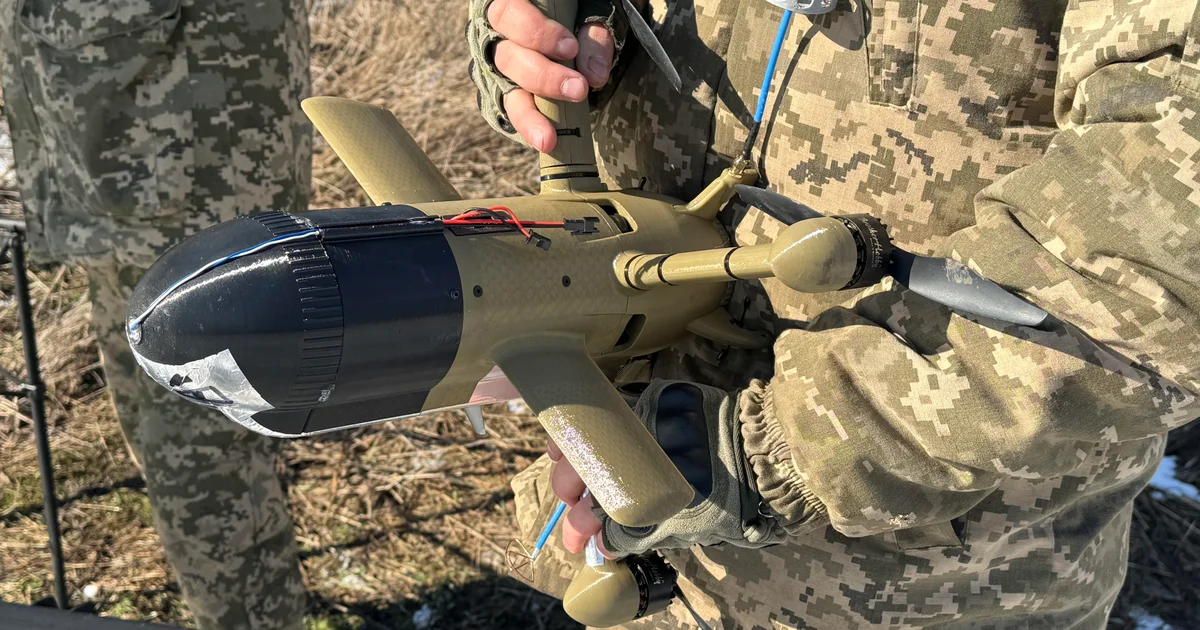
kyiv – Ukraine is set to sign a historic drone defense deal with the United States, according to three sources familiar with the matter. Ukrainian President Volodymyr Zelenskyy is set to sign the agreement on the sidelines of the United Nations General Assembly this week in New York City, but sources said the agreement could be finalized at a later date, when the United States is ready to sign. Over the past year, the Department of Defense and its Ukrainian counterpart developed a framework that would allow the two countries’ militaries to expand testing and production of Ukrainian defense technology in the U.S. The importance of expanding partnerships with Ukraine’s defense industry has become increasingly clear to the U.S. and its allies during the war with Iran. During the early days of the war, Iran began attacking US military facilities across the Middle East with Shahed one-way attack drones, the same type of drones that Russia has used to attack cities in Ukraine. As the United States and the Gulf states initially lacked a cost-effective means of intercepting the drones, kyiv sent interceptors and drone pilots to assist. Ukraine has since signed defense agreements with Saudi Arabia, Qatar and the United Arab Emirates, among other countries. The agreements link foreign financing to Ukraine’s burgeoning defense manufacturing industry. Zelenskyy has said Ukraine aims to make 10 million drones this year. By comparison, the U.S. military acquired about 50,000 in 2025, according to former Army Secretary Dan Driscoll. But experts say the most important lesson for the United States and its allies is that Ukraine’s advantage lies not only in the drones themselves, but also in the software, operators and teams that constantly adapt them. “Deborah Fairlamb, founding partner of Green Flag Ventures, an American venture capital firm that invests in Ukrainian defense technology, told CBS News. “It’s not like it’s a rifle that you just point and shoot.” Previously unreported details from the early days of the Iran war illustrate that challenge. In March, as Iran began retaliating against joint U.S.-Israeli attacks, then-Army Secretary Driscoll called Eric Schmidt, former Google CEO, who since He then founded Perennial Autonomy, an American drone company active in Ukraine. Perennial Autonomy manufactures an interceptor drone known as the Merops, which is among the most effective means of countering the Iranian-designed Shahed drones that Russia uses against Ukraine. Driscoll asked Schmidt to supply 13,000 Merops interceptor drones and 10,000 Bumblebee reconnaissance and attack drones to the Middle East. Schmidt agreed and the drones were sent to the US military within days, but they would pass. weeks before they were operational because Ukrainian components arrived late, according to multiple sources familiar with the shipments. Perennial Autonomy’s Merops drones use artificial intelligence beacons made by Sine Engineering, a Ukrainian defense communications company, and Ukrainian warheads that carry the drones’ explosive material. Ukrainian expertise was also needed to integrate the drones into U.S. air defense radars before they could be used in combat. CBS News contacted the White House. and the Pentagon to solicit comments on the use of Ukrainian technology to defend bases in the Middle East and the status of the drone agreement with Ukraine. In recent months, Washington’s efforts to absorb lessons from Ukraine’s drone war have been mixed. In August, the US military phased out a drone battalion tasked with studying lessons on drone warfare in Ukraine. American in Europe and Africa, General Christopher Donahue, were ousted or forced to retire earlier this year. But the Pentagon has also taken steps to expand the United States’ own drone arsenal. The United States Drone Mastery Program has invited select American and foreign companies, mainly Ukrainian, to compete for drone contracts from the US military. Ukraine, won the first “gauntlet” of the program earlier this year. Perennial Autonomy and Neros, another American manufacturer with a presence in Ukraine, won the second. Sources with direct knowledge of the drone deal say it would go beyond awarding contracts to a handful of Ukrainian companies. Instead, it would create a broader framework for major Ukrainian defense companies to work directly with their American counterparts and the U.S. military. deal will depend on their ability to transfer Ukraine’s operational knowledge along with its technology. “A lot of what goes into using drones on a battlefield, whether offensive or defensive, really requires a tremendous amount of coordination, operational planning, understanding of the environment and communication between drone operators,” he said. “There is a whole chain of events that happen in parallel with the use of drones that people overlook, but that is completely intrinsic to the Ukrainians’ understanding of how they are using drones. More from CBS News Go deeper. with The Free Press in: