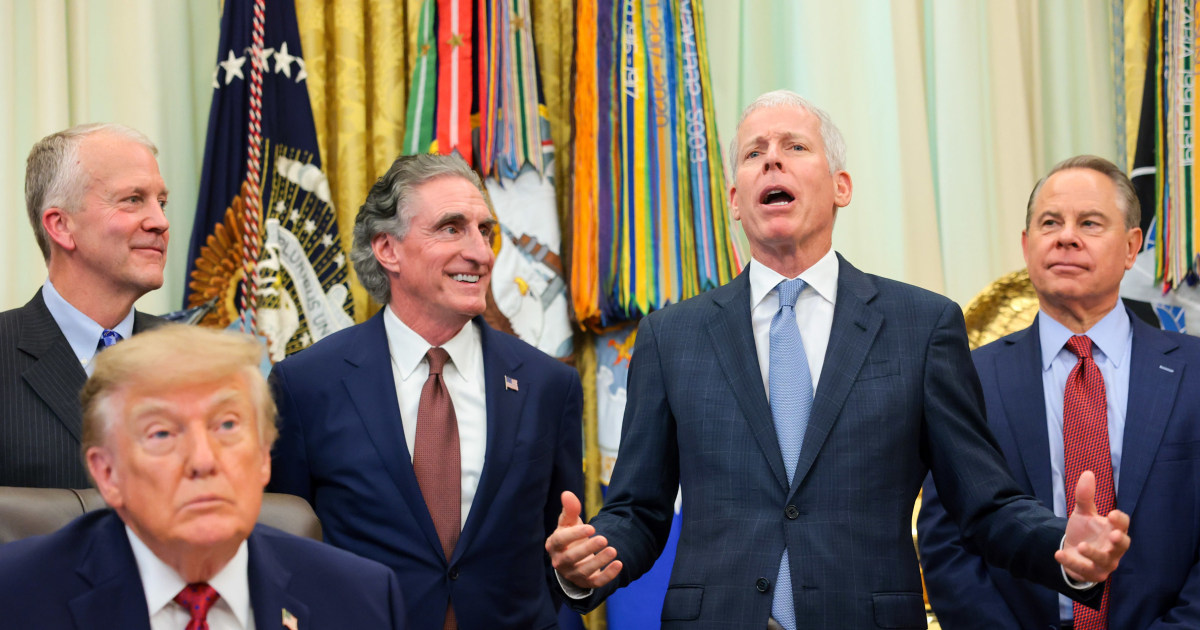
The Trump administration on Thursday stepped up a pressure campaign to convince European allies to release diesel from emergency national stockpiles. The White House says additional diesel from Europe would boost global supplies and potentially limit price growth. The average price of diesel in the United States has skyrocketed 70% since the war with Iran began, reaching $6.38 per gallon on Thursday, according to AAA. With less than five weeks until the US midterm elections, Republicans are eager to find some way to reduce domestic fuel prices. “Our European partners should accelerate compliance with their existing commitments and make additional supplies available immediately to address current disruptions” in energy markets, Treasury Secretary Scott Bessent posted Thursday. “American farmers, truckers and businesses should not be left to bear the brunt of the global diesel shortage.” Shortly after Bessent’s post, Trump told reporters that “we can” request that Europe release some of its emergency stockpiles. Earlier this week, US Energy Secretary Chris Wright seemed confident that Europe would agree to tap into its reserves. “You will hear announcements from our friends in Europe about new supplies of diesel coming to market that will drive down diesel prices significantly,” Wright told reporters Wednesday at an event with Trump in the Oval Office. But as of Thursday night, those announcements had not materialized. Rep. Jamieson Greer said he raised the diesel issue at a G20 trade ministers meeting in Milwaukee this week. But he did not suggest that Washington had made any firm commitments on emergency stockpiles. “We would love to have a collaborative response” to the global diesel crisis, he told Bloomberg News on Thursday. Also in Milwaukee were trade ministers from China, India, the United Kingdom and other countries that have been affected by global diesel supply shortages. U.S. Trade Representative Jamieson Greer met with his counterparts this week at a meeting of G20 trade ministers in Milwaukee. Michael Nagle/Bloomberg via Getty So far, however, the message is coming from Europe. The EU is “in very close contact with our member states on this current issue,” European Commission energy spokeswoman Anna-Kaisa Itkonen told reporters at a news conference in Brussels. “We are also maintaining high-level contacts with the US administration,” he said. Most of Europe’s emergency diesel reserves are stored in Germany and France. American and European oil refineries have been running at near full capacity for months, producing as much diesel fuel as possible. While the Iran war is responsible for most of the price increases in crude oil and unleaded gasoline around the world, the price of diesel has been outperforming both since July, albeit for a different reason. Russia has traditionally been a major diesel exporter, but that stopped this summer after Ukrainian drone attacks destroyed Russian refineries. On July 8, Russia banned the export of diesel to preserve domestic supply. On Wednesday, the Kremlin extended that ban until the end of October. “We have a diesel shortage because we have lost diesel exports from Russia,” Wright said at the White House. “We’ve lost diesel, some diesel exports from the Middle East, although we’re getting them back. And we’ve lost diesel exports from China.” “I’m thinking about it,” Trump told reporters in the Oval Office. “I talk to Chris and Doug a lot about this,” he said, referring to Wright and Interior Secretary Doug Burgum. “They think… it will help diesel, but it might increase the price of other things,” he said. A ban on US diesel exports would hit European countries especially hard. It would also land at a time when average US unleaded gas prices remain nearly 50% higher than they were on February 28, the day the US and Israel attacked Iran.