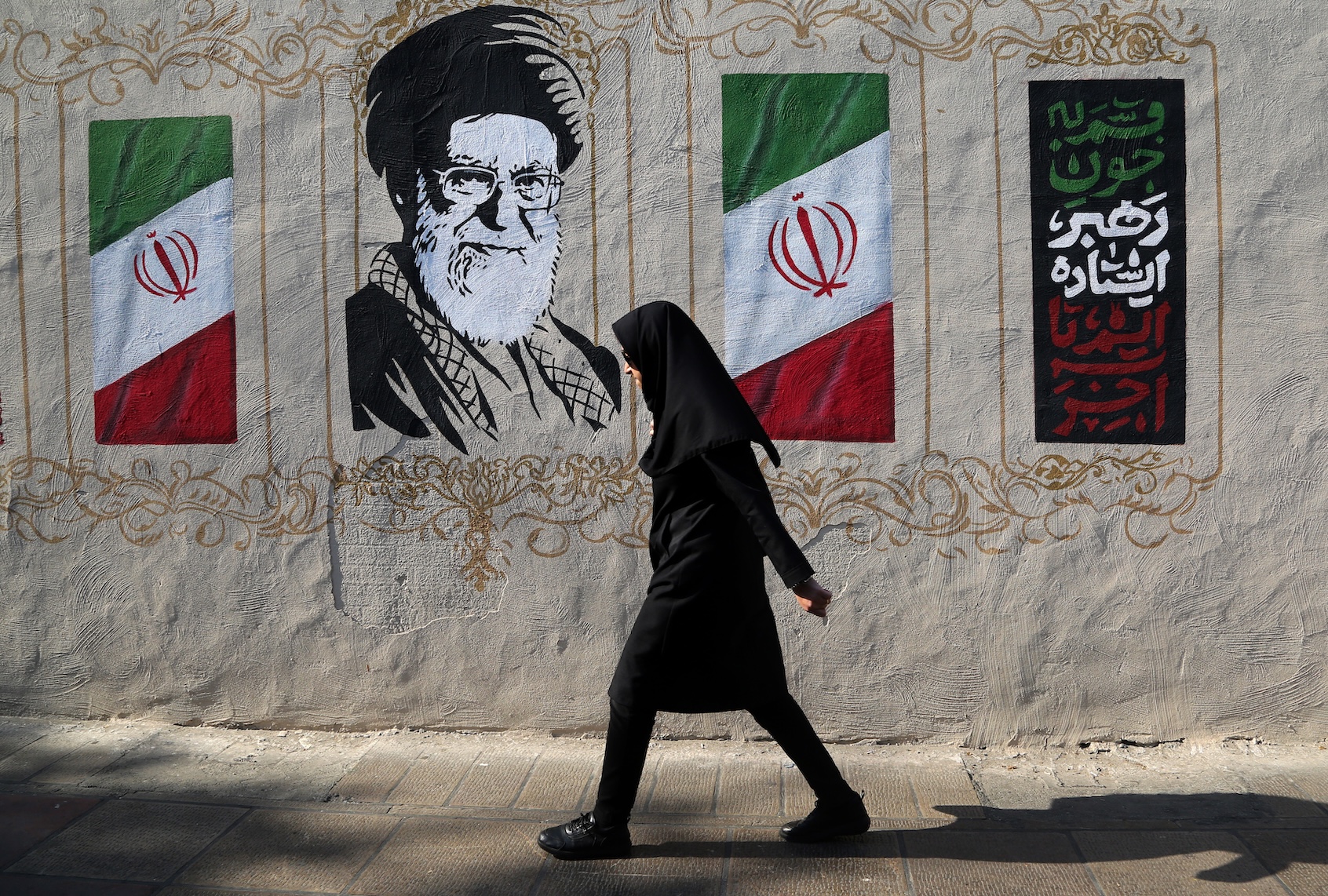
A version of this essay first appeared in Crash Course, Salon’s free morning newsletter. Sign up to get early access to articles like this, plus more bold journalism from Salon about how policies, movements, and culture wars affect real people. The current US-Israeli war against Iran has plunged the world economy so deep into the mire that economists now seem to throw down their pencils in frustration. On Thursday, for the first time since the conflict began, JPMorgan analysts said they don’t have a basic view of oil markets. “We simply don’t know how to model the endgame,” Natasha Kaneva, the company’s head of global commodities strategy, said in a note. According to CNBC, JPMorgan analysts assumed there were some economic red lines that the United States simply would not cross in the conflict, and that President Donald Trump would eventually be forced to reach a deal with Iran. But almost seven months after the war began, most of those red lines – including oil reaching over $100 a barrel, gasoline near $5 a gallon at the pump, or 10-year Treasury yields rising above 5% – have already been crossed, and “the exit strategy is less clear, not more,” in Kaneva’s words. Earlier this month, diesel prices rose above $6 per gallon in the United States for the first time and continue to rise. Costs are expected to rise as winter approaches, a season of peak fuel demand. Meanwhile, oil reserves continue to fall toward record lows, as highlighted by new analysis from S&P’s Global Energy Refining and Fuels team, which warned that “winter is coming for diesel markets.” Karim Fawaz, chief executive of S&P Global Energy, warned in the analysis that “inventories are low, spare refining capacity is tight and seasonal demand is about to strengthen at exactly the wrong time.” Start your day with essential news from Salon. Sign up for our free morning newsletter, Crash Course. Maybe it’s bad news that even economists have stopped pretending that everything will be fine. The Iran war remains a disaster, but Trump has refused to stop bombing the Islamic Republic. On Thursday he indicated he might even double down, telling Axios: “I have a big decision ahead of me. Do I want to go in and wipe them out?” [the Iranian regime] or not? It’s a great decision. Anything could happen to me.” Anything but peace, I imagine. The day before, the president recycled an old line, claiming that the Iranians “want to make a deal.” Given how many times we’ve heard that before, I’m just not convinced. Economic forecasts for the coming months remain bleak as fighting intensifies in the Middle East. A drone attack that severely damaged one of Saudi Arabia’s oil pipelines is expected to cause a drop in exports. of crude oil of 400,000 barrels per day this month alone. This is just one of the countless reasons why energy prices are expected to continue rising. Although more war clearly does not help, Trump now promises to sell 48 F-35 fighter jets to Saudi Arabia. Just what everyone needs. Earlier this week, the Pentagon told Congress that the cost of the war has risen to $42 billion, slightly above the most recent estimates of $38. $1 billion from the Congressional Budget Office. Some experts have estimated the cost is even higher, like Linda J. Bilmes, the Daniel Patrick Moynihan Senior Lecturer in Public Policy at Harvard Kennedy School, who told The Hill it could be $100 billion, and that was in July. But honestly, who cares about gas prices and grocery bills? between 1,800 and 3,800 civilian deaths. The Washington Post reported Friday that the Pentagon also does not disclose the actual number of American soldiers who have died in the war. The Pentagon’s public database cites 18 service member deaths, but officials who spoke on condition of anonymity to discuss the figures said the real number could be as high as 23, in addition to three American contractors based in the region have died since February 28. Yemen’s Iran-backed Houthi rebels have attracted significant attention for their attacks along the Red Sea coast, threatening Saudi Arabia’s oil exports, but less attention is being paid to the more than 100,000 people who have fled renewed fighting. On Thursday, the UN’s top human rights body reported “reasonable grounds” to believe the United States has committed war crimes in Iran, citing two attacks, including one on a school in Iran. southern city of Minab that killed 150 people, including 120 children. A White House spokesman responded that the human rights body “has accomplished nothing for human rights while talking nonsense for decades.”