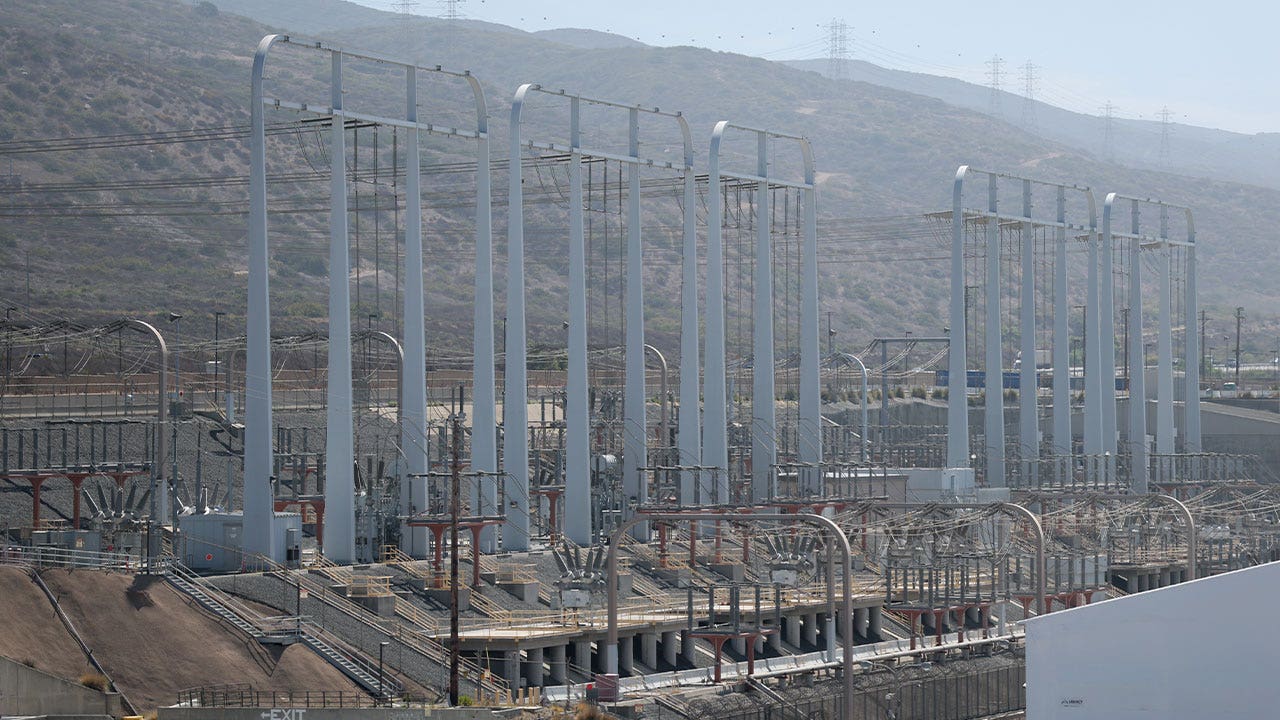
FOX Business’ Kelly Saberi joins ‘Making Money’ to detail the Department of Energy’s mission to improve automation technology on U.S. oil platforms to boost domestic energy production. President Donald Trump’s new national emergency declaration could restrict U.S. purchases and imports of certain foreign-made power grid equipment and potentially force utilities and infrastructure operators to replace equipment already in service as the administration takes steps to address national security risks to the electric system. Under an executive order signed Wednesday, the Department of Energy can prohibit the acquisition, import, transfer or installation of bulk energy equipment produced abroad if officials determine that the transaction involves a covered foreign entity and poses an unacceptable security risk. The order goes further for teams already operating on the US network. The Secretary of Energy may require that equipment manufactured or operated abroad be identified, isolated, monitored, secured, disconnected, replaced, or disposed of, which could require utilities and other infrastructure operators to make changes to existing systems. Those provisions could have financial and operational consequences for the power sector, although the order does not estimate potential costs or identify which equipment or suppliers could ultimately be affected. TRUMP SINGLES BIG OIL FOR ‘MAKING TOO MUCH MONEY’ The power transmission infrastructure and distribution yard at the San Onofre Nuclear Generating Station in California. (Allen J. Schaben/Los Angeles Times via Getty Images/Getty Images) The administration said the restrictions are necessary because foreign-produced equipment could contain vulnerabilities, including digital backdoors capable of providing remote access to critical infrastructure. The White House also argues that dependence on foreign suppliers leaves the United States vulnerable to equipment shortages caused by trade disruptions or other supply shocks. The stakes have risen as artificial intelligence, data centers, advanced manufacturing and defense production drive greater demand for reliable electricity, according to the order. Cash/UPI/Bloomberg via Getty Images / Getty Images) Potentially covered equipment encompasses major pieces of grid infrastructure, including transformers, generators, battery energy storage systems, grid-tied inverters, turbines and industrial control systems, as well as associated software, firmware and remote access capabilities. The order directs officials to weigh reliability and safety, the availability of safe replacement equipment and the continuity of essential service before requiring equipment to be isolated, disconnected, replaced or removed. The Department of Energy may also gradually comply. The order does not impose a blanket ban on all foreign-made networking equipment. The restrictions depend on Department of Energy determinations involving covered foreign entities and national security risks, and the department may establish a list of prequalified suppliers and equipment. The Department of Energy has 120 days to publish implementing rules or regulations as needed, giving the electric industry a clearer picture of which suppliers and equipment could face restrictions. Workers assemble transformers at a factory in Neijiang, China, on July 31, 2026. President Donald Trump’s executive order gives the Department of Energy authority to restrict certain foreign-produced bulk power equipment that officials determine represents a (Tang Mingrun/VCG via Getty Images/Getty Images)CLICK HERE TO GET FOX BUSINESS ON GOTrump is also ordering the federal government to reconsider how it purchases energy infrastructure. Within 180 days, the energy secretary must recommend changes to federal procurement rules aimed at addressing national security risks and prioritizing American-made energy infrastructure in federal procurement. That provision could have another trade impact, shifting some federal demand from foreign suppliers to domestic manufacturers as Washington seeks to secure the equipment that sustains an increasingly energy-hungry U.S. economy.