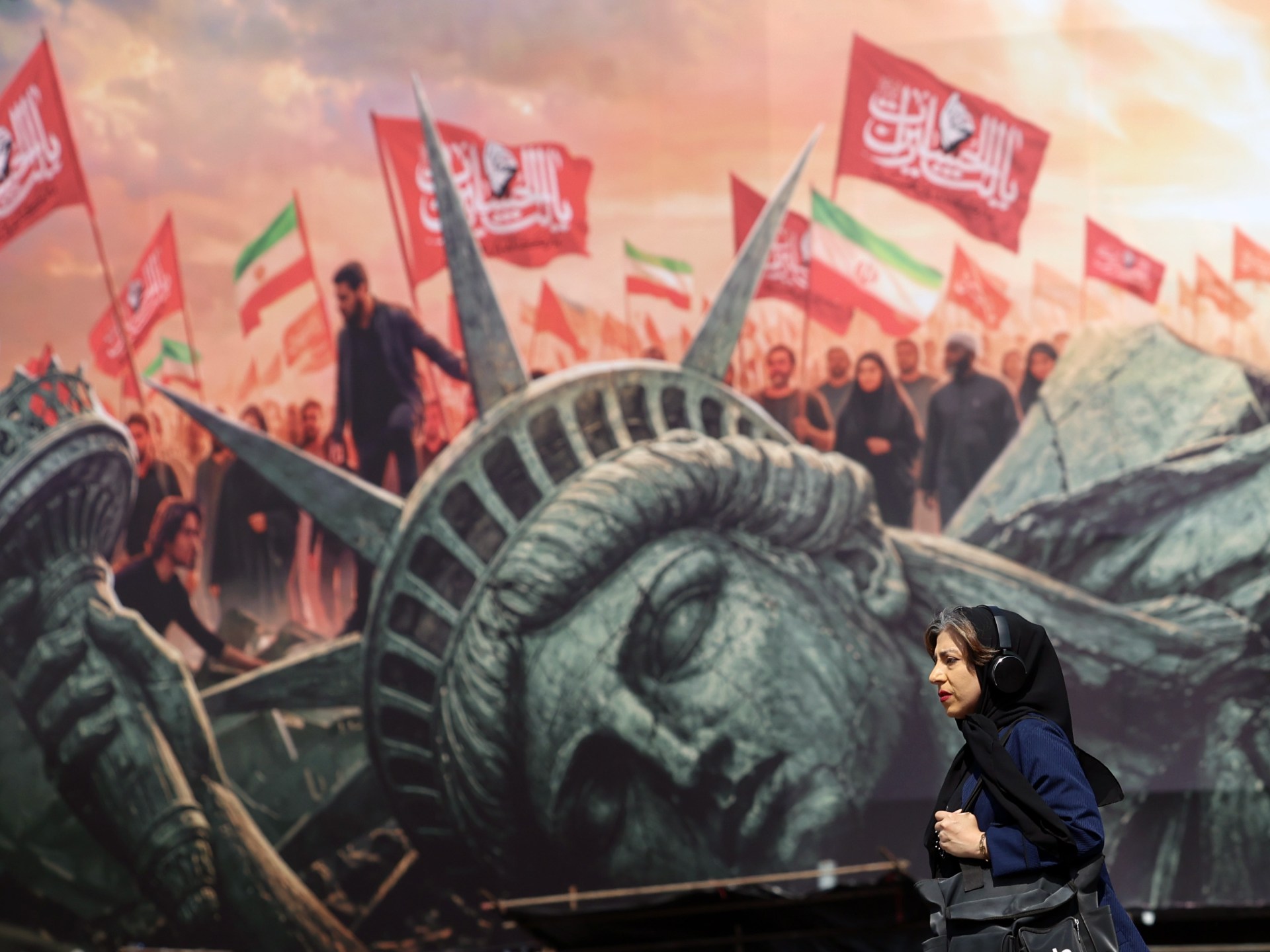
US President Donald Trump demanded that Iran surrender and threatened to bomb Oman if it interfered with the reopening of the Strait of Hormuz, as a 60-day ceasefire agreement between Washington and Tehran expired without an agreement to end the war. Speaking to Fox News on Monday, Trump said Iran should “put up the white flag of surrender” in the five-month war between the United States and Israel, confirming that his administration had opened a direct backchannel with Iran’s Islamic Revolutionary Guard Corps. Corps (IRGC). Recommended Stories list of 3 itemsend of list He described the IRGC as “good poker players” who are “dying.” But he insisted he was in no hurry to end the conflict, over which he has lost significant control and which has damaged his political support ahead of the US midterm elections in November, in which Democrats seek to retake Congress. “I don’t have a schedule,” he said. “I’m not in a hurry.” Rather, Trump once again sought to project force, threatening to bomb U.S. ally Oman if it “gets in the way” of a deal to reopen the Strait of Hormuz, a critical waterway for global oil supplies that Iran has blocked. “If Oman gets in the way, we will bomb the shit out of them,” he said during the interview. Shipping through the strait, with Tehran insisting on oversight of shipping in the waterway. Iranian officials say the two sides have reached an agreement on a new sea route in the strait, and Tehran’s Foreign Ministry said earlier on Monday that Iran and Oman were working on a joint statement. Foreign Ministry spokesperson Esmaeil Baghaei said the proposed mechanism would seek to protect the interests of both Iran and Oman by maintaining commercial shipping. “It is being developed to simultaneously safeguard the sovereign rights of the two coastal states and ensure the safe passage of commercial vessels,” Baghaei said. Baghaei accused the United States and Israel of working to undermine the talks, while adding that the deadlock between Tehran and Washington was not due to a shortage of mediators but to the Trump administration’s repeated reliance on approaches that have “failed hundreds of times.” Baghaei also rejected the importance of the missed deadline, arguing that the memorandum of understanding – which had set 60 days for negotiations on sanctions relief and the nuclear file – had already been nullified by previous US violations, meaning that talks never properly began. Tehran’s position. Iran, he said, does not make decisions under pressure. the negotiating table. But despite the expiration of the memorandum, neither of the two has shown signs of being willing to extend it. Iranian Foreign Minister Abbas Araghchi said on Saturday that Tehran “has not yet made a decision to restart negotiations with the United States.” Trump, meanwhile, said Friday that he would even declare the Strait of Hormuz part of US territory, while Iran countered that the waterway “will remain Iranian.” “maximalist” statements with little practical support. “They’re not really negotiating right now. They’re just making statements and hoping the other side will back down,” he said. Clark argued that the United States has limited room to intensify its blockade of Iranian ports without exposing American forces to significant risk, noting that air power alone has never decided a conflict. He said the only military option left for Washington would be to “open the [Strait of Hormuz] and use force to basically protect the shipping that passes through it,” which would require naval and air forces to actively defend commercial traffic, something Washington has so far avoided. Clark predicted that the standoff would ultimately be resolved with “the Iranians and the Yemenis controlling the strait with some kind of tariff agreement,” leaving Washington needing “some kind of fig leaf that allows them to at least argue that they have resolved it in a way that does not harm American interests.”