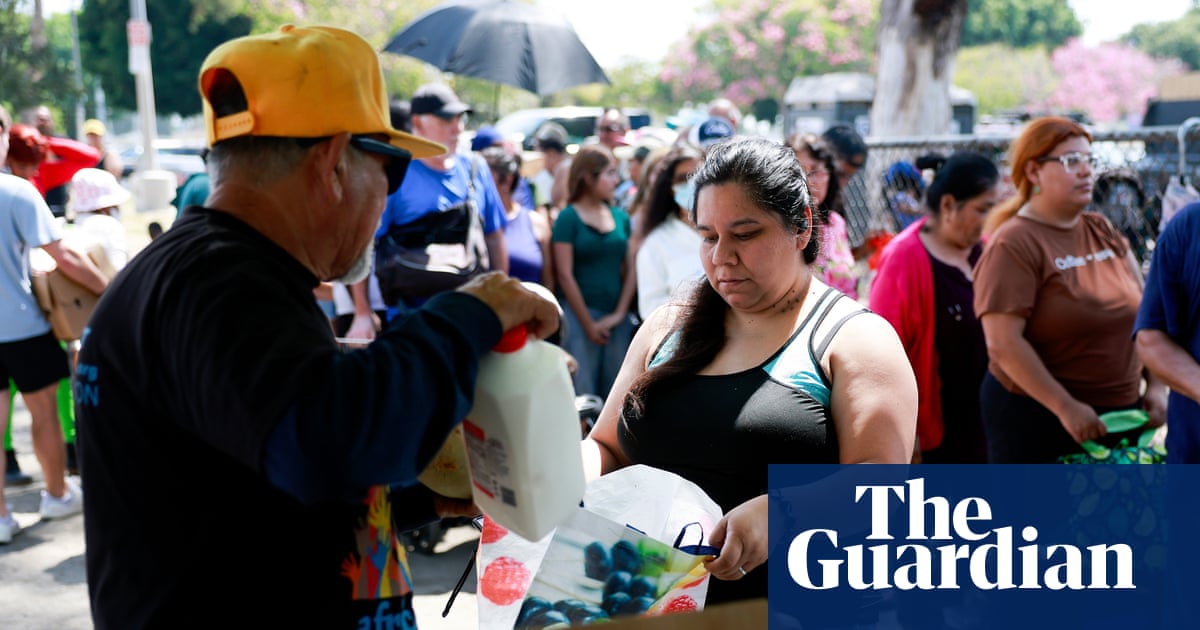
Enrollment in the Supplemental Nutrition Assistance Program (Snap) has dropped significantly over the past year in the US following restrictions imposed by the Trump administration, which have forced more people to seek help from food banks or go hungry, stakeholders say. The number of people receiving food stamps has fallen from 41.6 million in July 2025, before the One Big Beautiful Act took effect, to 36.5 million in June 2026, a 13% decline, according to the latest data from the U.S. Department of Agriculture, which administers the program. While Donald Trump and other Republicans have said the changes incentivize people to find jobs, elected officials, nonprofit leaders and people with food insecurity say the changes simply make it harder for Americans to feed their families. “There will always be a percentage of our communities that we need to help, we have to accept that, and so once we accept that, it’s easy to move forward and do the right thing, which is provide resources to people who need them,” said Rhona Kamar, founder and CEO of Feed Louisville, a nonprofit that aims to reduce hunger and food waste. The Trump administration’s changes to Snap will reduce spending by about $187 billion over 10 years, the Congressional Budget Office projected. Previously, only healthy people ages 18 to 54 who did not have dependents under age 18 had to meet the requirement to work a minimum of 20 hours per week or only receive benefits for a maximum of three months for three years. Under Trump, the rules now state that people ages 18 to 64 who do not have a dependent under age 14 had to perform paid or volunteer work for at least 20 hours per week. The One Big Beautiful Act also stated that starting As of October, states had to cover 75% of Snap’s administrative costs, up from half before. The changes have affected some states more than others. In Arizona, the number of people enrolled in Snap dropped by 50% between July 2025 and June 2026; Kentucky saw a 6% decline. “I am concerned that more people will go hungry in my state because of the changes to “Snap,” which affect children and the elderly,” Kentucky Gov. Andy Beshear, a Democrat who leads the predominantly Republican state, said in a letter this month to Brooke Rollins, the U.S. agriculture secretary. But Trump and Rollins described the reduction in Snap recipients as a positive. “But for those of us who love work and celebrate work and want people to work and not get food stamps, it’s a huge victory when we get 5 million people off food stamps.” Critics of the changes point out that despite Trump’s promises, grocery and gas prices have increased during his second term, making it difficult for families to meet their needs. “If people were paid enough, they wouldn’t be in the Snap program,” said Gina Plata-Nino, Snap director at Food Research and Action. Center, a nonprofit organization that supports anti-hunger programs. The Michigan Food Bank Council operates a helpline where staff answer residents’ questions about applying for Snap and accessing local food programs. The organization began receiving more than three times as many calls daily after Snap’s changes went into effect. This week, they had to temporarily suspend the helpline due to high call volume. The changes have also affected Feed Louisville, which receives surplus food from restaurants and farmers and uses those ingredients to prepare meals for partner organizations. Unused items also go to agencies. Double quotes States are really set up to fail Joseph Llobrera “We’ve always had enough food on hand,” Kamar said. “But now what we’re seeing is that every day the shelves are empty at the end of the day, so every piece of food that comes into our kitchen every day goes back into the community at the end of the day.” The decline in Snap enrollment has also affected schools’ ability to provide free meals to students. If at least 25% of the student body receives Snap or some other public benefit, the school can participate in the Community Eligibility Provision (Cep) program and use federal funds to provide free breakfast and lunch to all students without the need for domestic applications. But because fewer students are enrolled in Snap, that has made it harder for schools to serve those free meals to students who need them, the Washington Post reported this week. In the Houston Independent School District, 26 schools that previously provided free meals to all students under Cep are no longer eligible for the program, according to the Post. Anti-hunger advocates also say employment data does not support the argument that more people have found jobs or seen their wages rise and therefore no longer need food stamps. The United States added 776,000 nonfarm jobs between January 2025 and September 2026. During the last 20 months of Joe Biden’s presidency, the country added 2.6 million nonfarm jobs, according to Factcheck.org. “We don’t have data to suggest there are suddenly more jobs available. We just know that fewer people are receiving benefits,” said Sheril Kirshenbaum, chief of external relations for the Michigan Food Bank Council. A USDA spokesperson downplayed the effect of Snap’s restrictions. “The number of people receiving benefits is constantly changing and is not representative of any particular policy,” the spokesperson said in an email to The Guardian. It could soon become even more difficult for people struggling with food insecurity. States will now have to pay most of Snap’s administrative costs while also preparing for a change in October 2027 that will require states to pay some of the costs of Snap benefits if their payment error rate is above 6%, which the USDA says is not a measure of fraud. (Paradoxically, states that had error rates higher than 13% received a delay in implementing the requirement.) States will now have to pay more for existing work while also finding funding for additional work to reduce the error rate, said Joseph Llobrera, senior research director for the Center on Budget and Policy Priorities’ food assistance team. That could mean longer processing times and people who need assistance having to wait longer to get it, Kirshenbaum said. “States are really set up to fail.” Llobrera said. The USDA spokesperson did not respond to a question about concerns that Snap’s changes have forced some Americans to go hungry. A Louisville woman, Sandra Scott, 58, has been homeless most of her life and said that until she started receiving Snap benefits four years ago, she ate at “soup kitchens or wherever I could, but for the most part, like on the weekends, there was really nowhere to go.” Scott has undergone six back surgeries and has battled mental illness. She became addicted to methamphetamines, but got sober two years ago and now lives in a subsidized apartment. She is working toward her emergency response certificate and volunteers at The Table, a nonprofit restaurant that uses a pay-what-you-can model. When asked what he would say to members of the Trump administration about Snap’s changes, Scott said: “Why don’t you walk in one of our shoes, someone in the community who has nothing, who wasn’t born with money or doesn’t have a job because it’s so hard to find or [who] Can’t find affordable housing because it’s too expensive?