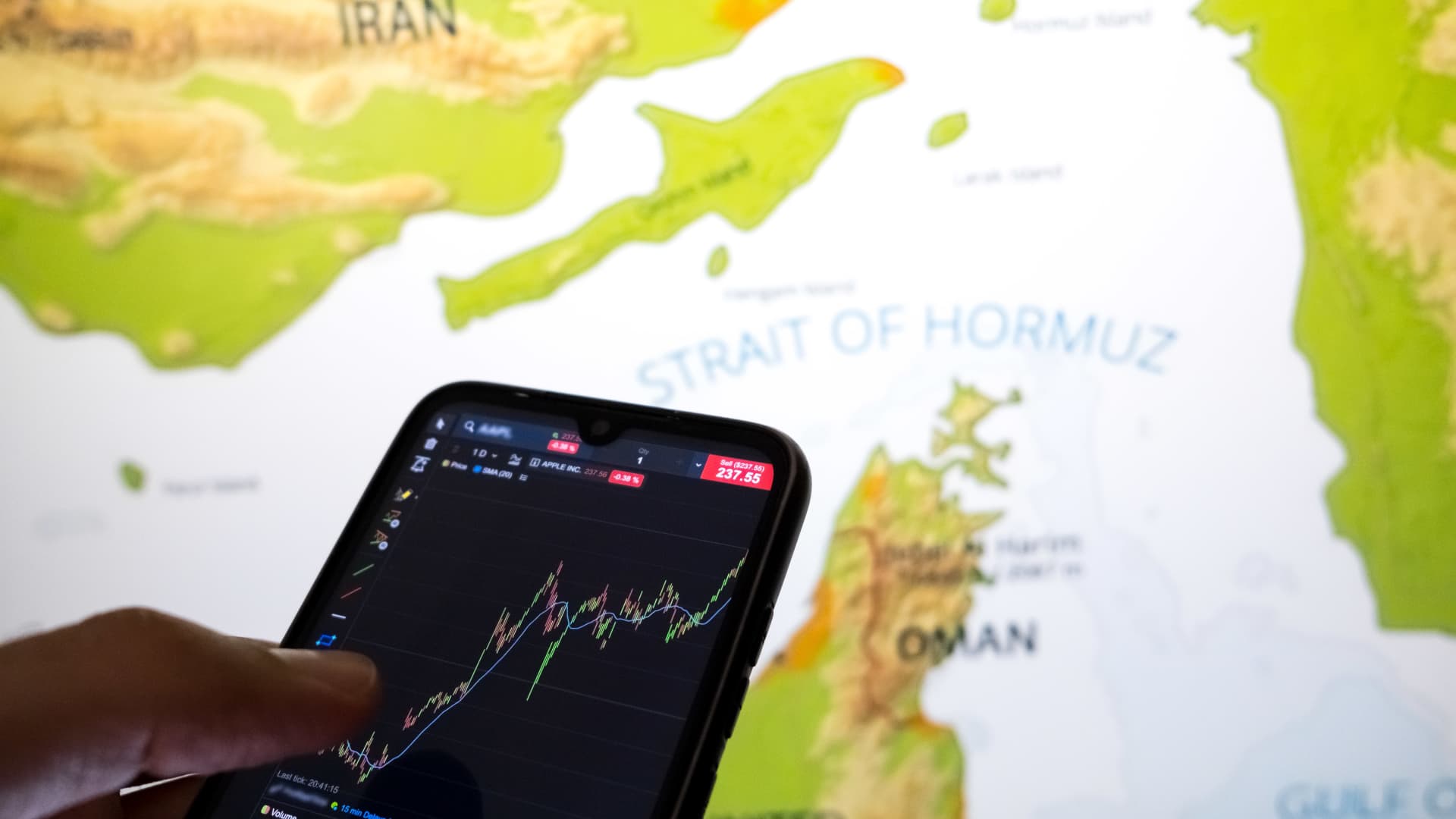
A stock exchange curve appears on a smartphone screen, and a map shows the Strait of Hormuz on a laptop computer screen in this photo illustration taken in Athens, Greece, on March 3, 2026.Nurphoto | Nurphoto | Getty ImagesTreasury yields moved lower on Tuesday, following oil prices, after new comments from Treasury Secretary Scott Bessent on the prospects of an agreement to open the Strait of Hormuz. The yield on the 10-year U.S. Treasury note — the key benchmark for U.S. government borrowing — fell more than 6 basis points to 4.619%.The 2-year Treasury note yield, which more closely tracks short-term Federal Reserve interest rate policy, slipped more than 5 basis points to 4.198%. The longer-dated 30-year Treasury bond yield shed more than 4 basis points to 5.182%.One basis point is equal to 0.01%, and yields and prices move in opposite directions.The move comes as oil prices slid after Bessent told CNBC an agreement to open the Strait of Hormuz could come Tuesday or Wednesday. U.S. West Texas Intermediate futures fell 5.69% to close at $75.77 per barrel, while international benchmark Brent crude moved down 5.26% to $79.36.”We are in talks with the Iranians,” Bessent told CNBC’s “Squawk Box.” “There is a chance we may have a deal today or tomorrow to open the strait and move towards a more normalized position in this conflict.”But Tony Miano, global fixed income analyst at Wells Fargo Investment Institute, noted that even if oil shipments resume, it might be a while before the market registers any significant impact.”It could take time for oil market fundamentals to stabilize, and even longer for consumers to see meaningful relief at the gasoline pump,” he said. “As a result, inflation is unlikely to normalize overnight.””Energy-related inflation pressures may ease, but broader inflation could remain sticky in the near term, limiting how far Treasury yields move lower,” Miano continued.Yields had been rising of late, with the 30-year hitting its highest level since 2007, as elevated oil prices sparked concern of persistent inflation. Investors are also grappling to an apparently “hawkish hold” from Federal Reserve interest rate setters last week. — CNBC’s Mike Sheen also contributed to this report.Choose CNBC as your preferred source on Google and never miss a moment from the most trusted name in business news.