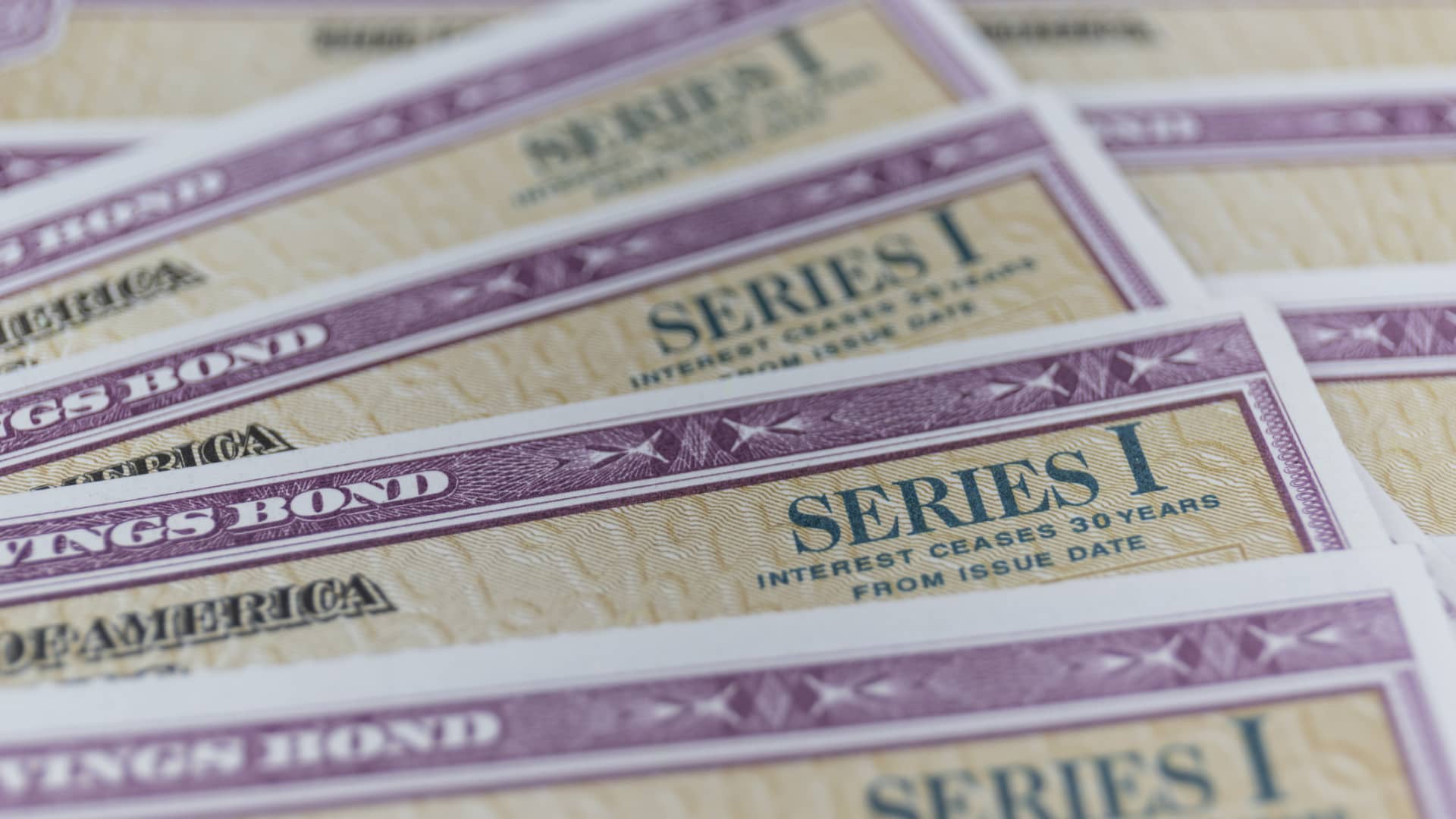
Image from Jetcity | Stock | Getty ImagesThe U.S. Treasury Department has announced new rates for Series I bonds. The newly purchased I bonds will pay 5.51% annual interest from November 1 to April 30, up from the 4.26% yield offered on purchases made through October 31. The new rate includes a variable part of 4.08% according to inflation data, and a fixed part of 1.40%. The fixed rate is up from 0.90% announced in April and the highest since 2006. Overall, the compound I bond rate is 5.51% after rounding, according to the Treasury. Read more CNBC Personal Finance Coverage Amid peak post-pandemic inflation, the I-bond rate hit an all-time high of 9.62% in May 2022, and investors poured millions into this nearly risk-free, government-backed asset. As inflation cooled and I-bond rates fell, many short-term investors redeemed I-bonds. But investors could return as inflation pushes I-bond rates up again, experts say. “I bonds are much more attractive right now,” said David Enna, founder of Tipswatch.com, a website that tracks Treasury Inflation Protected Securities, or TIPS, and I bond rates. I bonds are much more attractive right now. David Enna, founder of Tipswatch.com The consumer price index rose 3.7% in September 2026 from a year earlier, up from a 3.4% annual pace in August, the Bureau of Labor Statistics reported in October. President Donald Trump’s tariffs, new artificial intelligence data centers and travel demand have also contributed to rising prices, economists say. Consumers expect rising inflation to continue. In September, the one-year inflation outlook jumped to 3.9%, the highest in more than three years, according to a New York Federal Reserve survey released in early October. How bond rates work Bond rates are partly variable and partly fixed, which the Treasury adjusts every six months, in May and November. The variable rate is linked to inflation (using the percentage change in the consumer price index over six months) and remains the same for six months after purchase, regardless of the next Treasury update. Your fixed rate doesn’t change after you buy I bonds. The Treasury doesn’t disclose how it calculates fixed rate adjustments, making it harder to predict. Some experts believe the fixed rate on I bonds could be driven by the real, or inflation-adjusted, yields of five-year TIPS, according to Ken Tumin, founder of DepositQuest.com, a blog that tracks rates on I bonds, among other deposit accounts. “There’s some uncertainty there,” Tumin said. How the Change Affects Current I-Bond Investors If you currently own I-Bonds, rate updates follow a six-month schedule based on your original purchase date. After holding I bonds for six months, the variable yield changes to the next advertised rate. But the fixed rate remains the same for as long as you own the asset. For example, let’s say you bought I bonds in March when the variable rate was still 3.12% and the fixed rate was 0.9%. After six months, the variable portion would go to 3.34%, announced in April 2026, but its fixed rate would remain 0.9%. You can earn interest on I bonds for up to 30 years, or less if you redeem the assets before that. However, you cannot cash out I bonds for at least a year after purchasing them. If you redeem within five years, you will lose the last three months of interest.