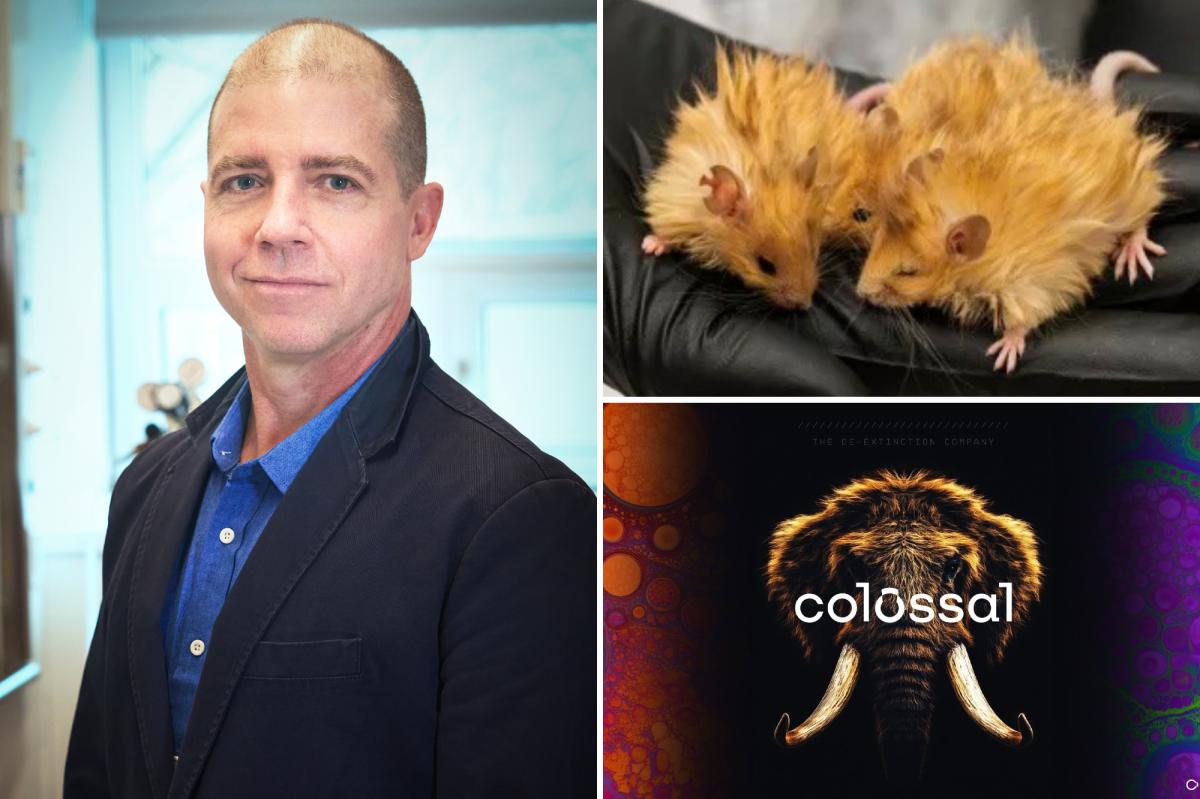
Colossal Biosciences, a futuristic startup working to bring back extinct species including the woolly mammoth, is suing one of its former top scientists for allegedly stealing trade secrets and sharing the data with competing labs. In an explosive lawsuit filed Friday morning in Texas federal court in Austin, Colossal accused James Kehler, former vice president of animal sciences and then BioSynergy, of “dishonesty, greed and betrayal of the confidential science at the heart of Colossal’s mission.” The Dallas-based company, which has so far managed to create “woolly mice” with woolly mammoth features and gray wolves similar to the extinct dire wolf, claimed that Kehler breached three of the contracts he signed with the company after leaving for rival laboratories. Scientists at Colossal Biosciences create genetically modified mice in an effort to revive woolly mammoths. Colossal Biosciences’ forensic analysis of Kehler’s Colossal work laptop found that before leaving the company, he moved files containing sensitive information to a personal cloud account and to multiple personal devices, the lawsuit alleges. Colossal is represented by Alex Spiro, the tough lawyer at the New York law firm Quinn Emanuel, according to court documents. Kehler did not immediately respond to the Post’s request for comment. As vice president of Colossal, Kehler – who lives in Maryland – had access to the company’s most sensitive scientific information, including data on its avian programs, such as work with the dodo bird and the moa, a large, wingless bird previously found in New Zealand, according to the lawsuit. On or about April 14, 2026, after resigning from Colossal, Kehler joined Neion Bio, a competing laboratory, as Head of Avian Sciences and “used and disclosed trade secrets and confidential information of Colossal,” the lawsuit alleges. James Kehler (above) is accused of misappropriation of trade secrets. Neion Bio has also been linked to Felix Pets, a startup that claims to use gene-editing technology to develop hypoallergenic cats, a process that “relies on the same research and knowledge underlying Colossal’s de-extinction work,” according to the lawsuit. Colossal is demanding damages, alleging that Kehler “went from scientist to thief.” The laboratory argued that safeguarding its proprietary information is key in its efforts to recover extinct species whose ecosystems have been damaged without them. He is currently working on the woolly mammoth; geezer; the thylacine, a cat-like carnivore with enormous jaws, also known as the Tasmanian tiger; and the dire wolf, a 150-pound-plus creature with thicker legs and broader heads and shoulders than today’s wolves. The startup raised $200 million in a funding round in January 2025 led by TWG Global, the investment firm co-founded by Mark Walter and Thomas Tull, which raised its valuation to $10.2 billion. The startup raised $200 million in a funding round in January 2025. Colossal Biosciences Notable investors include Peter Jackson and Fran Walsh, the Oscar-winning film duo behind “The Lord of the Rings” and “The Hobbit,” and hedge fund manager Paul Tudor Jones. Colossal has raised at least $435 million since it was founded in 2021 by billionaire entrepreneur Ben Lamm and geneticist George Church, a professor at Harvard and MIT. “Colossal’s trade secrets and confidential information are at the core of its competitive advantage and its ability to achieve its extinction mission,” the company said in its complaint. “Unauthorized use or disclosure of that information, particularly to a competitor, would allow others to replicate in days or weeks what took Colossal years to develop, and at a fraction of the cost. Such unauthorized use or disclosure would inflict serious and irreparable harm on Colossal and the objectives it seeks to achieve.” At its Dallas lab, Colossal said its scientists process tissue samples from endangered animals, edit genomes and work to reprogram stem cells with the goal of undoing large-scale biodiversity loss, reviving extinct species and preserving endangered species.