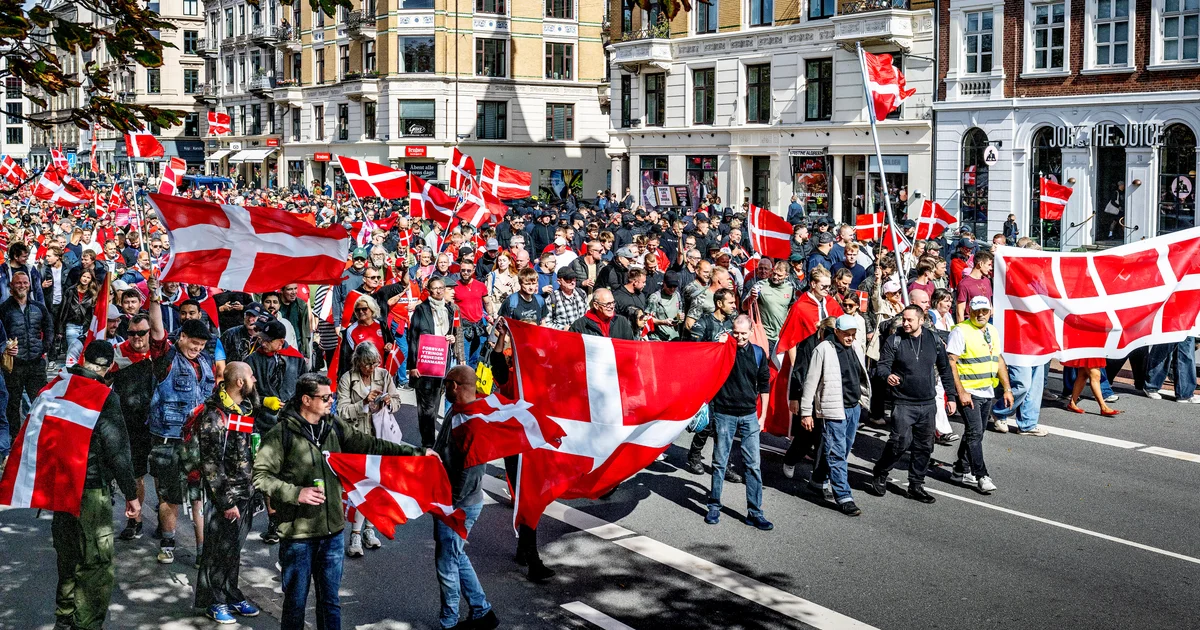
Denmark’s Supreme Court on Monday upheld a controversial law aimed at eliminating ethnic enclaves in public housing, or “ghettos” as the government calls them, by giving authorities the ability to limit the number of “non-Western” immigrants and their descendants who can live in any particular housing development. The court ruled that the 2022 eviction of residents of Nøjsomhed-Sydvej, a housing development in the town of Helsingør, north of Copenhagen, does not constitute ethnic discrimination. The Danish law introduced in 2018 is one of Europe’s most aggressive attempts to force migrant communities to assimilate and prevent the evolution of “parallel societies” in the country. It has attracted both international condemnation and admiration from politicians in other countries seeking to emulate Denmark’s approach to immigration and integration. Under the legislation, residential areas with at least 1,000 inhabitants, where more than 50% of residents are immigrants or descendants of immigrants from “non-Western” countries, and that meet certain socioeconomic criteria related to employment rates, income levels, educational attainment and crime, may be subject to redevelopment requirements. Housing developments designated as “conversion” Under the law, non-Western countries include all nations outside the European Union, Andorra, Iceland, Liechtenstein, Monaco, Norway, San Marino, Switzerland, United Kingdom, Vatican State, United States, Canada, Australia, New Zealand. The classification is based on a person’s country of origin rather than their citizenship, meaning that even Danish citizens born and raised in Denmark can be classified as non-Western if both parents emigrated from non-Western countries. The seven evicted families from Nøjsomhed-Sydvej argued in their case that the distinction between Western and non-Western origins was effectively a representation of ethnicity and therefore amounts to illegal discrimination based on race. However, the Supreme Court concluded that the distinction was based on nationality and country of birth rather than ethnicity, noting that both categories covered a wide range of ethnic groups and that people of the same ethnicity could fall into either category. The court’s ruling followed a decision last December by the European Union’s highest court, which found that Danish law could constitute discrimination on the grounds of ethnic origin, but the EU court left it to Denmark’s courts to make the final decision. Anders Svendsen, legal director of Denmark’s national tenants organization, LLO, told CBS News that the organization did not expect the Supreme Court to rule the way it did. “We were a bit surprised, considering what the EU court had previously proposed last December,” he said. The organization estimates that several thousand homes have already been demolished under the legislation. “A lot of people are still quite worried because they don’t know if they will be next,” Svendsen said. “This regulation has been quite unpopular with public sector tenants, but it has been quite popular with the general population.” The LLO said it recognized the government’s desire to promote social cohesion, but questioned whether demolishing homes and reducing the availability of affordable housing was a proportionate response. “We disagree, because he sees public housing as a problem that needs to be solved and less public housing is seen as the cure,” Svendsen told CBS News. Joachim B. Olsen, a former Dane The lawmaker who is now opinion editor of the Danish newspaper BT was not surprised by Monday’s ruling. “Legislation is carefully vetted by the Department of Justice to ensure it is in accordance with Denmark’s constitution and international obligations before it is presented to parliament,” he told CBS News. Olsen rejected the suggestion that the distinction between Western and non-Western origin was an indicator of race, arguing that it was based on cultural background. “It is important to understand that the provisions of the ‘ghetto law’ apply to anyone living in the area designated as a ‘ghetto,’ regardless of their ethnicity or citizenship,” he said. Olsen argued that the policy had been generally successful. According to Danish government figures, the number of neighborhoods officially classified as ghettos fell from 29 in 2018 to five in 2025. “Income in these areas has increased. Employment has increased. So has the educational level,” he said. “Overall, I would say the positives outweigh the negatives.” Denmark’s influence on European immigration policy Denmark has become a model for some other European governments seeking ways to tighten immigration restrictions and address public concerns about the integration of immigrant communities. While demands for a tougher immigration policy in many European nations have been driven predominantly by right-wing populist parties, Denmark’s restrictive approach has been championed by its center-left Social Democratic Party, led by Prime Minister Mette Frederiksen. Supporters of “The Danish People” wave Danish flags as they take part in the so-called remigration march on September 5, 2026 in Copenhagen. The march organized by the Danish People initiative sparked a counter-demonstration by the Joint Initiative Against Racism and Discrimination. Nils Meilvang / Ritzau Scanpix /AFP via Getty Images Frederiksen has openly expressed his desire to preserve Danish culture and his opposition to a concept of multiculturalism in which all cultures have equal standing in the country. “We are a Danish society and we form an ethnically Danish indigenous tribe,” Frederiksen said last week on BT newspaper’s Borgerlig Tabloid podcast. “Of course, this evolves when new people arrive here. But it is also necessary that, in the future, Denmark still has a strong majority culture.” Britain’s government cited Denmark’s policies earlier this year when it changed its own rules on who is granted asylum in the United Kingdom. Home Secretary Shabana Mahmood, announcing a new policy in March under which people granted asylum will have that status subject to periodic review, said Britain’s “restart of its asylum offer” had been “inspired by Denmark’s success”. Denmark has also been at the forefront of efforts to establish “return centres” – deportation centers outside Europe. Last week, Denmark joined Germany, Austria, Greece and the Netherlands in announcing plans to establish a “return center” in Rwanda for migrants who have exhausted their legal avenues to remain in Europe but cannot be returned to their countries of origin. More from CBS News Go deeper with The Free Press in: