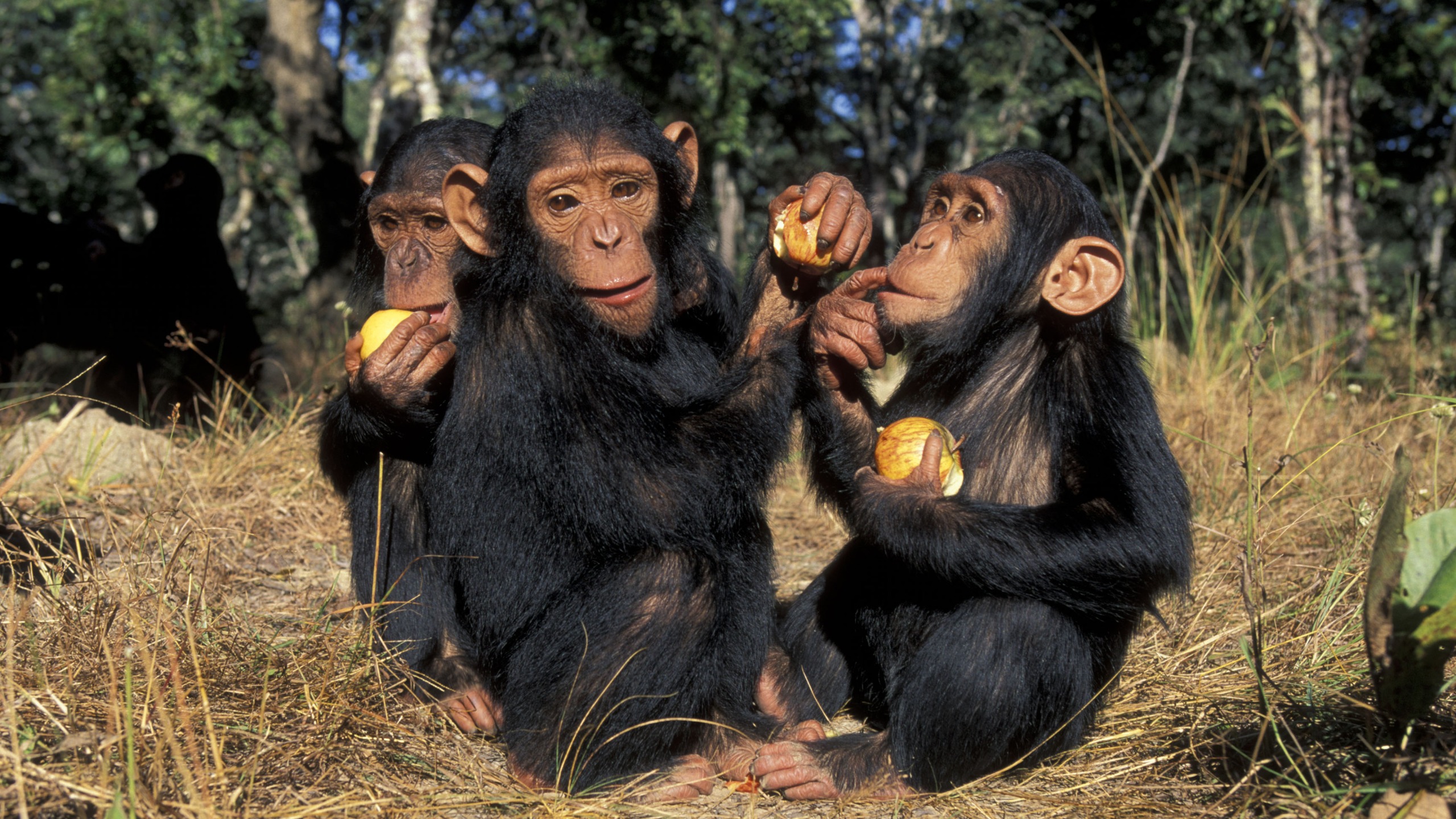
Humans and chimpanzees are remarkably similar, despite major differences in how our societies have developed. After about 5 to 6 million years of evolution from a common ancestor, only 1.2 percent of our DNA is different. A virus that infected chimpanzees (Pan troglodytes), but not humans, about 4 million years ago is partly responsible. This ancient retrovirus made a small adjustment to chimpanzees’ DNA that has led to some important differences in how our brains develop, according to a new study published today in Science Advances. “We wanted to understand how human and chimpanzee brains could have evolved differently when many of their protein-producing genes are similar,” lead author Patricia Gerdes told ScienceAlert. Gerdes is a molecular neurogeneticist at Lund University in Sweden. “We knew that ancient viruses can leave DNA in the genome, and those remnants can affect nearby genes,” he said. “PTERV1 (Pan troglodytes endogenous retrovirus-1) was a particularly interesting candidate because it is found in chimpanzees and other African apes, but not in humans.” Brain development is a known point of difference between chimpanzees and humans: for example, our brains are about three times larger. Perhaps the ancient virus could even have played a role in the separation of our species. It’s unclear why humans never contracted PTERV1 when many of our ape relatives did, but there are some theories. Perhaps a unique antiviral protein, TRIM5α, protected us against it. Perhaps the ancestors of chimpanzees and humans were living in different places when the viral pandemic hit. The new study does not seek to answer that question, but it does reveal a specific effect that the infection had on chimpanzee brain development. All those years ago, PTERV1 inserted DNA sequences into the chimpanzee genome that are still active today. Both humans and chimpanzees have a molecule made of DNA called LINC00662, which provides our cells with instructions to build a particular protein. “We found it active during early human brain development, and our experiments suggest that it helps [human] Brain cells mature and develop extensions,” Gerdes explained. (Fiordaliso/Moment/Getty Images) Chimpanzees have it too, and that’s exactly where the virus left its mark. The insertion of the virus’s DNA turns off the chimpanzee’s LINC00662. In experiments with human brain organoids (small groups of cells grown in a laboratory as a research model), when the team turned off LINC00662, the neurons and their extensions (the dendrites and the axons that transmit information through the brain) did not mature or grow as prolifically as they do with LINC00662 intact. “We still don’t know all the functions of LINC00662 in the human body, or what the loss of its activity means for chimpanzees as a whole,” Gerdes said. An experiment with organoids like this is a great way for scientists to get a quick preview of what could happen if, for example, PTERV1 day made its way into the human genome to perform similar editing. “If humans had the same insertion, it would probably have disabled LINC00662 and altered brain cell development,” Gerdes explained. “But we can’t predict that this would produce a particular brain shape, capacity, or behavior. The effect could also depend on the surrounding human DNA and other genes. “And what if the chimpanzees were freed from the ancient viral DNA that prevents the full potential of their version of LINC00662?” In our experiment, removing the insertion from chimpanzee stem cells restored LINC00662 activity. This shows that the insertion contributes to deactivating this gene. “Brain differences arise from many genetic and developmental influences, and eliminating the insertion of an adult brain would not undo previous brain development.” been… The research was published in Science Advances. This article was fact-checked by Fiona MacDonald and edited by Fiona MacDonald. While we take pride in our process, we are human. If you spot an error, please let us know.