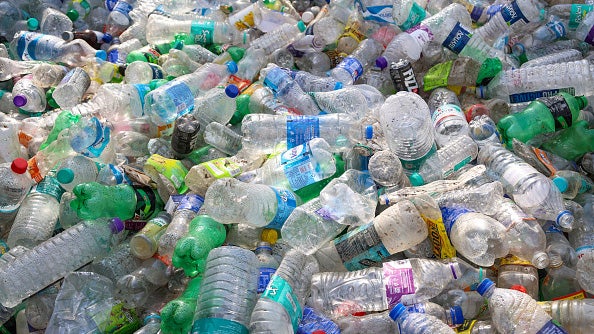
This cookie is made from waste plant materials and plastic and could feed humans everywhere, from submarines to spaceships. (SIU Carbondale Communications) When you pull out your favorite cookie recipe, you probably won’t find plastic as one of the ingredients, but scientists have found a way to transform your trash into treats that could help solve problems from Earth to outer space. Researchers at Southern Illinois University Carbondale began working on this as part of a NASA-led project interested in producing food for astronauts who wouldn’t have access to many resources. Unfortunately, DoorDash doesn’t reach deep space. The first step was to make a vital but simple connection: plastic is carbon and food is carbon. So how does this work? It all starts with one of the most common forms of plastic, polyethylene terephthalate (try saying that three times fast). This material, also known as PET, is often used to make soft drink and water bottles. PET contains carbon-rich molecules that can be broken down and reused into useful compounds. And while this seems like a process that could be energy-intensive and not exactly environmentally friendly, these scientists were one step ahead. Get more of our news on Google Set The Weather Company as a ‘Preferred Source’ for faster access to the news you value. The answer? “Microbes are very intelligent. Therefore, we use their characteristics to solve the problems we create,” said Associate Professor Lahiru Jayakody. Researchers have long used microbes, like yeast, as “mini-factories” to produce molecules. So, essentially, the plastic is broken down and the molecules are fed to yeast, which will then transform them into ingredients that can be used in food, such as proteins, fats and acids. a little fiber, starch and sweetener, we run it through a 3D printer and boom, we have a protein-rich cookie, called a microbite. So far, the cookies have received rave reviews when it comes to aroma. If reading this has made you hungry for a science experiment turned into a sweet treat, you may not have to wait too long to see them on your supermarket shelf. The team is already working on ways to make the cookies attractive and available to the public in a few years. So, in the not-too-distant future, you could eat the same foods as astronauts. The biggest impact Aside from the fascinating spatial implications and consumer enjoyment, this project is helping to address two major global challenges: plastic pollution and food insecurity. With millions of tonnes of plastic produced each year and a large portion of the population struggling with hunger, these are incredibly complex and daunting problems. But these little cookies help kill two birds with one stone by reducing plastic pollution as it is transformed into food that parts of the world desperately need. Health of our Earth and its inhabitants: that seems like my kind of solution! Plastic waste is seen at an open recycling yard on the occasion of World Environment Day in Srinagar, Jammu and Kashmir, on June 5, 2026. (Firdous Nazir/NurPhoto via Getty Images) Caitlin Kaiser graduated from the Georgia Institute of Technology with a bachelor’s and graduate degree in Earth and Atmospheric Sciences before beginning her career as a digital meteorologist at Weather.com.